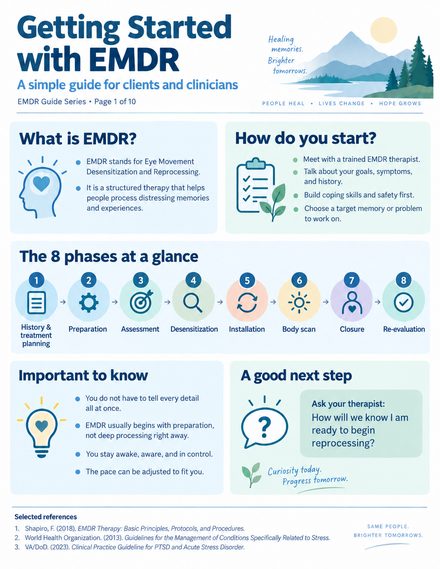
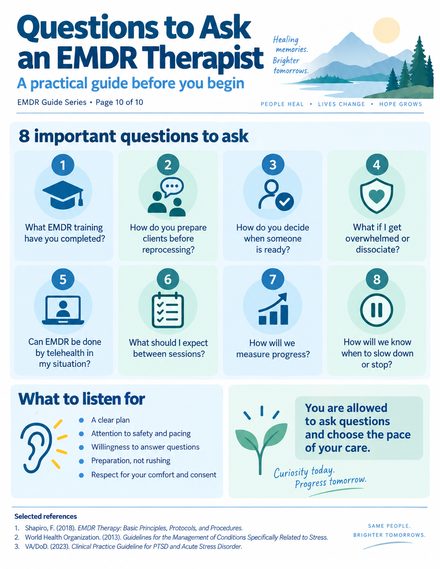
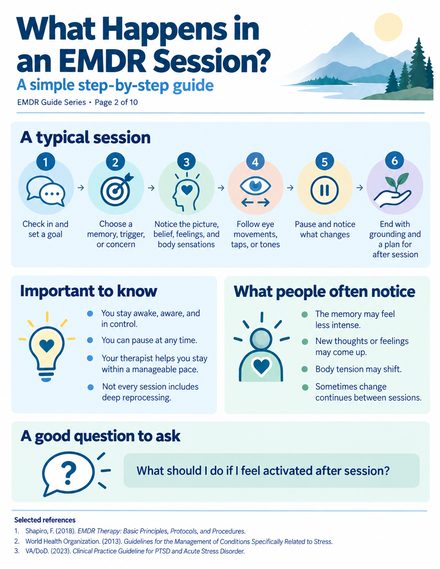
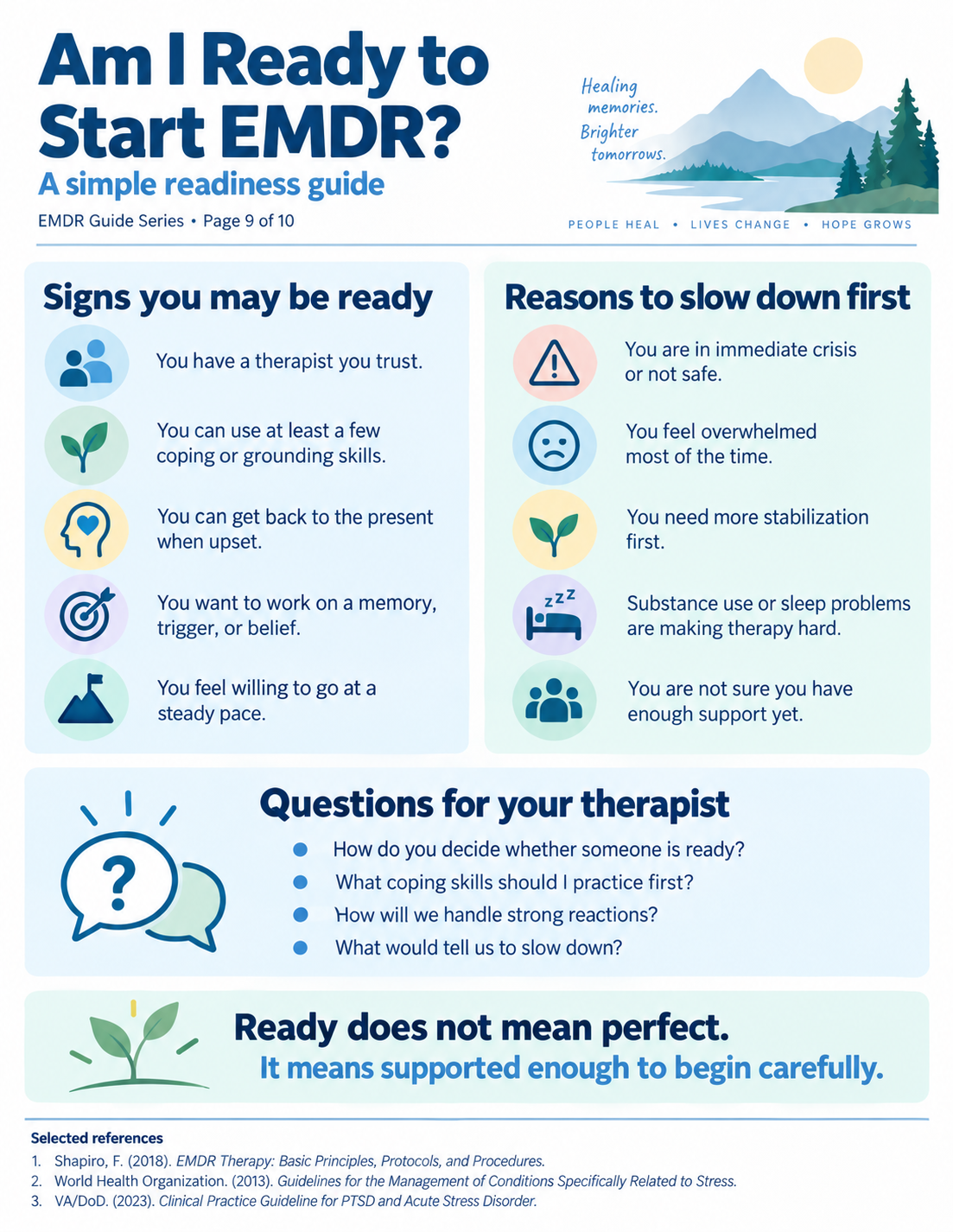
Am I Ready to Start EMDR?
Last reviewed: 2026-09-12 · Editorial source check
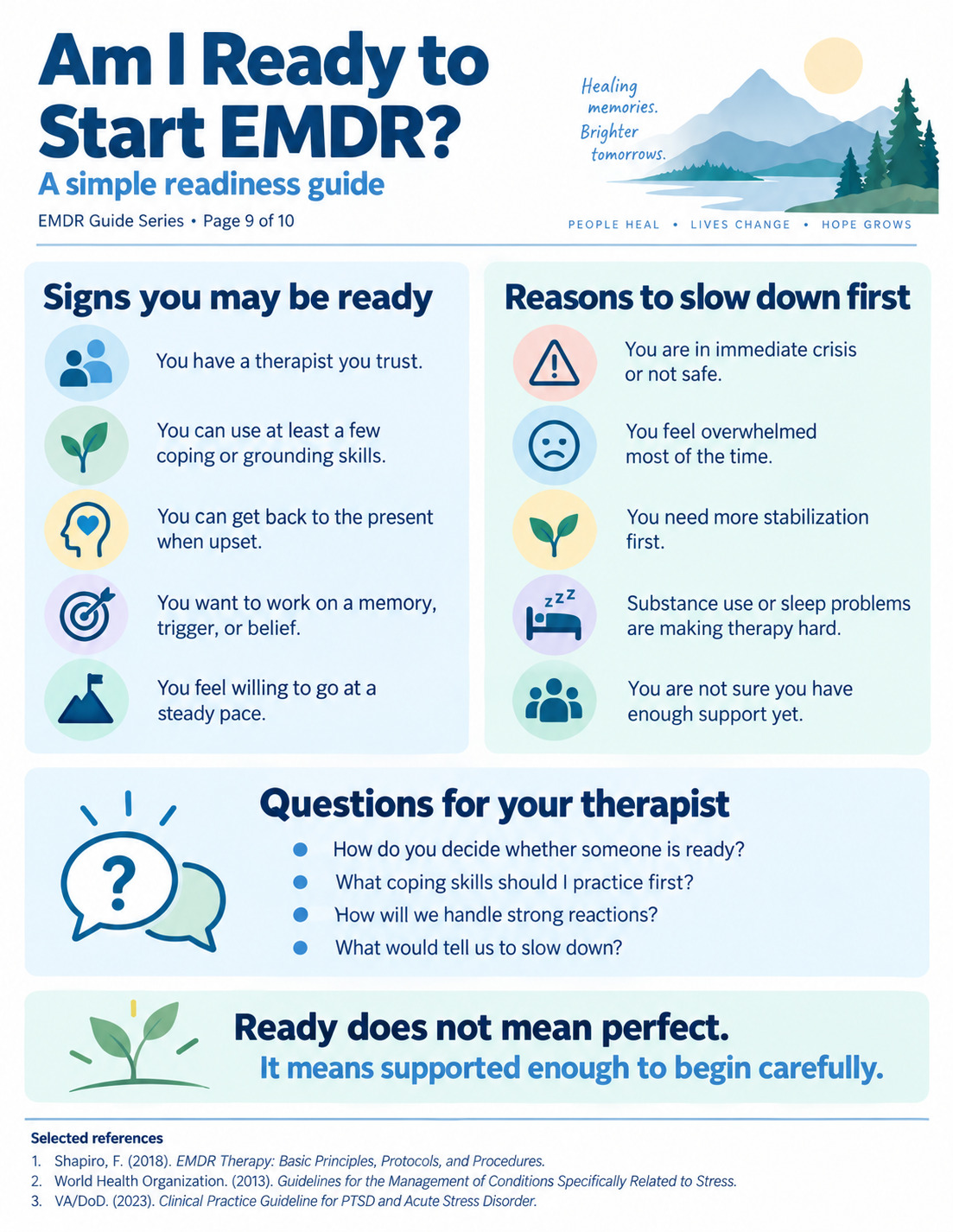
Readiness is an individual clinical discussion, not a score on a checklist. Feeling nervous does not automatically mean you are unready, and feeling eager does not replace preparation.
Use this guide to organize questions with your therapist rather than to assess or diagnose yourself.
What this guide explains
Preparation can include understanding what the work involves, discussing what helps when emotions become intense, and agreeing on how to pause. Your therapist also needs to consider your current circumstances and the support available between appointments. These conversations can inform a plan without requiring you to be free of every symptom before treatment begins.
You might ask what the therapist would want to know if you become numb, disconnected, overwhelmed, or unsure what is happening. You can also discuss how previous therapy experiences affect your expectations. The purpose is not to give the “right” answers. It is to make concerns visible so they can be considered in assessment and pacing.
For telehealth, practical preparation includes a private setting, a way to communicate if the connection drops, and an agreed plan for getting help if needed. Those arrangements do not replace clinical assessment. This infographic is an educational discussion guide, not a validated readiness instrument or a self-treatment protocol. If a question feels difficult, it may be useful to bring the question itself to your therapist and work through it together.
At a glance
- Discuss preparation and coping resources.
- Agree on a pause signal and pacing.
- Talk about support between appointments.
- For telehealth, agree on a connection-loss plan.
- This is not a readiness test or self-treatment guide.
What the research says
Preparation is part of the standard EMDR framework. The questions here are educational prompts, not a research-validated checklist. Remote delivery research is developing and requires attention to suitability and practical arrangements.
How to read the evidenceReferences
- Shapiro, F. (2018). Eye Movement Desensitization and Reprocessing (EMDR) Therapy: Basic Principles, Protocols, and Procedures (3rd ed.). Guilford Press.Treatment manual
- National Center for PTSD. Eye Movement Desensitization and Reprocessing (EMDR) for PTSD.Patient education
- Kaptan, S. K., Kaya, Z. M., & Akan, A. (2024). Addressing mental health need after COVID-19: a systematic review of remote EMDR therapy studies as an emerging option. Frontiers in Psychiatry, 14, 1336569. doi:10.3389/fpsyt.2023.1336569Systematic review
Selected sources checked for identity and relevance. This is an educational summary, not a comprehensive systematic review or a claim of independent clinical review.