What Happens in an EMDR Session?
Last reviewed: 2026-09-12 · Editorial source check
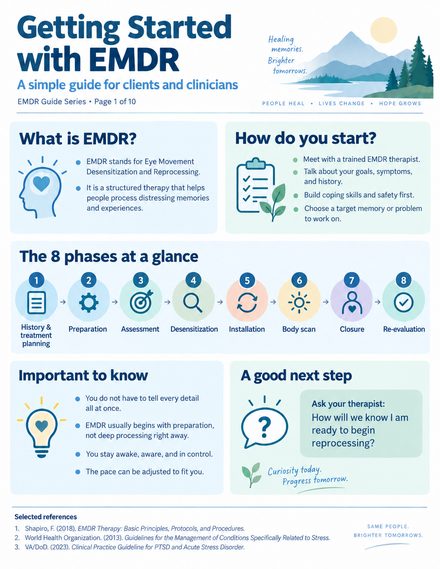
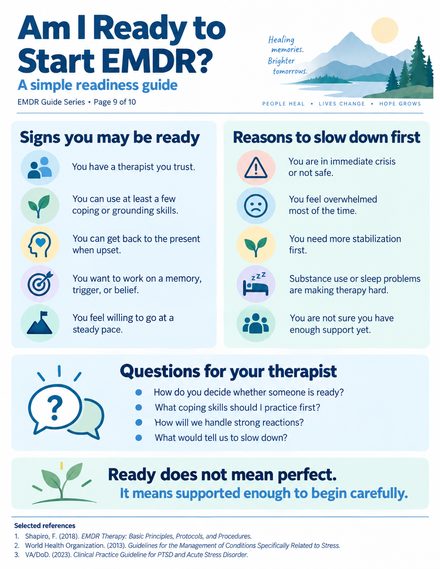
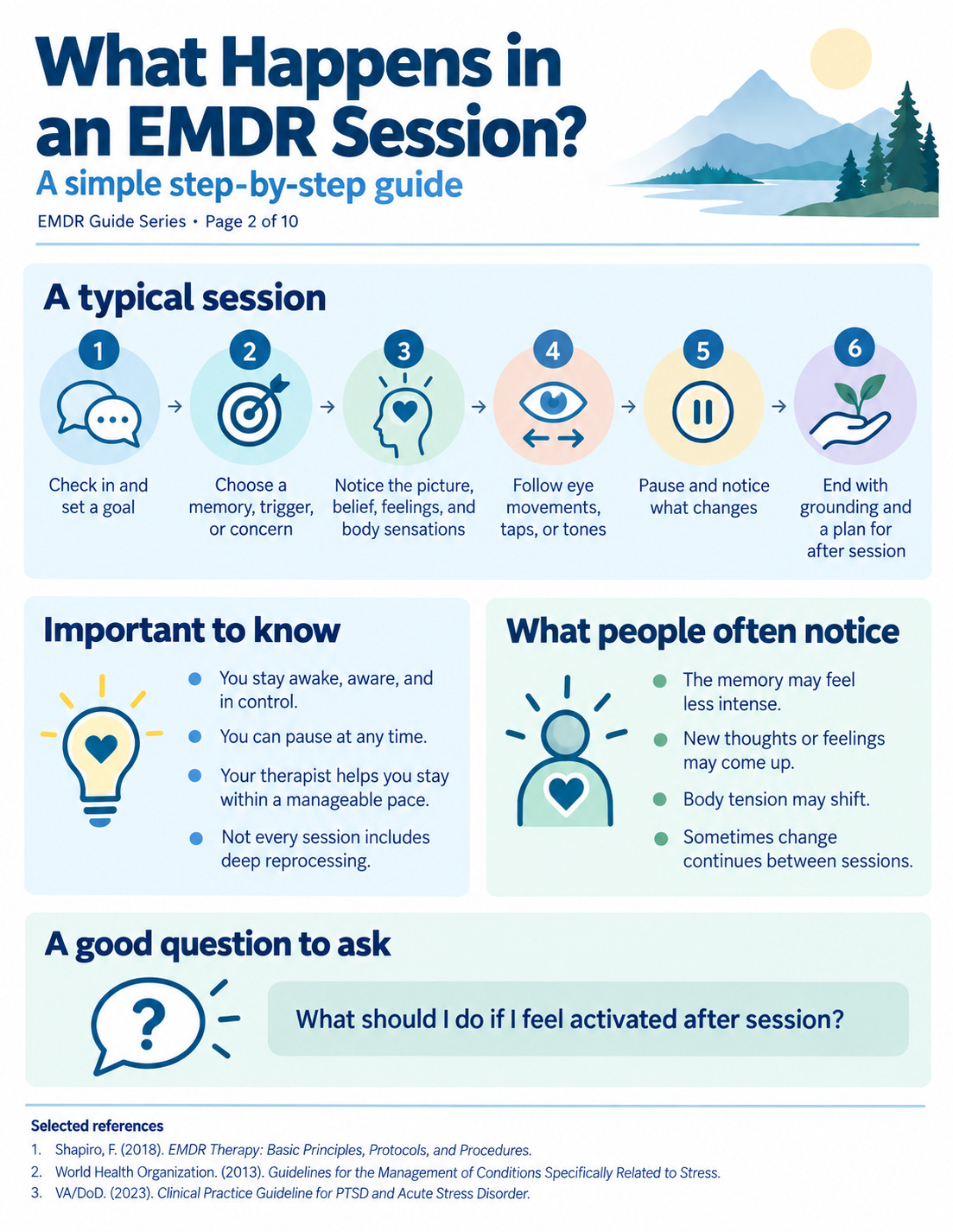
An EMDR appointment involves more than eye movements. Some appointments focus on understanding your situation or preparing for the work; others include reprocessing a selected experience.
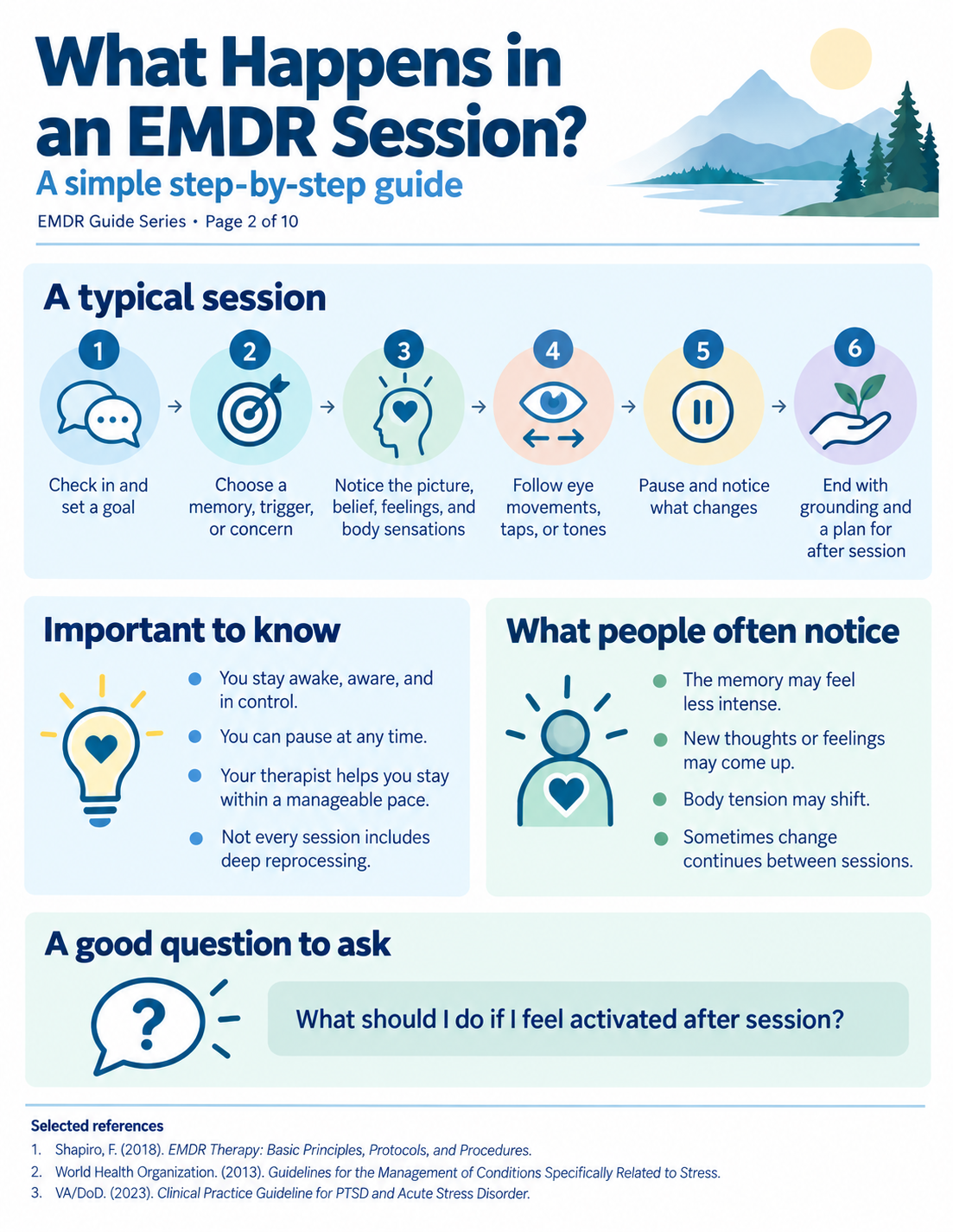
Your therapist should explain the plan and how to communicate if you need to pause. A session does not need to look exactly like this illustration to be appropriate.
What this guide explains
A check-in gives you an opportunity to describe how things have been since the previous appointment. It can also help your therapist decide whether the original plan still fits that day. When reprocessing is appropriate, you may focus on a selected memory or other agreed target and notice the associated thoughts, feelings, and body sensations.
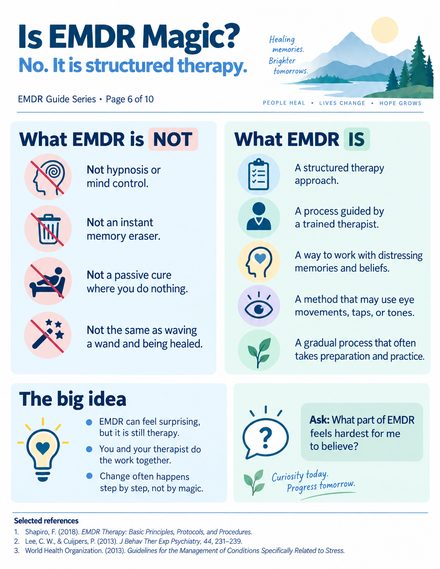
During sets of bilateral stimulation, the therapist guides the procedure and checks what you notice. You are not being asked to perform well or produce a particular feeling. Responses can vary, and an absence of an obvious change is something to discuss rather than a personal failure. Some conversation is part of the process even when a detailed spoken account of every event is unnecessary.
The appointment also needs an ending. Closure and a plan for the time between sessions remain relevant whether or not a particular target feels fully resolved. Consider asking how much time is reserved for closing, what to do if distress increases afterward, and how progress will be reviewed next time. This sequence is educational; your individual session plan belongs with your treating clinician.
At a glance
- Check in and agree on the plan.
- Work with a selected target when appropriate.
- Notice responses during and between sets.
- Use an agreed pause signal when needed.
- Close the appointment and review the next steps.
What the research says
EMDR is supported as a structured PTSD treatment. Describing a typical session explains the method, but does not establish that every component works independently or that everyone improves at the same pace.
How to read the evidenceReferences
- National Center for PTSD. Eye Movement Desensitization and Reprocessing (EMDR) for PTSD.Patient education
- Shapiro, F. (2018). Eye Movement Desensitization and Reprocessing (EMDR) Therapy: Basic Principles, Protocols, and Procedures (3rd ed.). Guilford Press.Treatment manual
- Bisson, J. I., Roberts, N. P., Andrew, M., Cooper, R., & Lewis, C. (2013). Psychological therapies for chronic post-traumatic stress disorder (PTSD) in adults. Cochrane Database of Systematic Reviews, (12), CD003388. doi:10.1002/14651858.CD003388.pub4Systematic review
Selected sources checked for identity and relevance. This is an educational summary, not a comprehensive systematic review or a claim of independent clinical review.