Questions to Ask an EMDR Therapist
Last reviewed: 2026-09-12 · Editorial source check
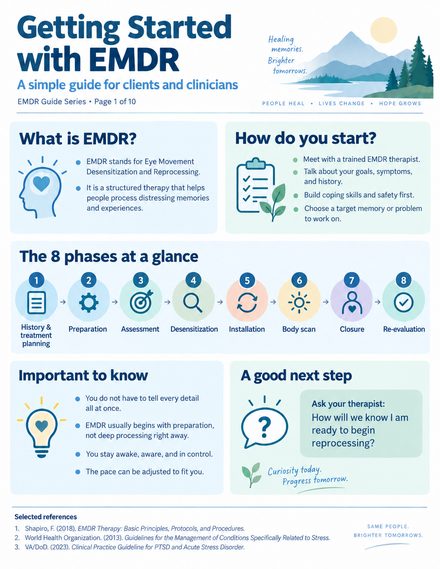
A consultation is an opportunity to understand both a therapist's approach and how you would work together. You are allowed to ask practical questions before deciding.
Bring the questions that matter most to you. They are prompts for a conversation, not a script you must complete.
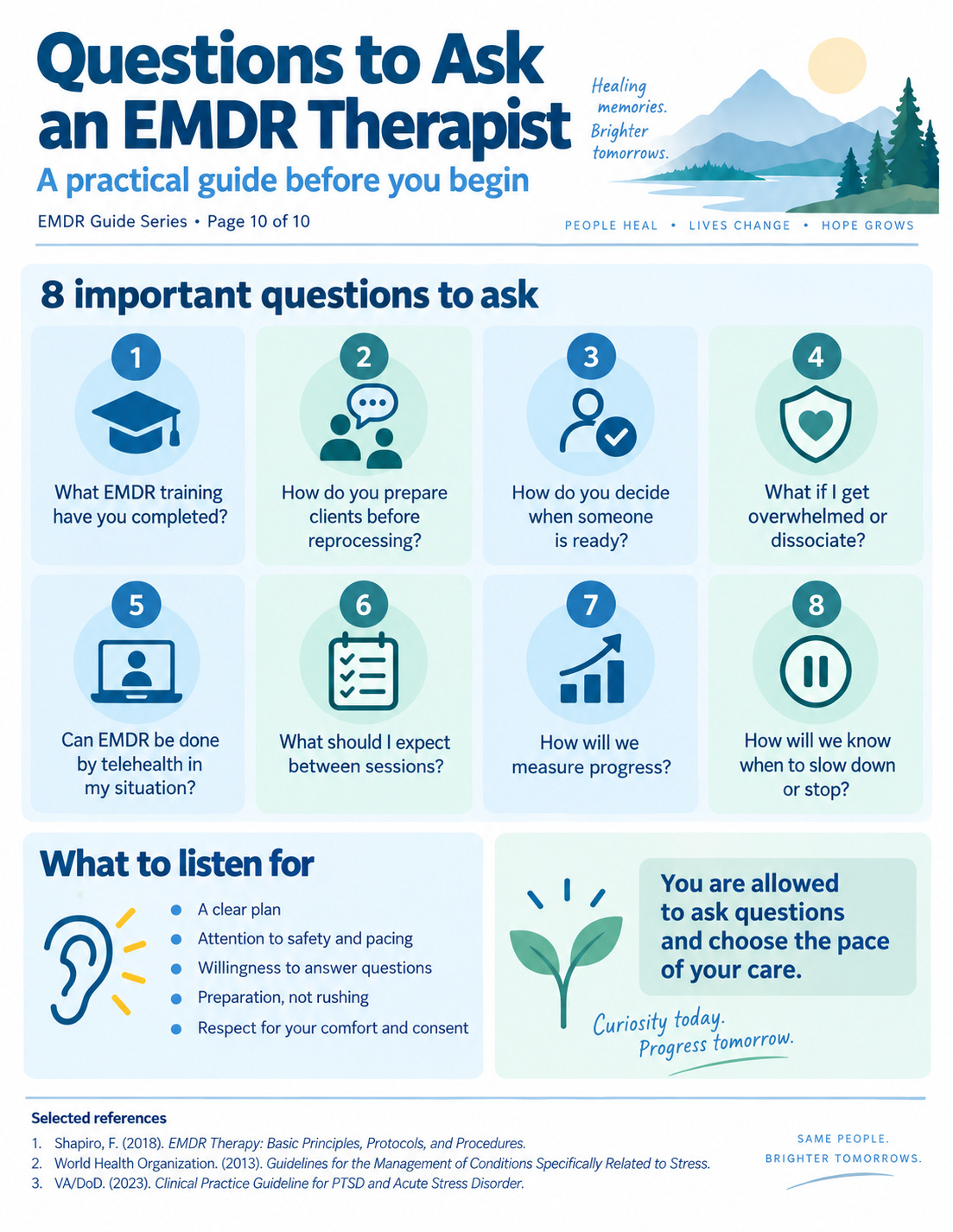
What this guide explains
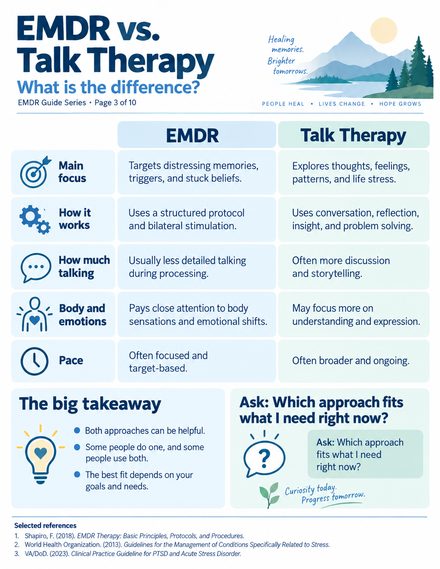
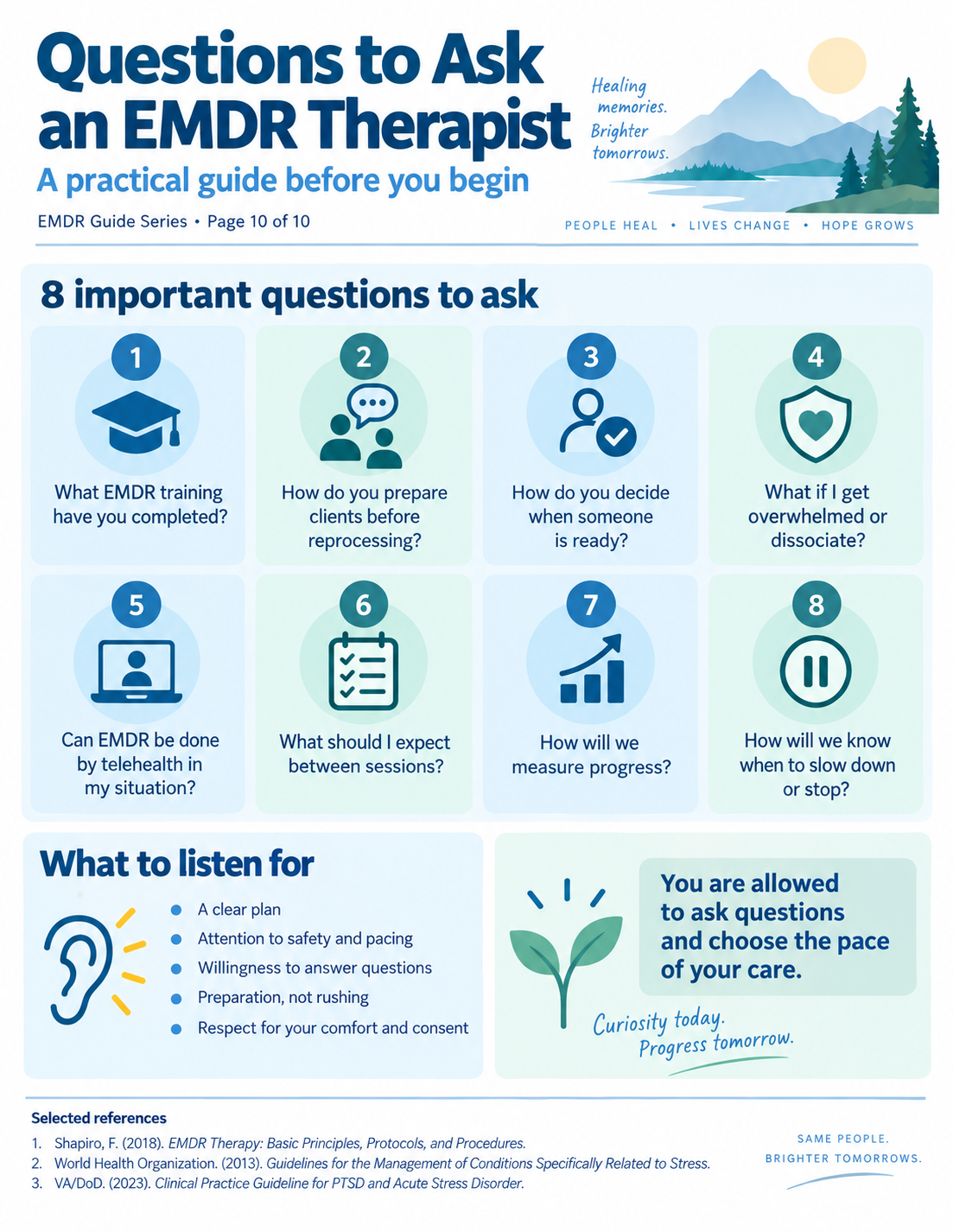
Training is a useful starting question, but a credential alone does not tell you everything about fit. Ask about the therapist's experience with concerns like yours, how they assess suitability, and when they would recommend another approach. A clear answer can include both strengths and limits rather than a promise of success.
Preparation and pacing deserve equal attention. Discuss how the therapist responds to distress, dissociation, or a request to stop, and what happens between appointments. You may want to ask how goals are set and how progress is reviewed. Those questions help turn a general treatment description into an understandable working agreement.
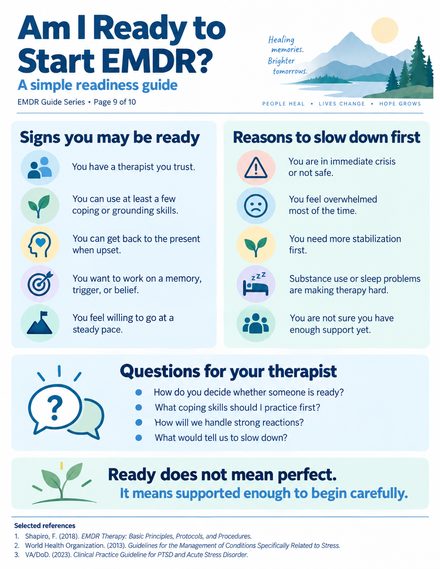
For online sessions, ask how privacy, technology problems, and emergency arrangements are handled. A browser tool can support visual stimulation but does not make those clinical arrangements automatically. You can take time to reflect after the conversation or seek another qualified opinion. These questions do not certify a provider or establish whether treatment is appropriate; they help you gather information for an informed decision.
At a glance
- What EMDR training and relevant experience do you have?
- How will we decide whether EMDR fits my concerns?
- What does preparation involve?
- How do you assess and respond to dissociation?
- How can I ask to pause or change the pace?
- How will we review progress?
- What is our telehealth privacy and connection-loss plan?
- What alternatives should I consider?
What the research says
Patient education and the EMDR treatment framework support discussing procedure and expectations. These questions are practical prompts; no study is being cited as validating this exact list or guaranteeing provider quality.
How to read the evidenceReferences
- National Center for PTSD. Eye Movement Desensitization and Reprocessing (EMDR) for PTSD.Patient education
- Shapiro, F. (2018). Eye Movement Desensitization and Reprocessing (EMDR) Therapy: Basic Principles, Protocols, and Procedures (3rd ed.). Guilford Press.Treatment manual
- Kaptan, S. K., Kaya, Z. M., & Akan, A. (2024). Addressing mental health need after COVID-19: a systematic review of remote EMDR therapy studies as an emerging option. Frontiers in Psychiatry, 14, 1336569. doi:10.3389/fpsyt.2023.1336569Systematic review
Selected sources checked for identity and relevance. This is an educational summary, not a comprehensive systematic review or a claim of independent clinical review.