Getting Started with EMDR
Last reviewed: 2026-09-12 · Editorial source check
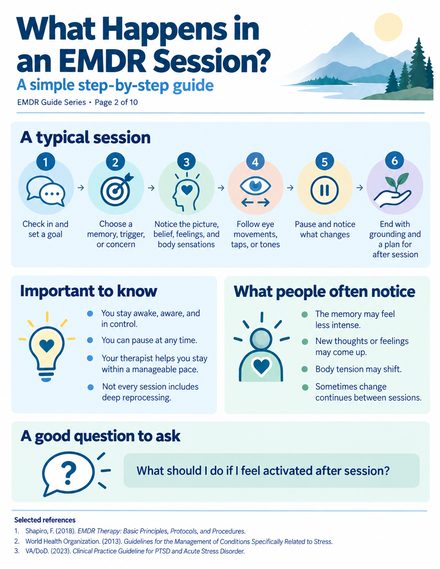
Starting a new therapy can bring practical questions as well as uncertainty. EMDR stands for eye movement desensitization and reprocessing. It is a structured psychotherapy that includes assessment, preparation, work with distressing experiences, and follow-up.
This guide is a starting point for a conversation with a qualified therapist. You do not need to arrive with a perfectly organized account of your experiences.
What this guide explains
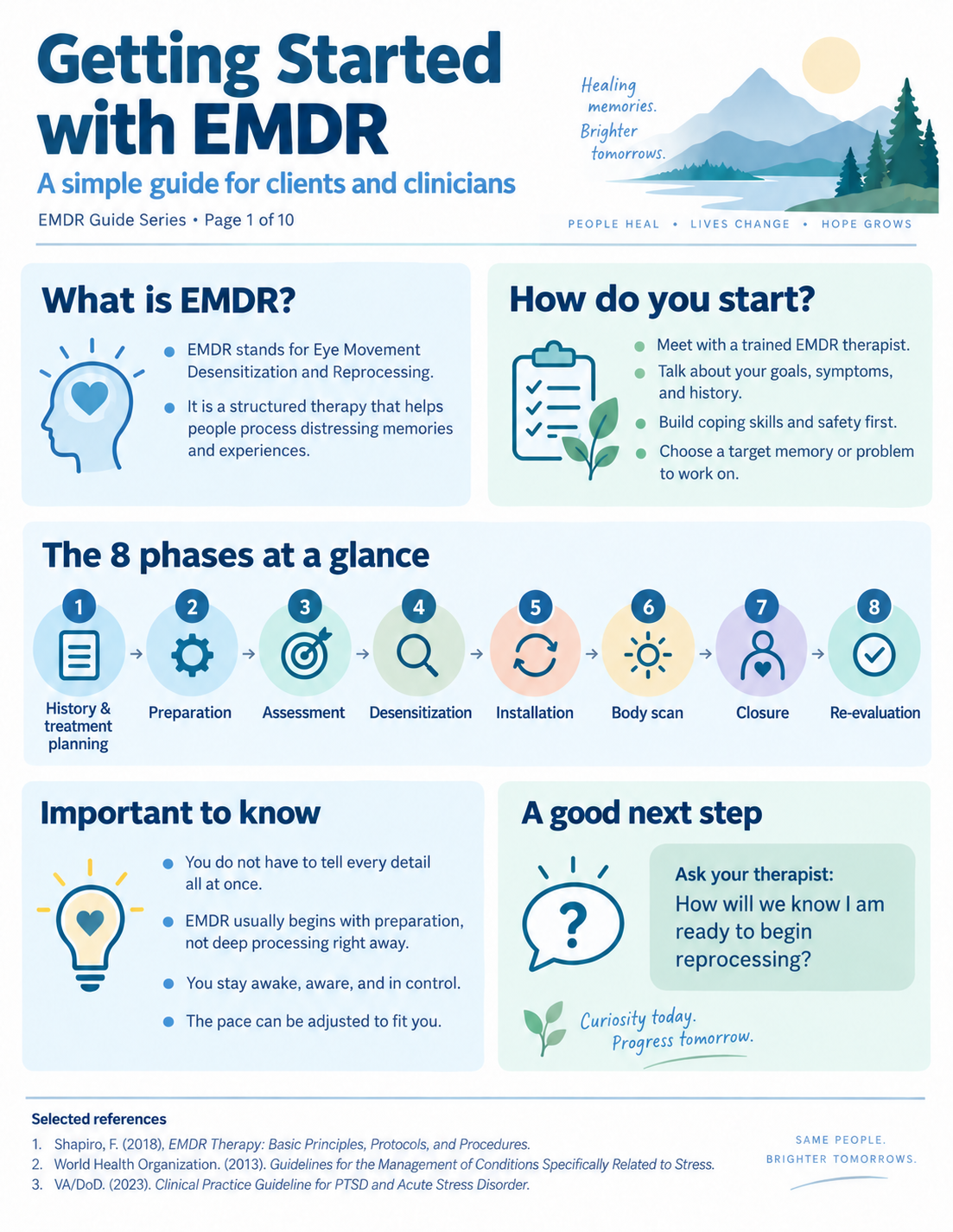
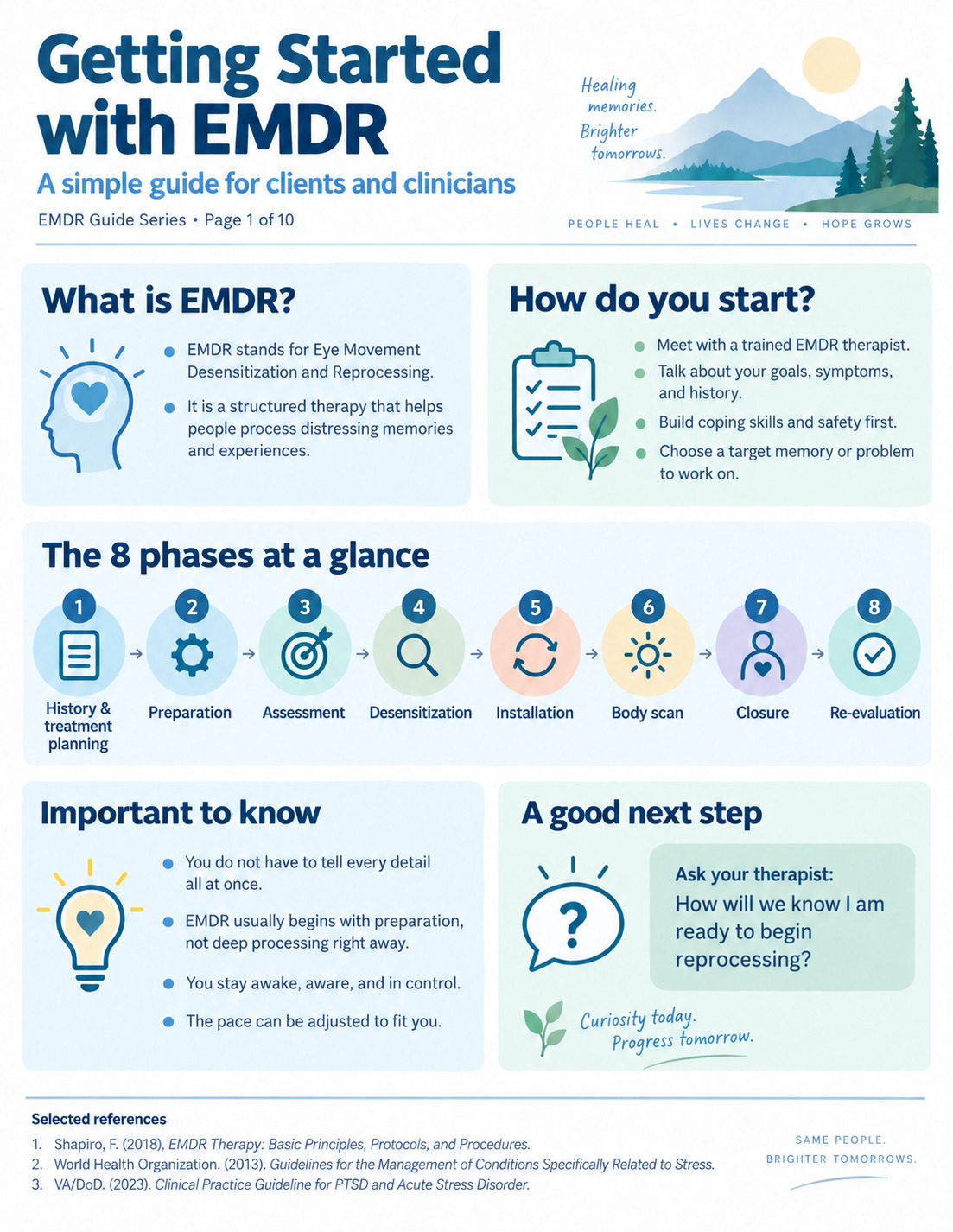
The eight phases describe a treatment framework, not eight appointments or a timetable that every person must follow. History and treatment planning establish the concerns and goals. Preparation gives you and your therapist time to discuss the process, ways to communicate discomfort, and resources you can use between appointments. Assessment identifies aspects of a selected experience that will be addressed during the work.
Desensitization, installation, and body scan involve processing the selected material, considering a more adaptive belief, and noticing remaining physical responses. Closure supports the end of the appointment. Re-evaluation checks what has changed and what still needs attention. Your therapist may return to earlier phases as your needs change; completing a set of eye movements is not the same as completing treatment.
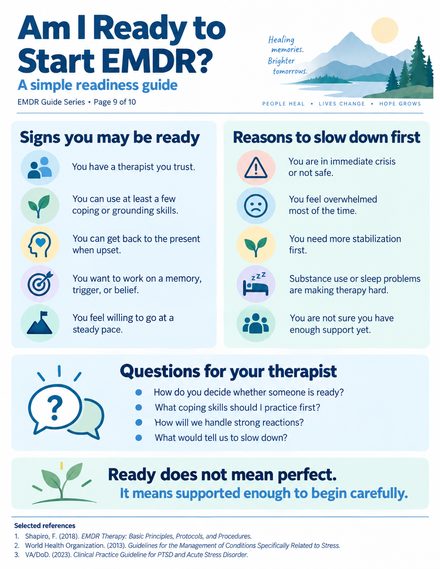
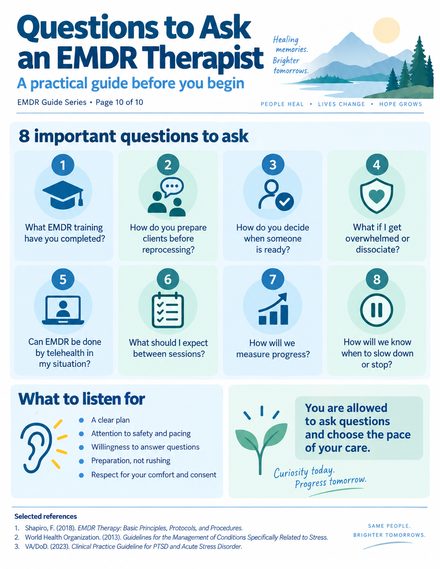
Use this handout to identify your own questions. What would you like help with? What would make the process easier to understand? How will you and your therapist know when to pause? A useful first conversation should leave room for your preferences and for alternative approaches. The infographic describes the general framework and cannot decide whether EMDR is the right treatment for you.
At a glance
- History and treatment planning
- Preparation
- Assessment
- Desensitization
- Installation
- Body scan
- Closure
- Re-evaluation
What the research says
Major PTSD guidelines include EMDR among recommended psychological treatments. Evidence for the complete therapy should not be interpreted as evidence that following a moving dot alone treats PTSD. The eight-phase description comes from the treatment framework; it is not a promise about outcome or treatment length.
How to read the evidenceReferences
- National Center for PTSD. Overview of Psychotherapy for PTSD. Summary of the 2023 VA/DoD guideline.Clinical guideline summary
- World Health Organization (2013). Guidelines for the management of conditions specifically related to stress.Clinical guideline
- Shapiro, F. (2018). Eye Movement Desensitization and Reprocessing (EMDR) Therapy: Basic Principles, Protocols, and Procedures (3rd ed.). Guilford Press.Treatment manual
Selected sources checked for identity and relevance. This is an educational summary, not a comprehensive systematic review or a claim of independent clinical review.