EMDR and the Brain
Last reviewed: 2026-09-21 · Editorial source check
Brain illustrations can make an unfamiliar therapy easier to discuss, but they can also make uncertain science look settled. This seven-part guide separates useful metaphors from research findings.
The illustrations are educational artwork. They are not diagnostic scans, evidence of a particular person’s brain changes, or a self-treatment protocol.
Seven illustrated panels with research notes. Download PDF includes all panels, notes, and references; Download Image above is the cover. Individual PNGs are available below.
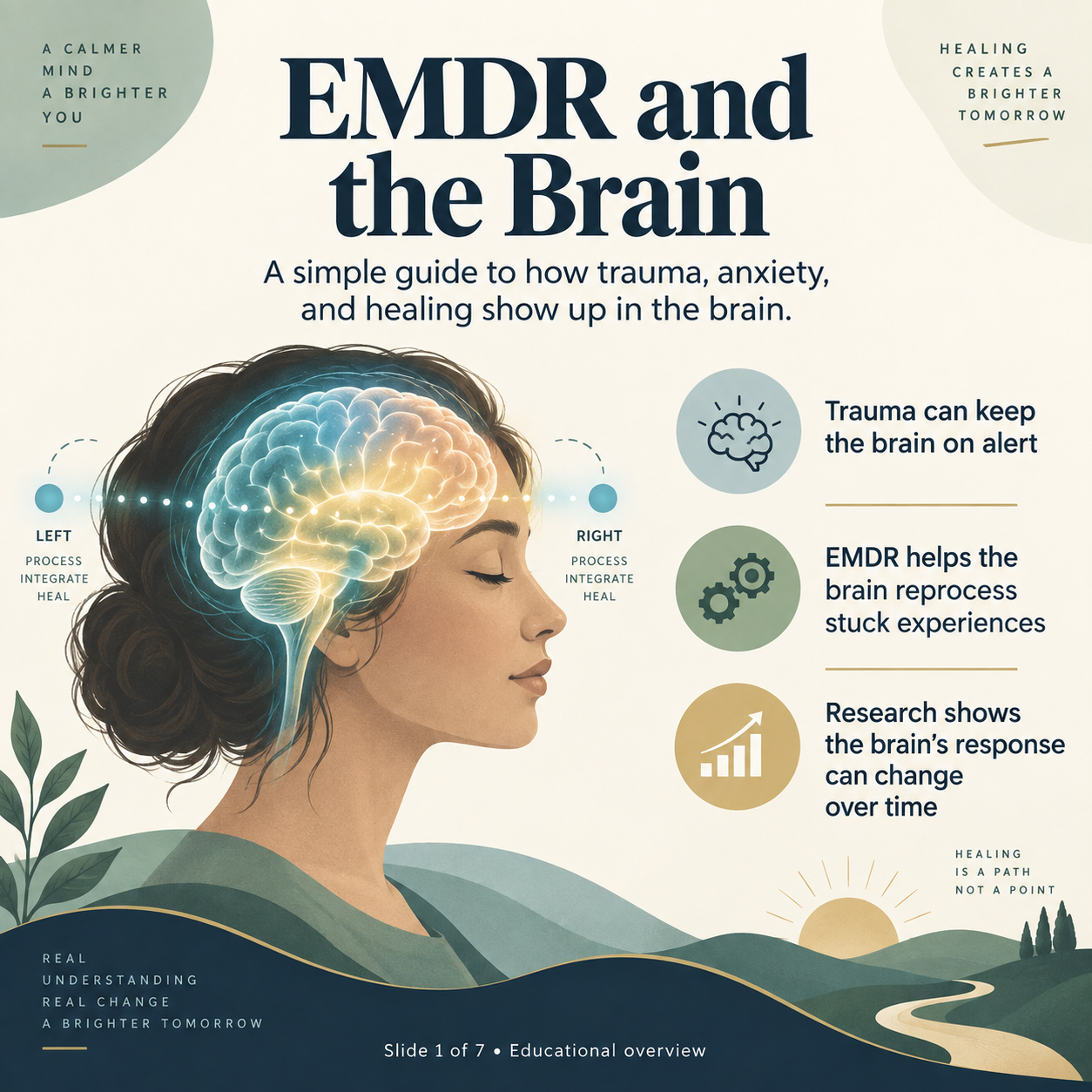
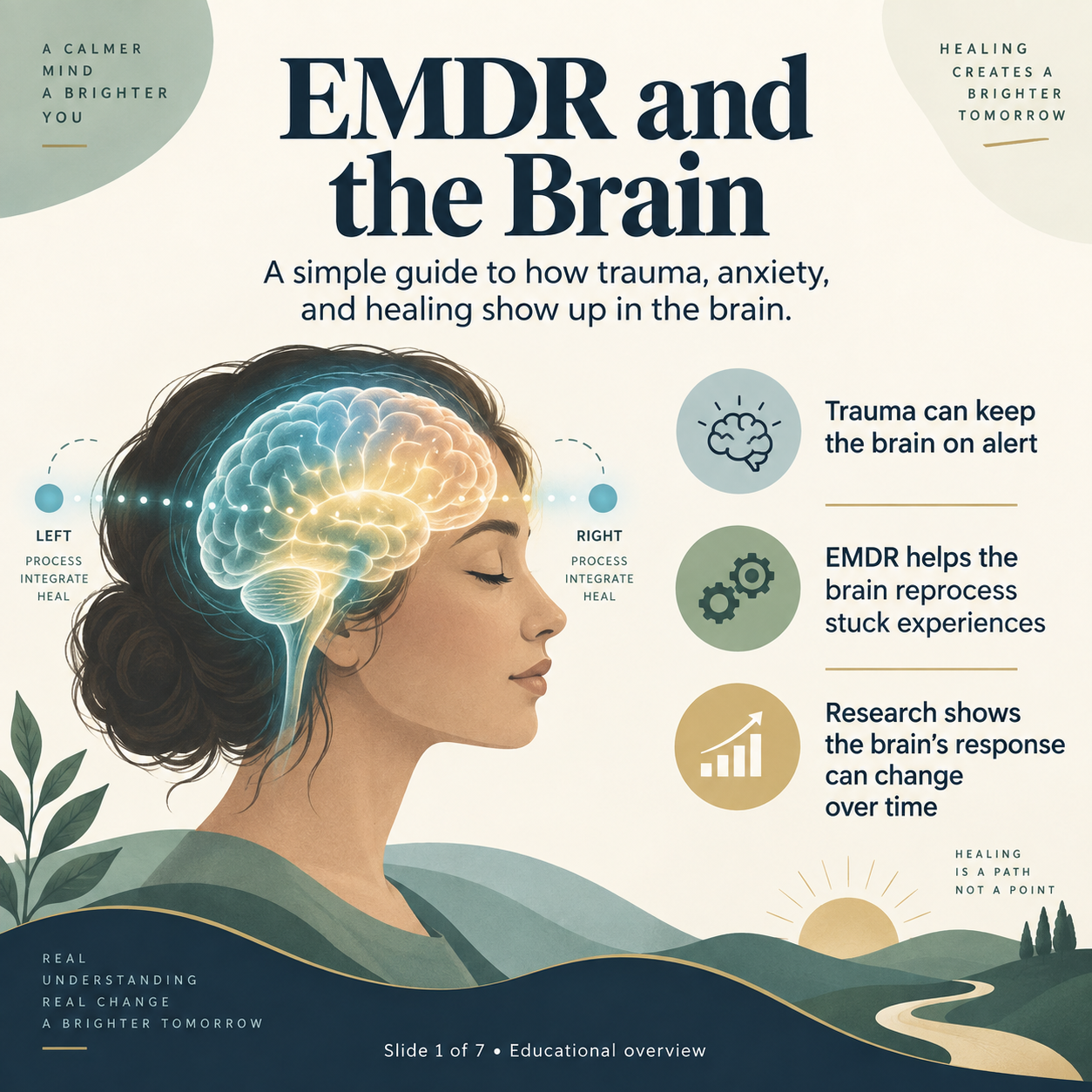
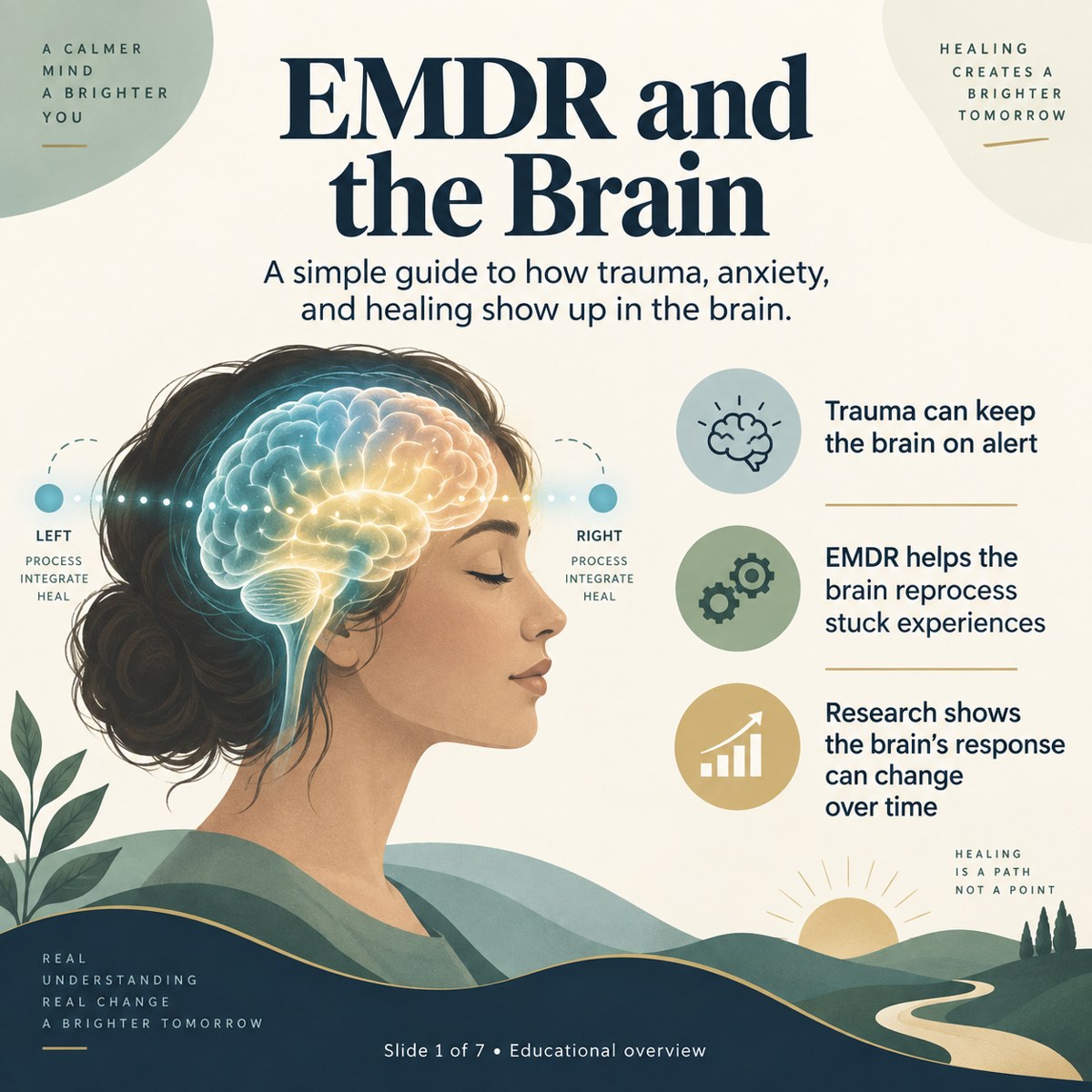
1. EMDR and the Brain
Trauma-related distress can involve thoughts, emotions, memories, and bodily reactions. This series uses illustrations to discuss those experiences.
Research note: The left/right imagery does not mean EMDR heals by switching on or balancing the two hemispheres. That is not an established mechanism. “Stuck” is a metaphor for distress that persists.
Download PNG: EMDR and the Brain · Enlarge panel 1 (new tab)
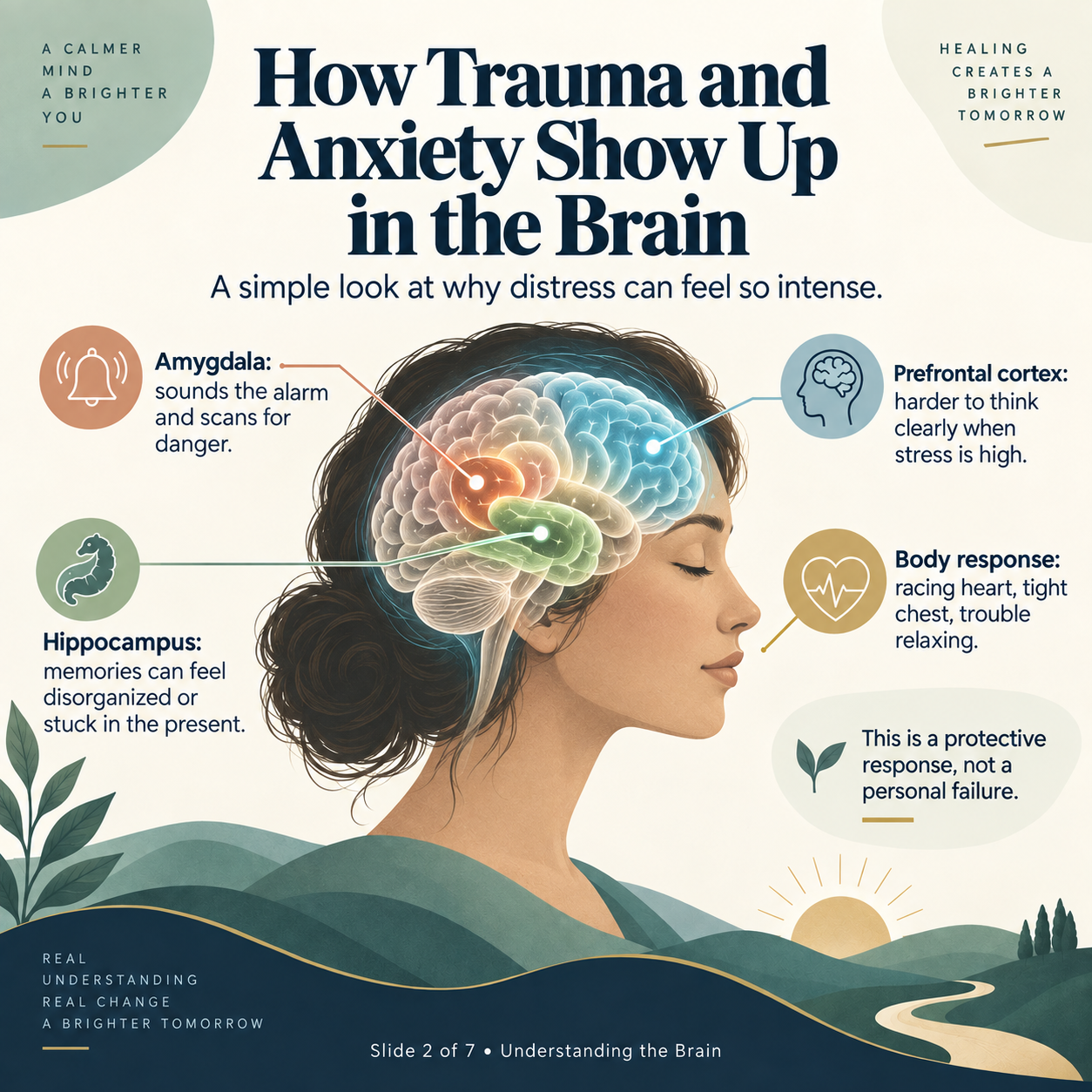
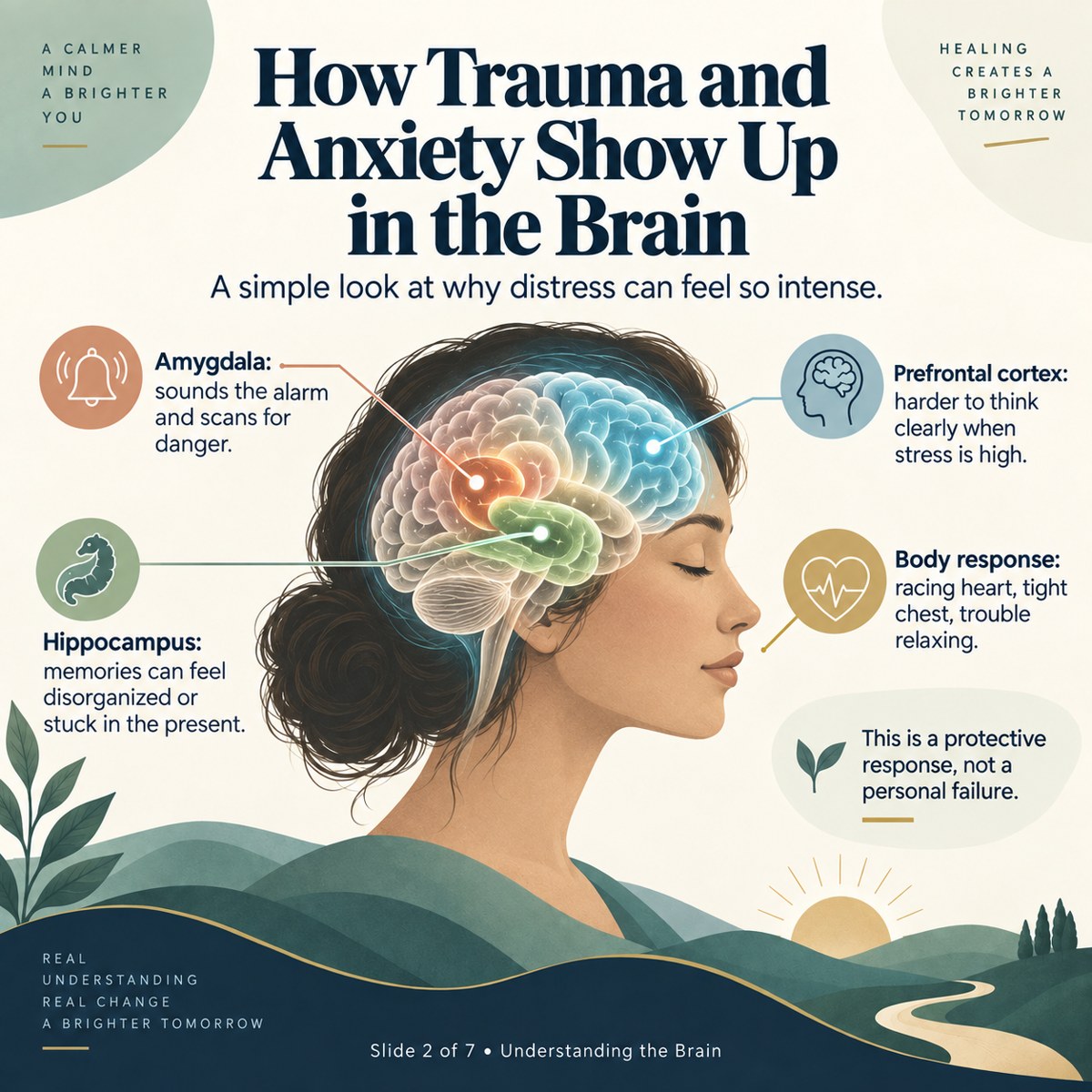
2. How Trauma and Anxiety Show Up in the Brain
The image connects threat responses, memory context, and difficulty thinking clearly under stress. Body sensations can be part of distress, but they are not specific to one condition.
Research note: This is a simplified network illustration, not an individual diagnosis. Anxiety and bodily sensations have multiple possible explanations; a diagram cannot determine their cause.
Download PNG: How Trauma and Anxiety Show Up in the Brain · Enlarge panel 2 (new tab)
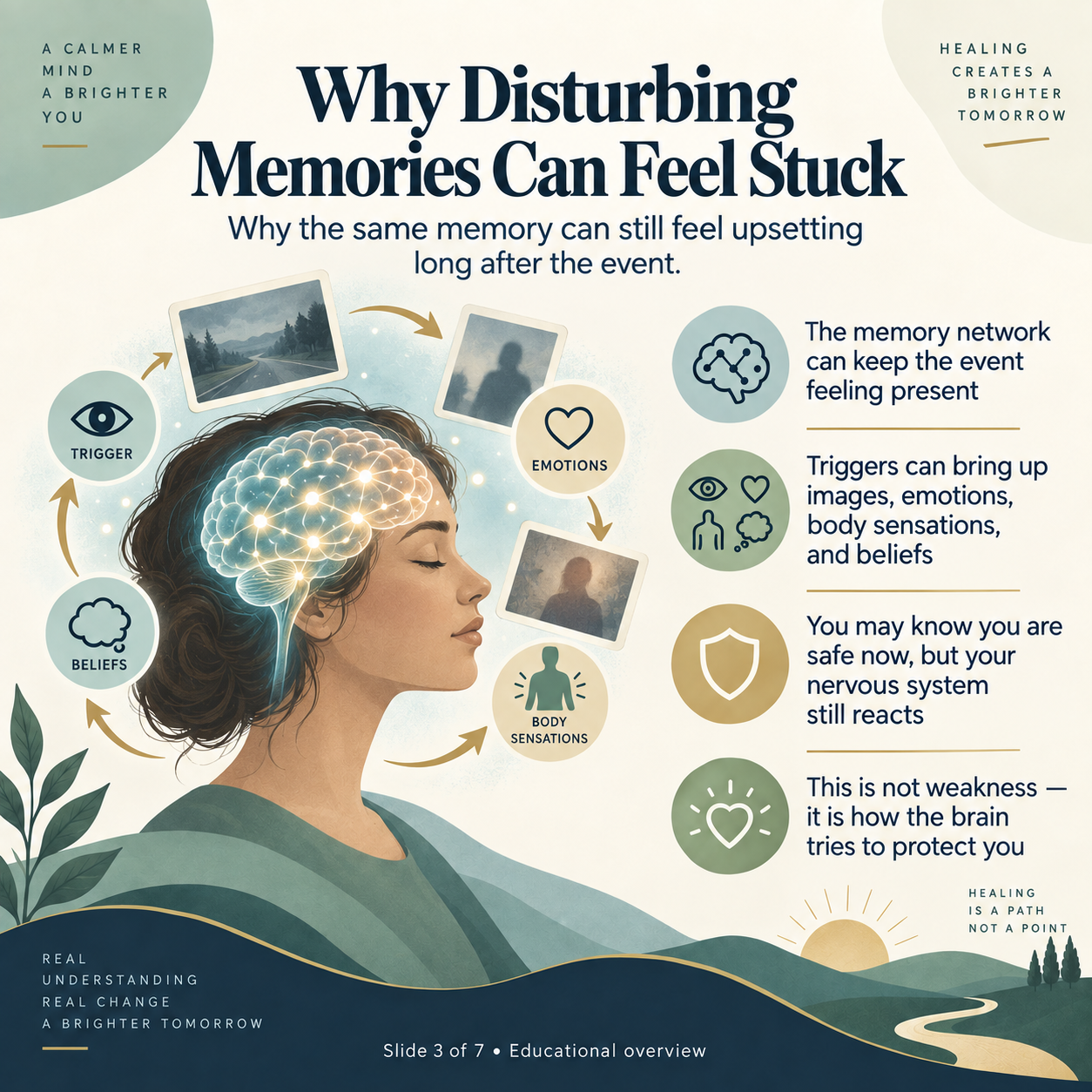
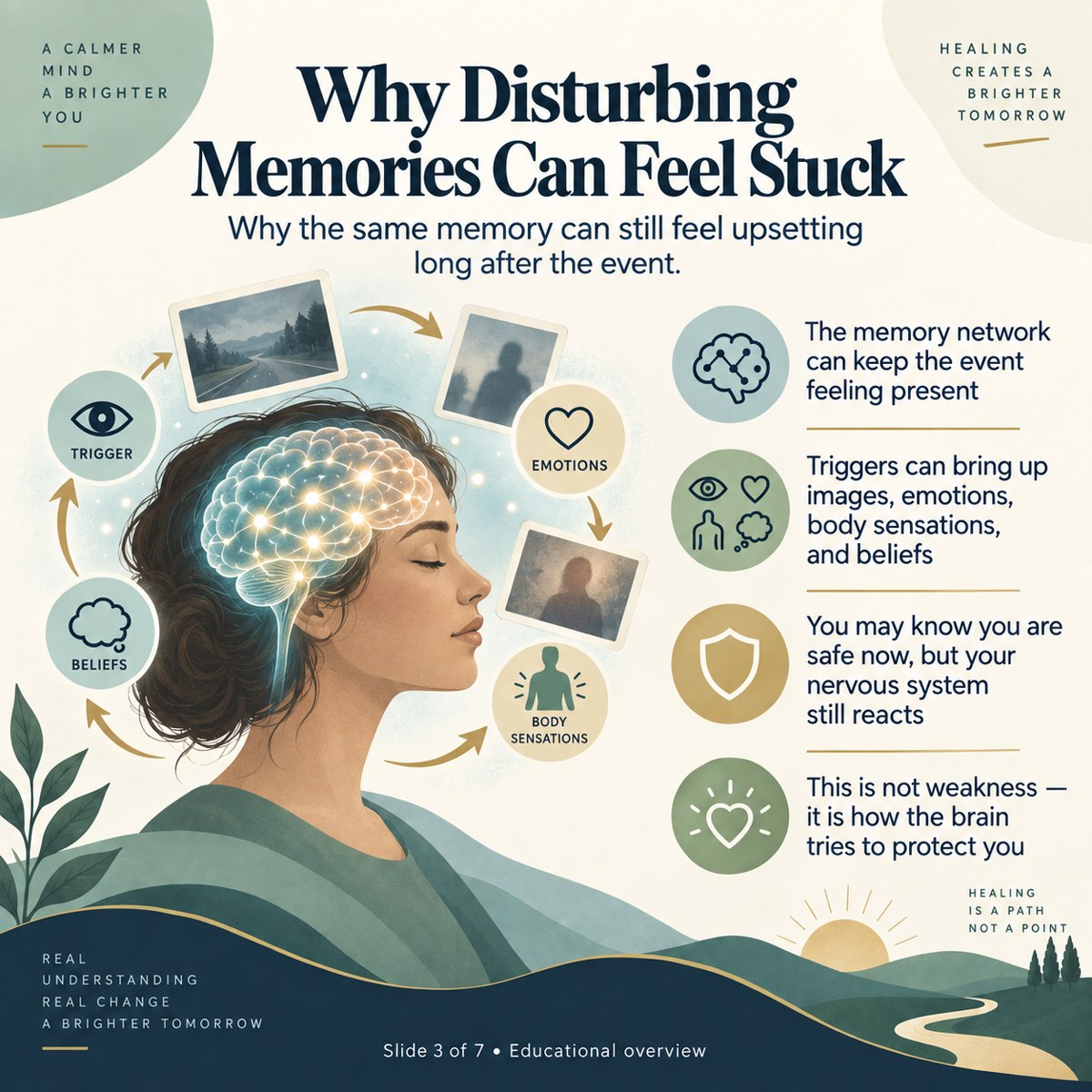
3. Why Disturbing Memories Can Feel Stuck
Reminders may bring up images, beliefs, feelings, or sensations associated with a difficult experience. The panel uses “stuck” to describe how present those reactions can feel.
Research note: “Stuck memory” is a clinical metaphor, not a literal trapped object. Ask how the proposed explanation fits your experience without assuming that every symptom comes from trauma.
Download PNG: Why Disturbing Memories Can Feel Stuck · Enlarge panel 3 (new tab)
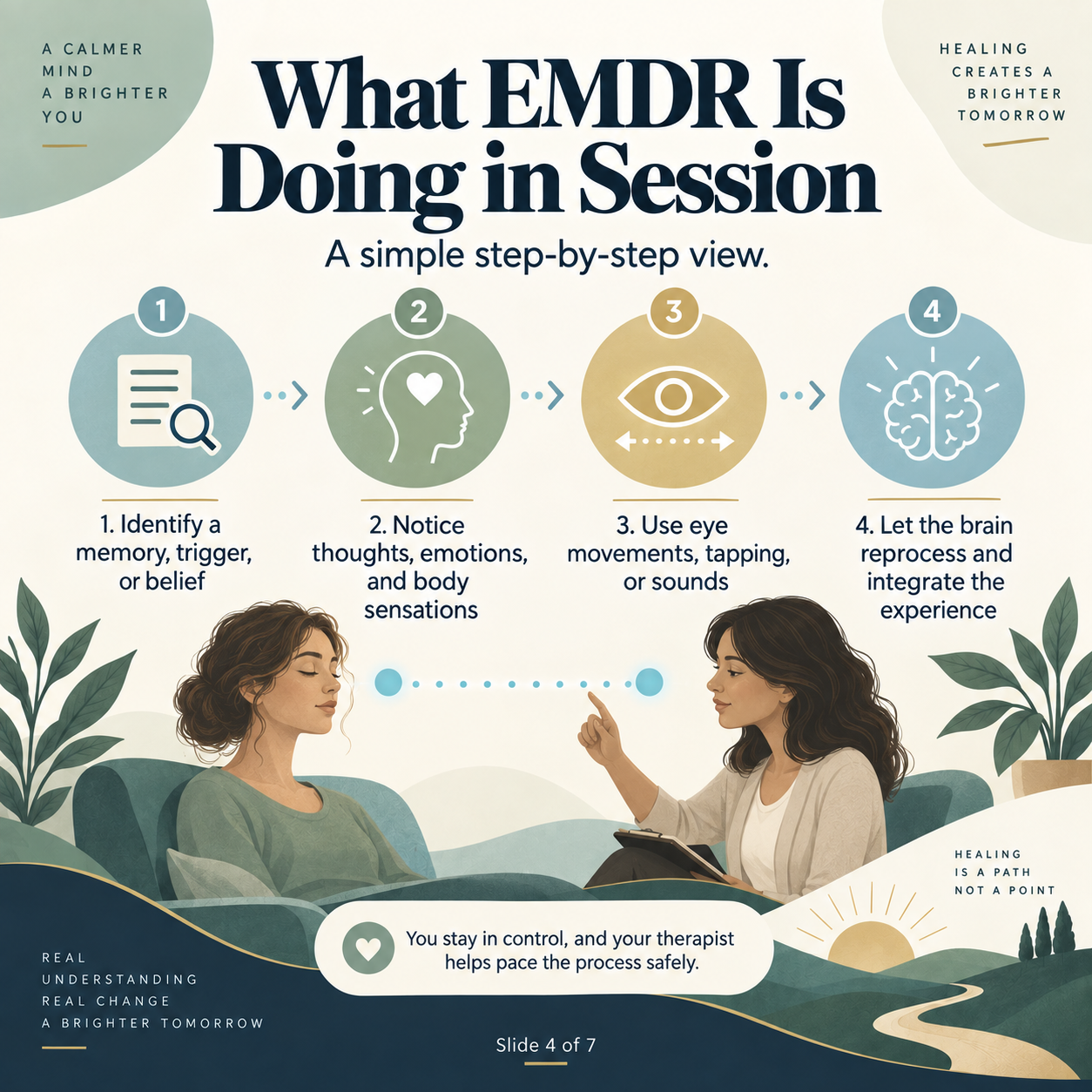
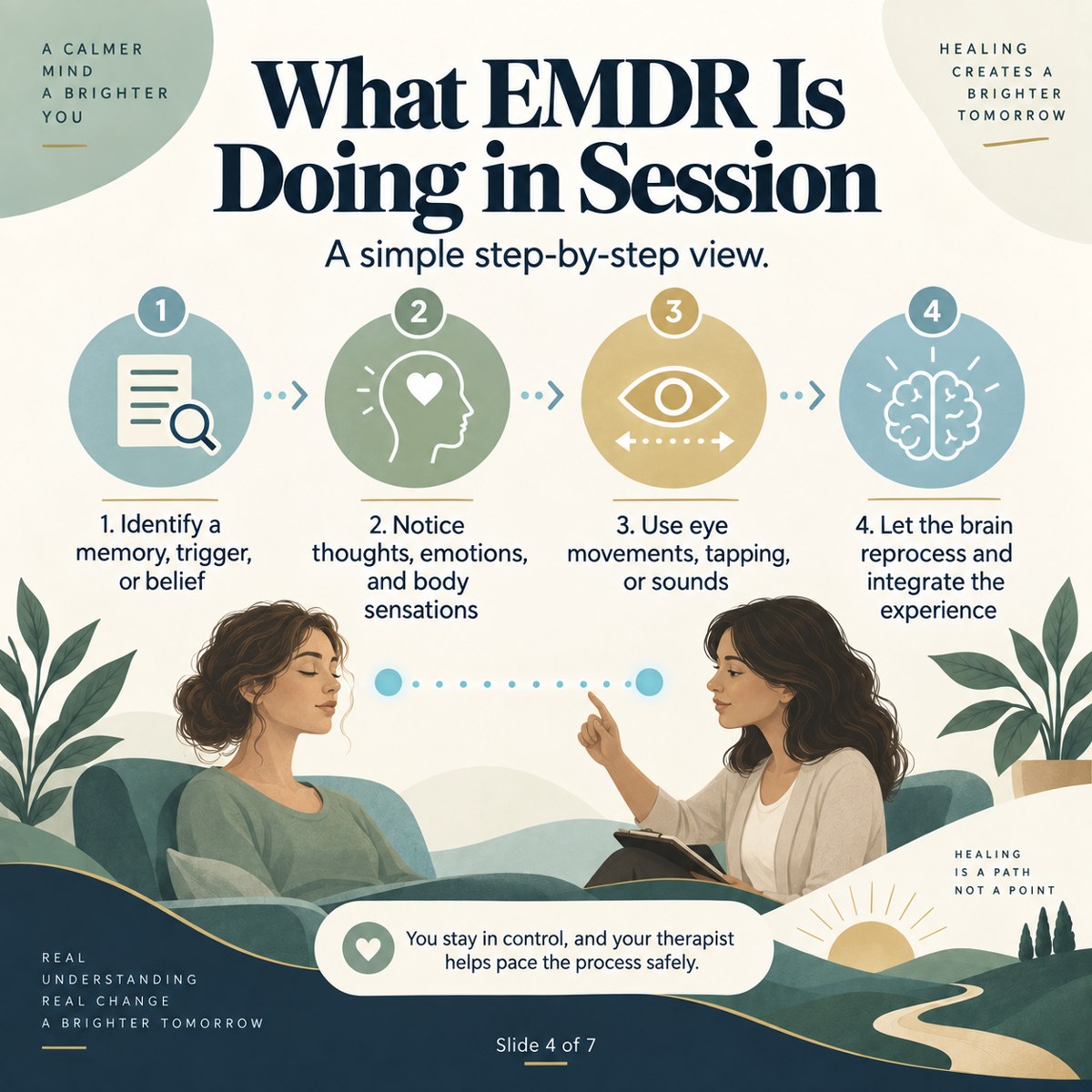
4. What EMDR Is Doing in Session
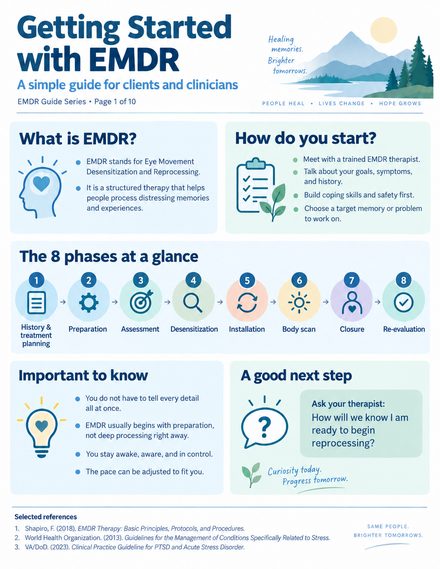
The illustration shows selecting material, noticing reactions, using a dual-attention activity, and discussing what follows. The complete treatment includes additional phases.
Research note: The four illustrated steps omit assessment, preparation, closure, and follow-up. They are not instructions for self-directed trauma reprocessing. Bilateral stimulation alone is not equivalent to EMDR therapy.
Download PNG: What EMDR Is Doing in Session · Enlarge panel 4 (new tab)
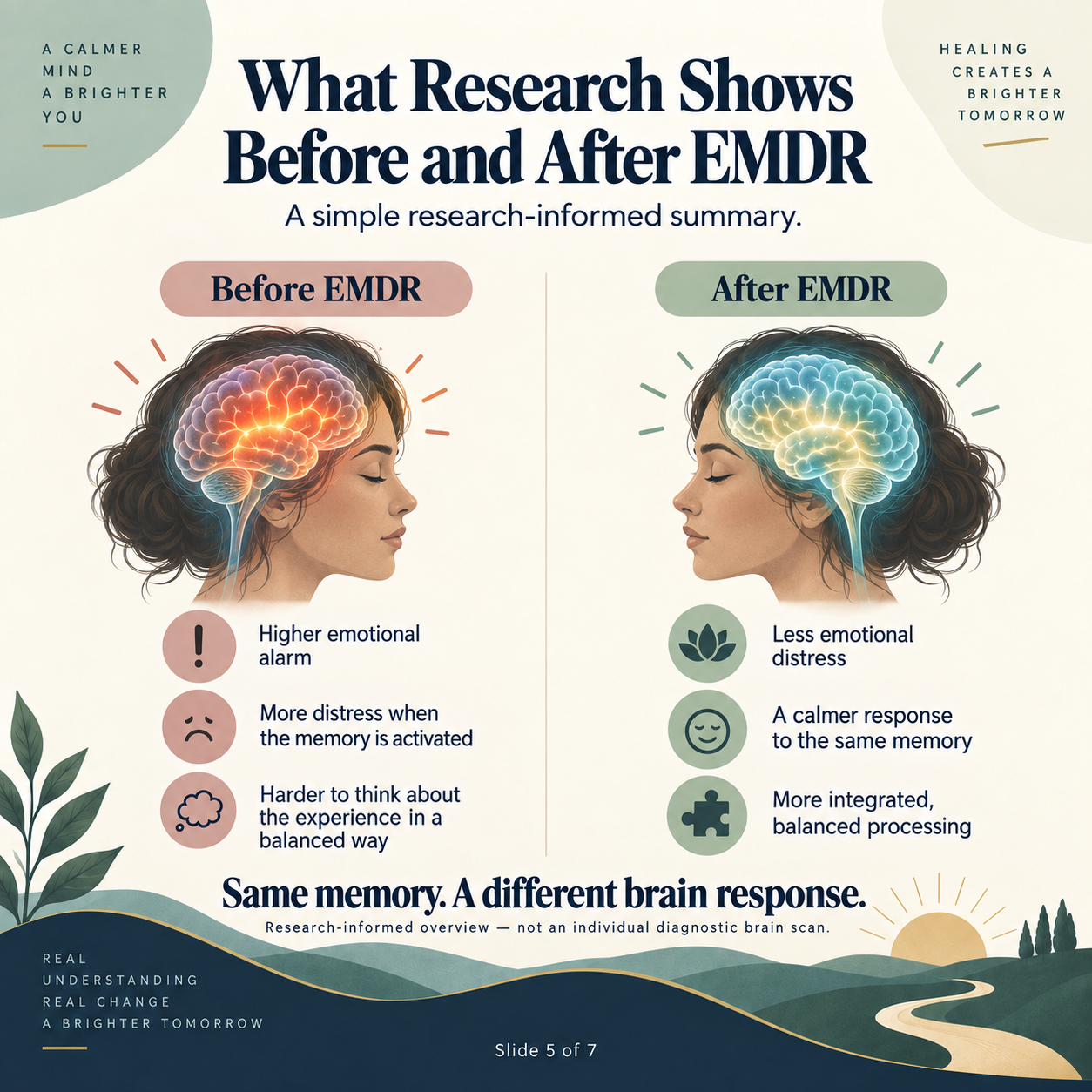
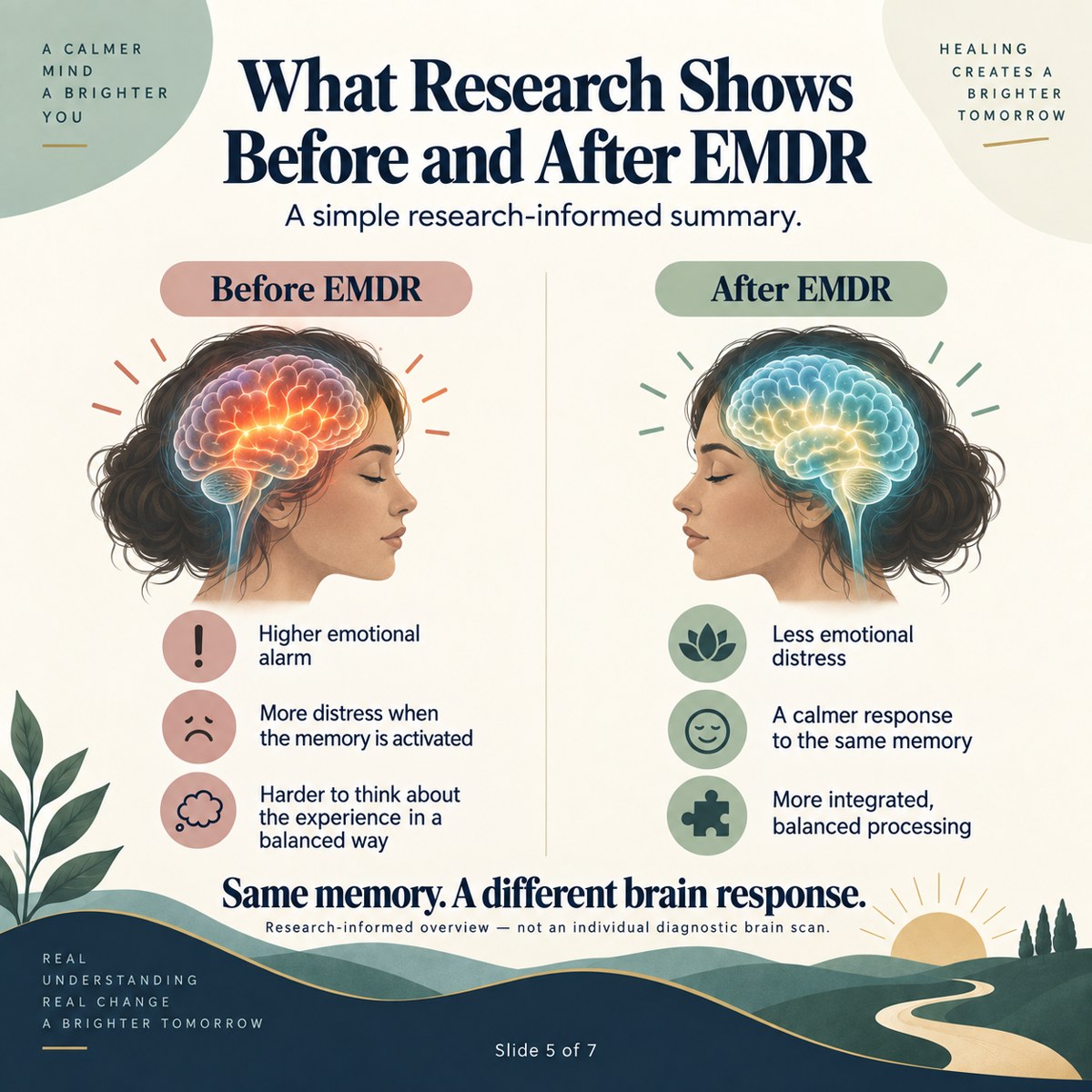
5. What Research Shows Before and After EMDR
The panel contrasts greater distress with a possible calmer response to the same memory. It is a conceptual comparison, not a record of measured brain activity.
Research note: The pictures are illustrations, not actual patient scans or a validated before/after test. Preliminary neuroimaging findings do not establish a universal brain response, prove causation, or predict individual benefit.
Download PNG: What Research Shows Before and After EMDR · Enlarge panel 5 (new tab)
6. What People Often Notice as Healing Happens
Possible changes to discuss include less intense distress, fewer reactions to reminders, and greater choice in daily life. They are not required milestones.
Research note: These are possible changes to discuss, not a guaranteed sequence. The statement that healing changes memory storage is a proposed explanation, not a settled finding. Track lived experience and functioning with your therapist.

Download PNG: What People Often Notice as Healing Happens · Enlarge panel 6 (new tab)
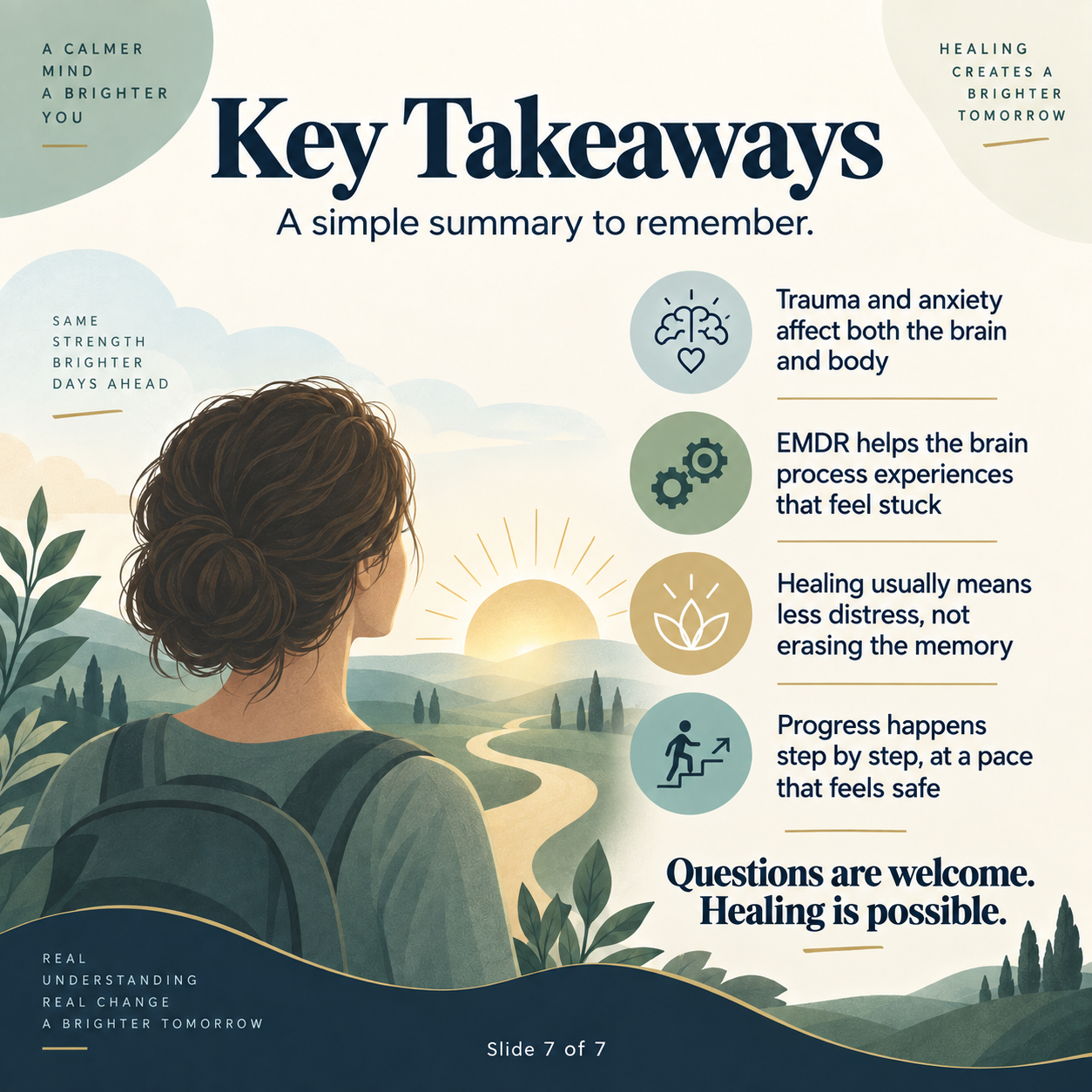
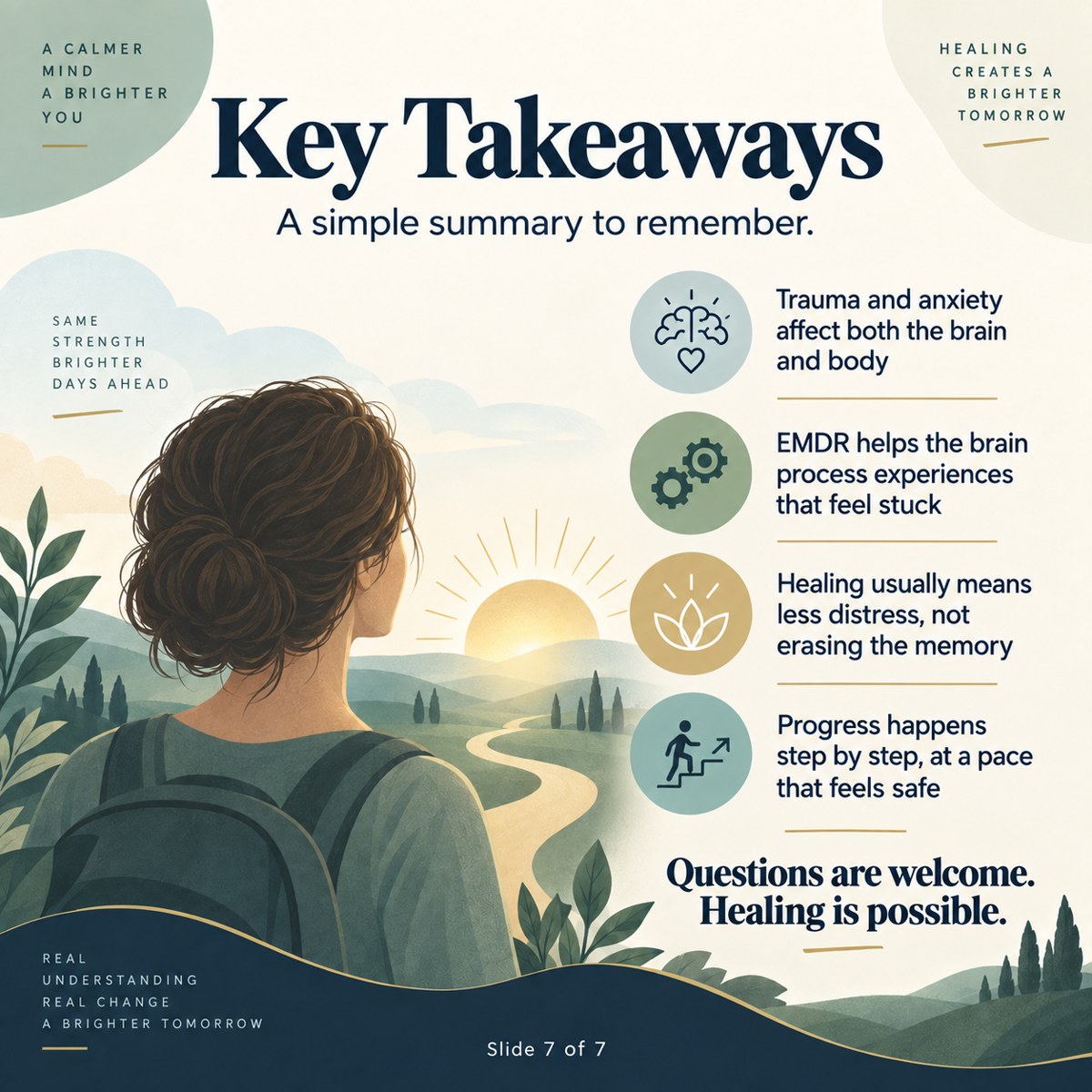
7. Key Takeaways
Bring questions about the brain, treatment, and expectations to your therapist. The goal of this guide is informed discussion rather than a formula for recovery.
Research note: EMDR is supported for PTSD, while specific neural mechanisms remain under study. Progress can be uneven. Questions about fit, pacing, or alternatives are welcome throughout treatment.
What this guide explains
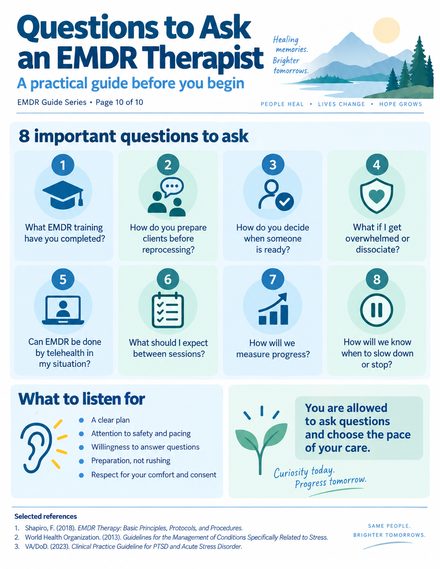
Use this series as a conversation aid, beginning with what you notice rather than a conclusion about your brain. A person might describe a memory that feels close, difficulty feeling settled, or uncertainty about treatment. These descriptions deserve attention without assuming that one diagram explains every experience. Invite your therapist to explain how assessment informs the treatment plan.
The before-and-after panel needs particular care. Its colors and shapes illustrate a possible change in distress; they are not measurements taken from a client. Ask what an actual study measured, who participated, and whether the findings were replicated. A change in symptoms and a change on a scan are different outcomes, and a visual comparison cannot establish why either occurred.
The session panel is also deliberately simplified. Before using it, discuss what preparation and consent look like in your own care. Afterward, use the final panels to choose personal indicators of progress and questions for follow-up. You could ask what has become easier, what remains difficult, and whether the current approach still fits your goals. Keep room for mixed experiences and for revising the plan together.
At a glance
- Use the illustrations to start a discussion.
- PTSD evidence and mechanism evidence are different.
- The images cannot predict individual outcomes.
- Preparation, consent, pacing, and follow-up matter.
What the research says
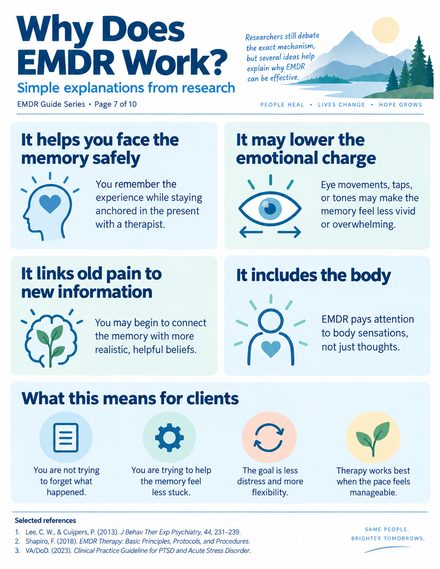
Established evidence supports EMDR for PTSD. Mechanism research is less definitive: working-memory accounts and other psychological and neurobiological models have been investigated. The 2018 systematic review describes preliminary neural findings and methodological limitations; it does not validate these illustrations as a diagnostic test or establish one universal mechanism.
How to read the evidenceReferences
- National Center for PTSD. Overview of Psychotherapy for PTSD. Summary of the 2023 VA/DoD guideline.Clinical guideline summary
- National Center for PTSD. Eye Movement Desensitization and Reprocessing (EMDR) for PTSD.Patient education
- Landin-Romero, R., Moreno-Alcazar, A., Pagani, M., & Amann, B. L. (2018). How Does Eye Movement Desensitization and Reprocessing Therapy Work? A Systematic Review on Suggested Mechanisms of Action. Frontiers in Psychology, 9, 1395. doi:10.3389/fpsyg.2018.01395Systematic review of proposed mechanisms
Selected sources checked for identity and relevance. This is an educational summary, not a comprehensive systematic review or a claim of independent clinical review.