EMDR Myths vs. Facts
Last reviewed: 2026-09-12 · Editorial source check
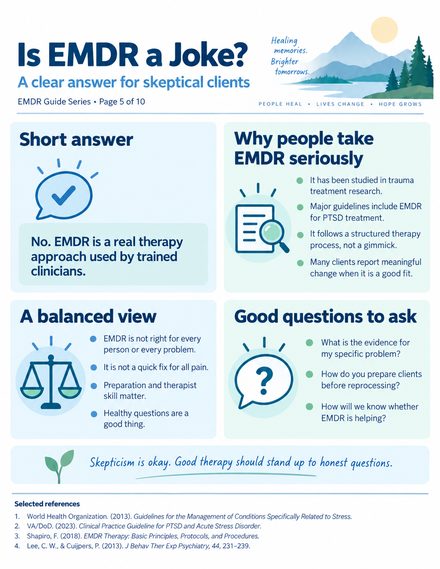
Unfamiliar therapy methods can attract strong claims in either direction. It is reasonable to ask what EMDR involves and what evidence supports it.
This guide separates common misconceptions from more useful questions to bring into treatment.
What this guide explains
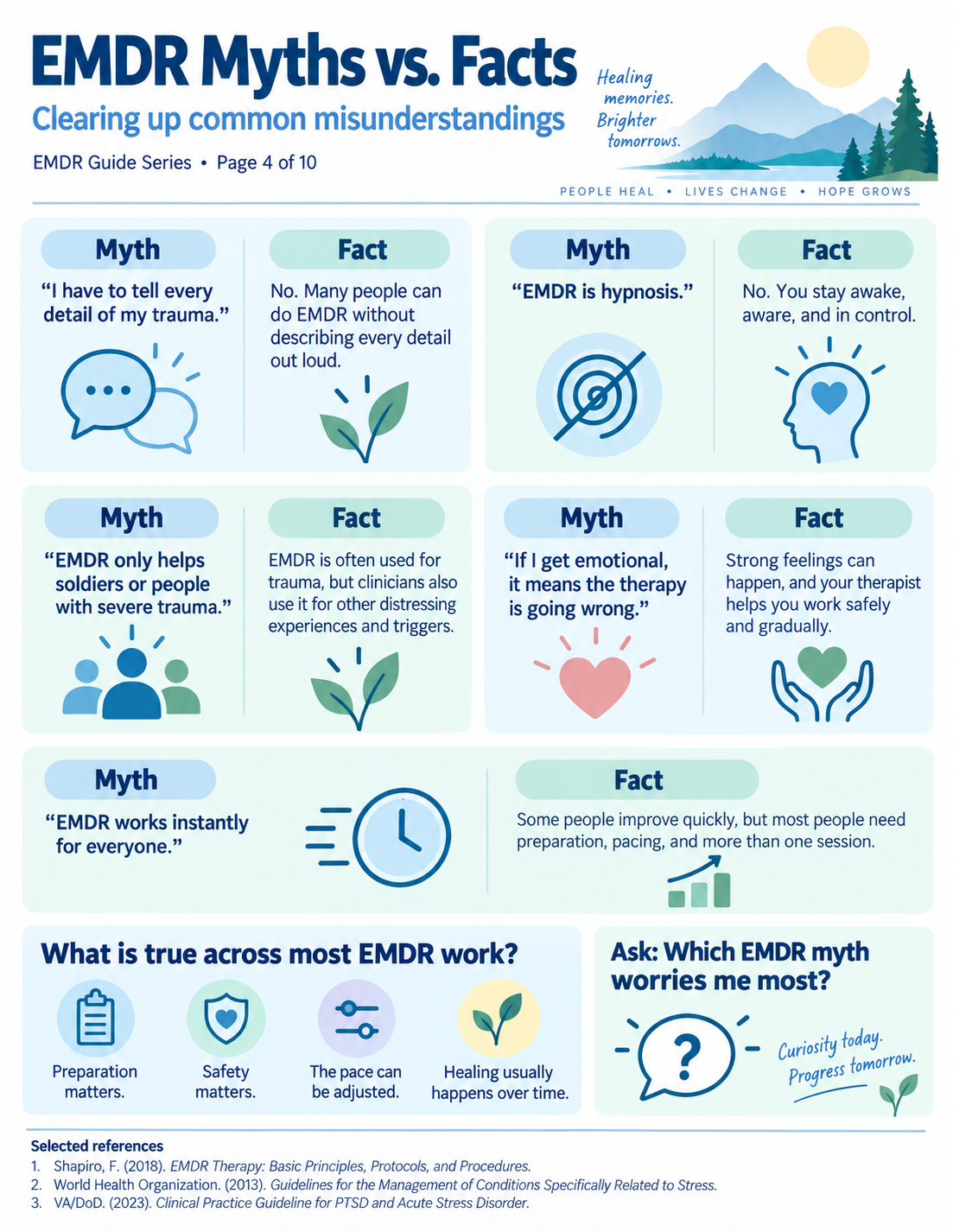
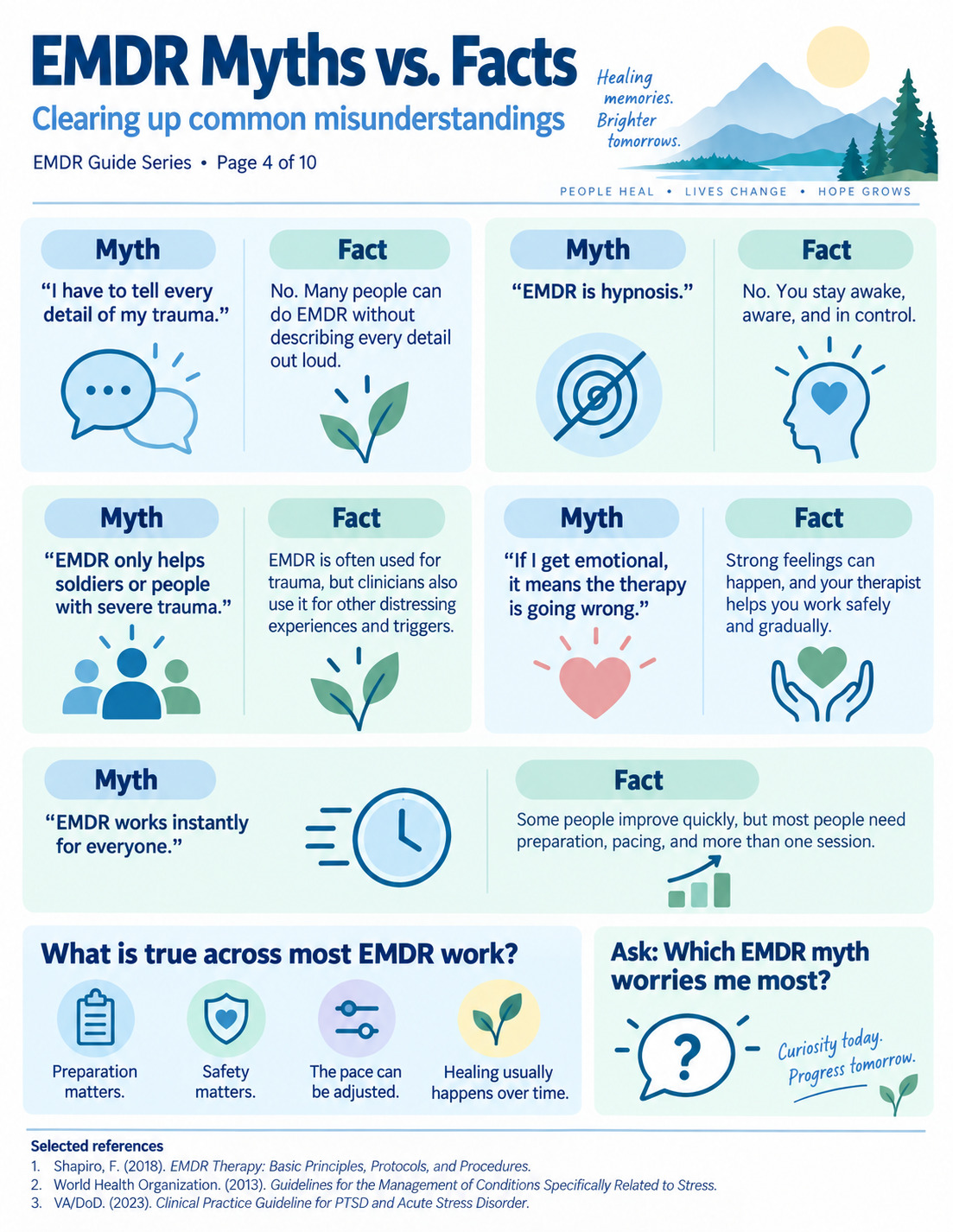
A common misunderstanding is that a therapist must hear every detail of an event for EMDR to be possible. Detailed retelling is not always required, although your clinician still needs enough information to assess your needs and work responsibly. You can ask why a question is being asked and discuss the level of detail you feel able to share.
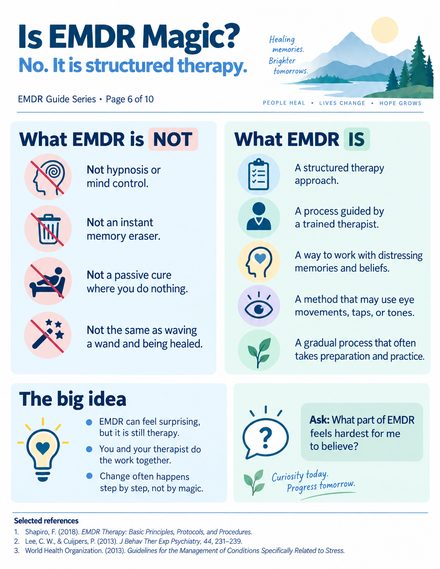
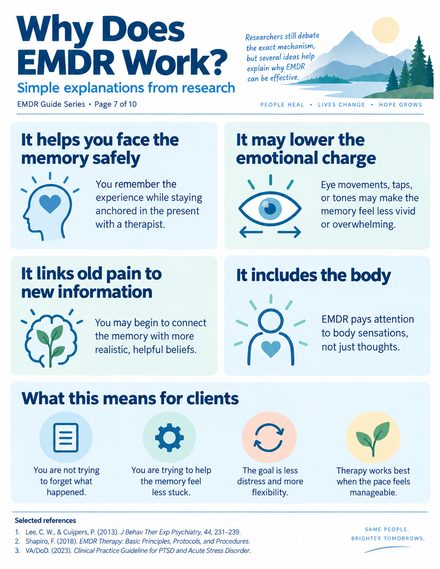
Another misconception is that EMDR involves hypnosis or erasing memories. Its standard structure does not depend on either. The aim is to address distress and related responses, not to make a real event disappear. Describing EMDR as a quick cure also sets an unhelpful expectation: assessment, preparation, and follow-up are part of treatment, and the pace varies.
Some infographic statements are best read as conversation starters rather than guarantees. For example, having a pause signal supports collaboration, but it does not guarantee that difficult feelings will never arise. Ask how your therapist responds if you feel overwhelmed or disconnected. A credible explanation can acknowledge uncertainty, make space for your preferences, and explain alternative treatments without dismissing your questions.
At a glance
- A complete detailed retelling is not always needed.
- EMDR is not a memory eraser or hypnosis.
- Treatment length and response vary.
- You can discuss pacing, consent, and alternatives.
- Distress or uncertainty should be discussed with your therapist.
What the research says
Guideline support for EMDR is specific to clinical contexts such as PTSD. It does not support claims of an instant cure, universal benefit, or recovery of perfectly accurate memories.
How to read the evidenceReferences
- National Center for PTSD. Eye Movement Desensitization and Reprocessing (EMDR) for PTSD.Patient education
- National Center for PTSD. Overview of Psychotherapy for PTSD. Summary of the 2023 VA/DoD guideline.Clinical guideline summary
- Shapiro, F. (2018). Eye Movement Desensitization and Reprocessing (EMDR) Therapy: Basic Principles, Protocols, and Procedures (3rd ed.). Guilford Press.Treatment manual
Selected sources checked for identity and relevance. This is an educational summary, not a comprehensive systematic review or a claim of independent clinical review.