Is EMDR Magic?
Last reviewed: 2026-09-12 · Editorial source check
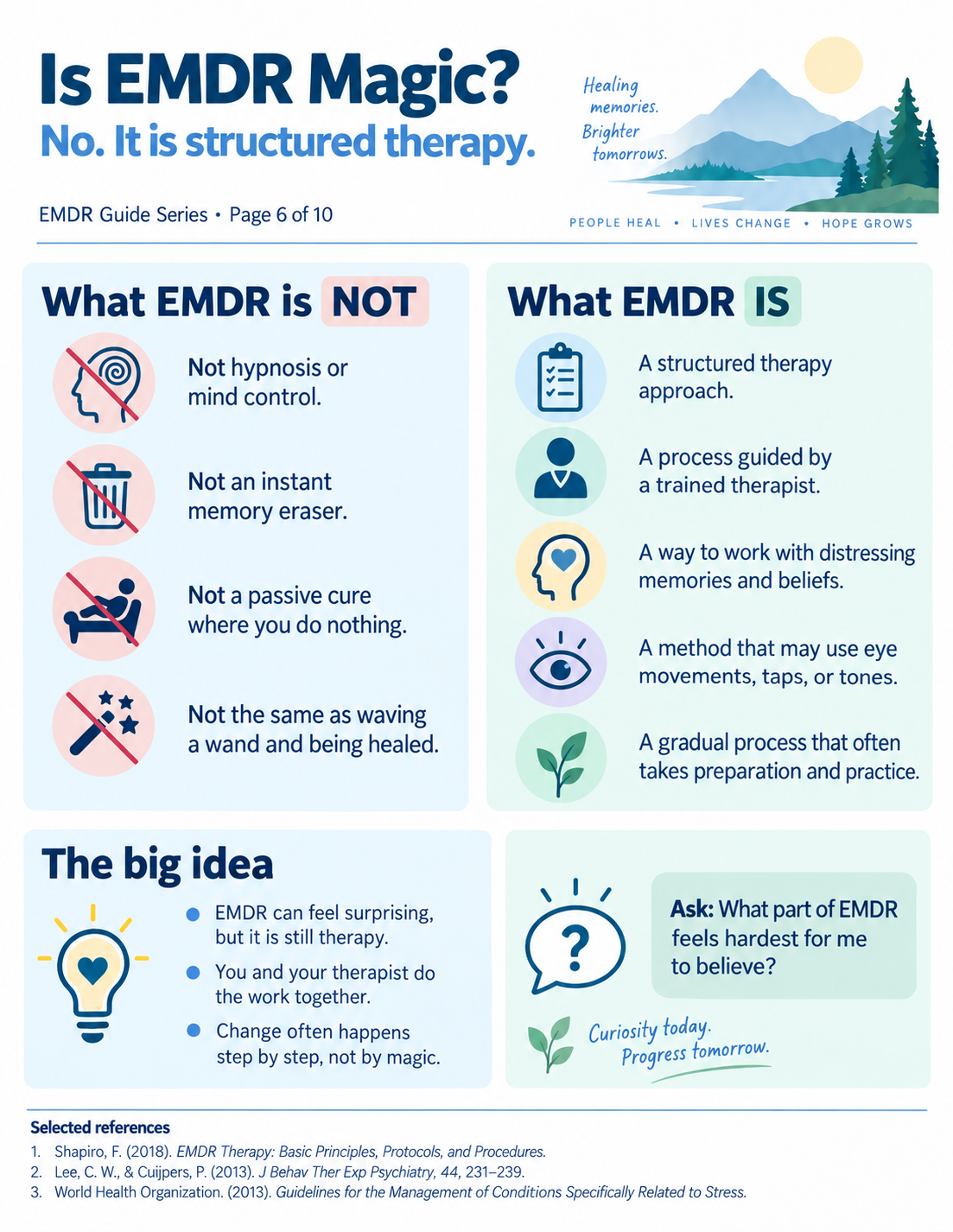
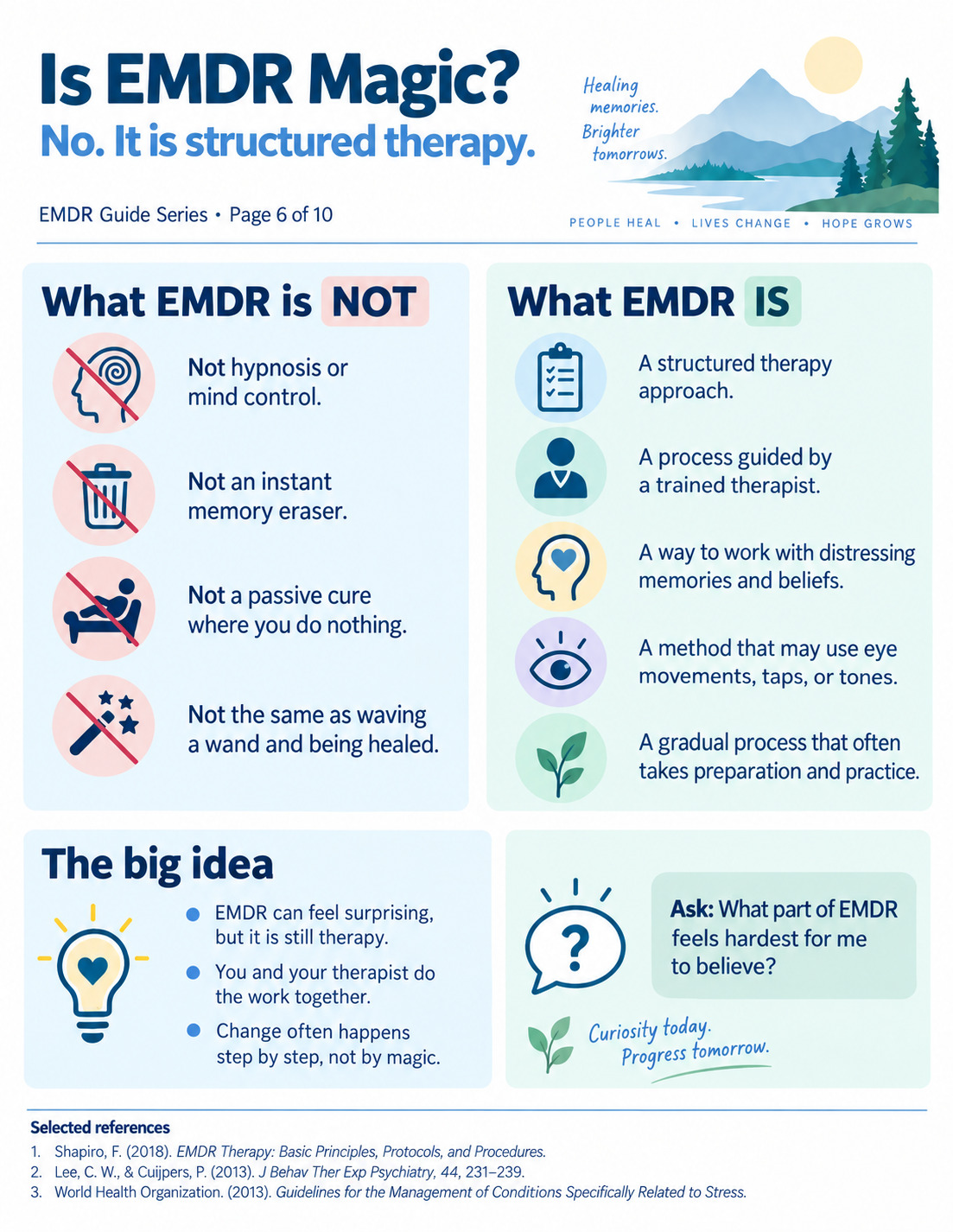
EMDR can be unfamiliar without being mysterious. It follows a clinical framework, and your therapist should be able to explain what they are proposing and why.
Changes in how a memory feels are not the same as erasing what happened. No therapy can promise to remove the past.
What this guide explains
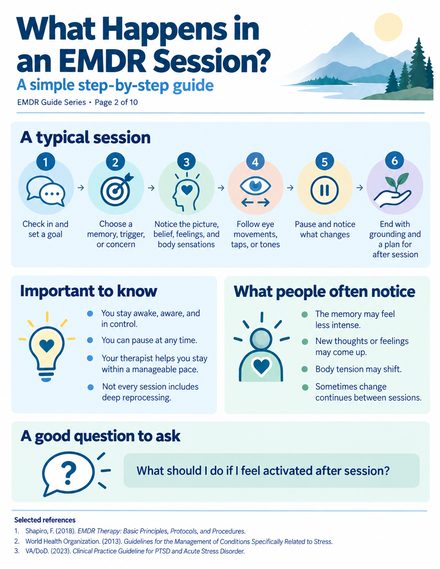
An accessible explanation starts with what you would actually do: discuss your concerns, prepare for the work, focus on agreed material when appropriate, notice responses, and review what changes. Bilateral stimulation is one element within that process. It is not a standalone test, a truth detector, or a way for someone else to control your thoughts.
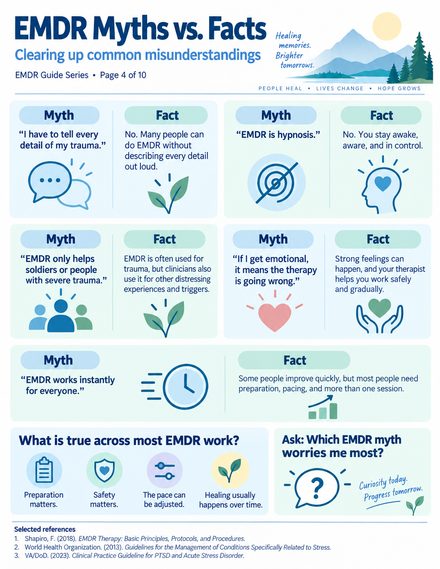
Descriptions such as “magic” may reflect how surprising an experience felt to someone, but they do not explain a treatment scientifically. Likewise, language about a brain being rewired can sound more certain than the evidence warrants. You can benefit from a clear explanation of the procedure without being asked to accept a settled account of every mechanism.
A useful discussion also covers choice. Ask how you can signal that you want a break and what happens if you prefer another approach. You may notice strong emotions during treatment, so collaboration includes planning for that possibility rather than promising effortless change. This guide offers plain language for a conversation with a qualified professional; it is not an instruction to attempt memory processing on your own.
At a glance
- EMDR has an assessment and treatment framework.
- It does not erase memories or establish their factual accuracy.
- Bilateral stimulation alone is not the complete therapy.
- Mechanisms remain under investigation.
- Consent, pacing, and clinical judgment matter.
What the research says
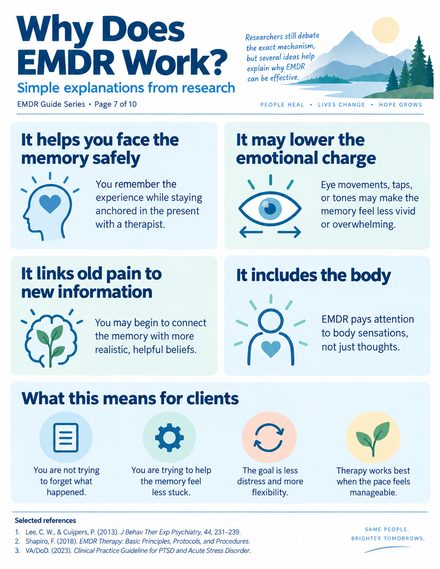
Evidence supports EMDR for PTSD, while research into how different components contribute continues. Findings about eye movements do not establish a magical process or a simple “both hemispheres” explanation.
How to read the evidenceReferences
- National Center for PTSD. Eye Movement Desensitization and Reprocessing (EMDR) for PTSD.Patient education
- Shapiro, F. (2018). Eye Movement Desensitization and Reprocessing (EMDR) Therapy: Basic Principles, Protocols, and Procedures (3rd ed.). Guilford Press.Treatment manual
- Lee, C. W., & Cuijpers, P. (2013). A meta-analysis of the contribution of eye movements in processing emotional memories. Journal of Behavior Therapy and Experimental Psychiatry, 44(2), 231–239. doi:10.1016/j.jbtep.2012.11.001Meta-analysis
Selected sources checked for identity and relevance. This is an educational summary, not a comprehensive systematic review or a claim of independent clinical review.