Is EMDR a Joke?
Last reviewed: 2026-09-12 · Editorial source check
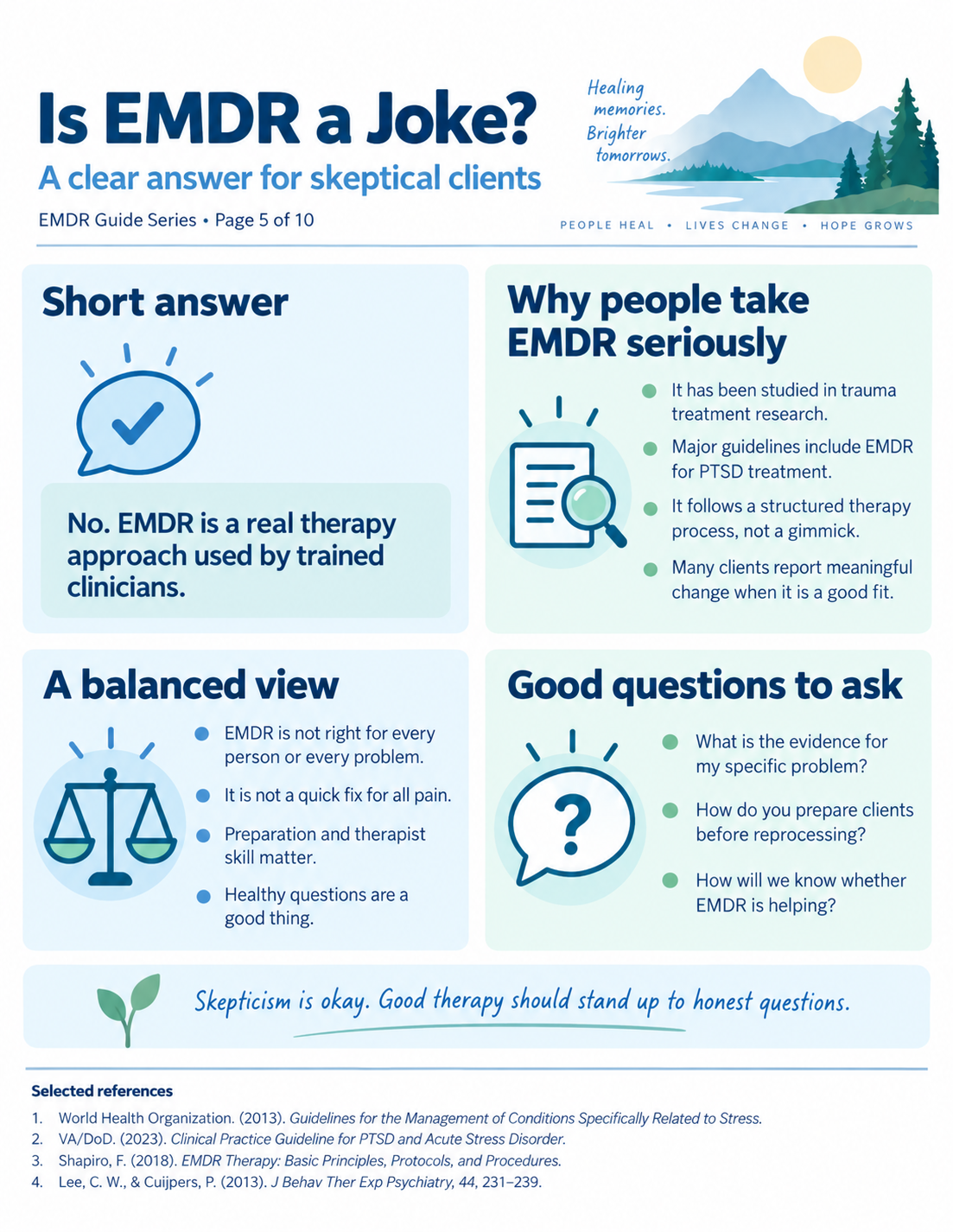
Watching eye movements in a therapy demonstration can look unusual. Skepticism is a reasonable response to a treatment you do not yet understand.
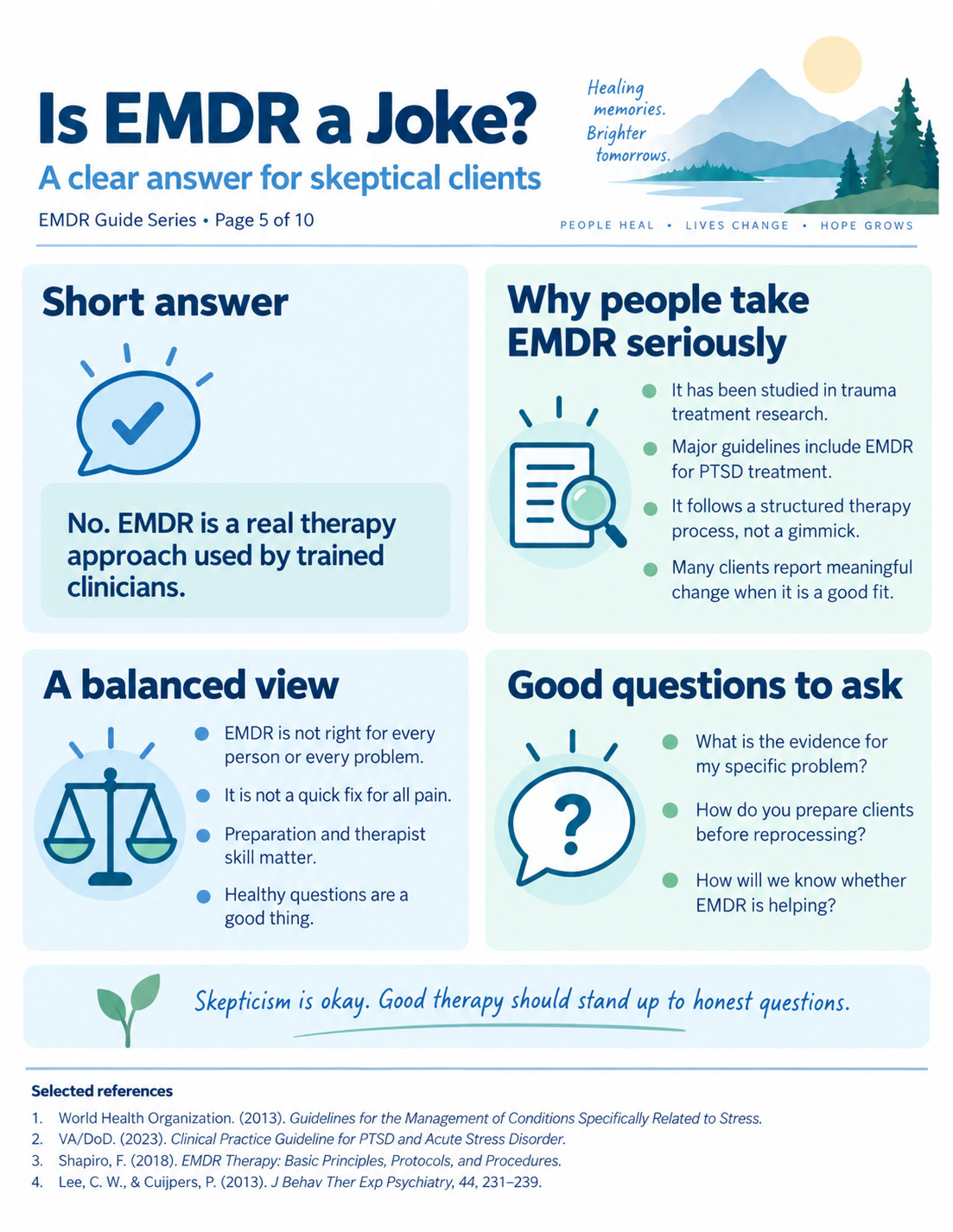
EMDR is taken seriously because it has been studied as a psychotherapy, particularly for PTSD. That does not require accepting every explanation or marketing claim made about it.
What this guide explains
It helps to separate three questions: whether a treatment can help, how it produces change, and whether it is appropriate for you. Research can support an intervention even while researchers continue to debate its mechanisms. At the same time, a plausible-sounding explanation of the brain is not enough to establish a treatment's effectiveness.
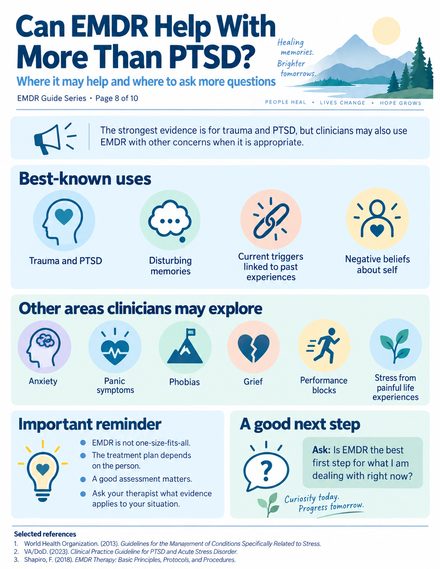
For EMDR, the strongest clinical support concerns PTSD. A claim about depression, anxiety, pain, or another concern requires its own evidence rather than borrowing certainty from PTSD studies. When reading an article, look for the population studied, the comparison treatment, follow-up, and the limitations the authors describe. Testimonials alone do not answer these questions.
You do not need to suppress doubts to have a useful consultation. Consider asking what your therapist sees as the benefits and limitations, what alternatives are available, and how you will decide whether to continue. A professional conversation should allow a measured answer rather than a sales pitch. This resource is intended to make that conversation easier, not to persuade every person to choose EMDR.
At a glance
- Unusual-looking does not mean unstudied.
- Evidence for outcomes and explanations of mechanisms are different questions.
- PTSD evidence should not be generalized to every concern.
- Ask about limitations, alternatives, and progress.
What the research says
Systematic reviews and major PTSD guidelines support EMDR as one treatment option. Treatment studies have limitations, and benefits in research do not guarantee a particular person's outcome.
How to read the evidenceReferences
- National Center for PTSD. Overview of Psychotherapy for PTSD. Summary of the 2023 VA/DoD guideline.Clinical guideline summary
- Bisson, J. I., Roberts, N. P., Andrew, M., Cooper, R., & Lewis, C. (2013). Psychological therapies for chronic post-traumatic stress disorder (PTSD) in adults. Cochrane Database of Systematic Reviews, (12), CD003388. doi:10.1002/14651858.CD003388.pub4Systematic review
- World Health Organization (2013). Guidelines for the management of conditions specifically related to stress.Clinical guideline
Selected sources checked for identity and relevance. This is an educational summary, not a comprehensive systematic review or a claim of independent clinical review.