EMDR vs. Talk Therapy
Last reviewed: 2026-09-12 · Editorial source check
“Talk therapy” is an umbrella term for many psychotherapies, and EMDR is itself a psychotherapy. This comparison highlights a common difference in emphasis rather than two completely separate categories.
The most useful question is which approach fits your concerns, preferences, and treatment goals.
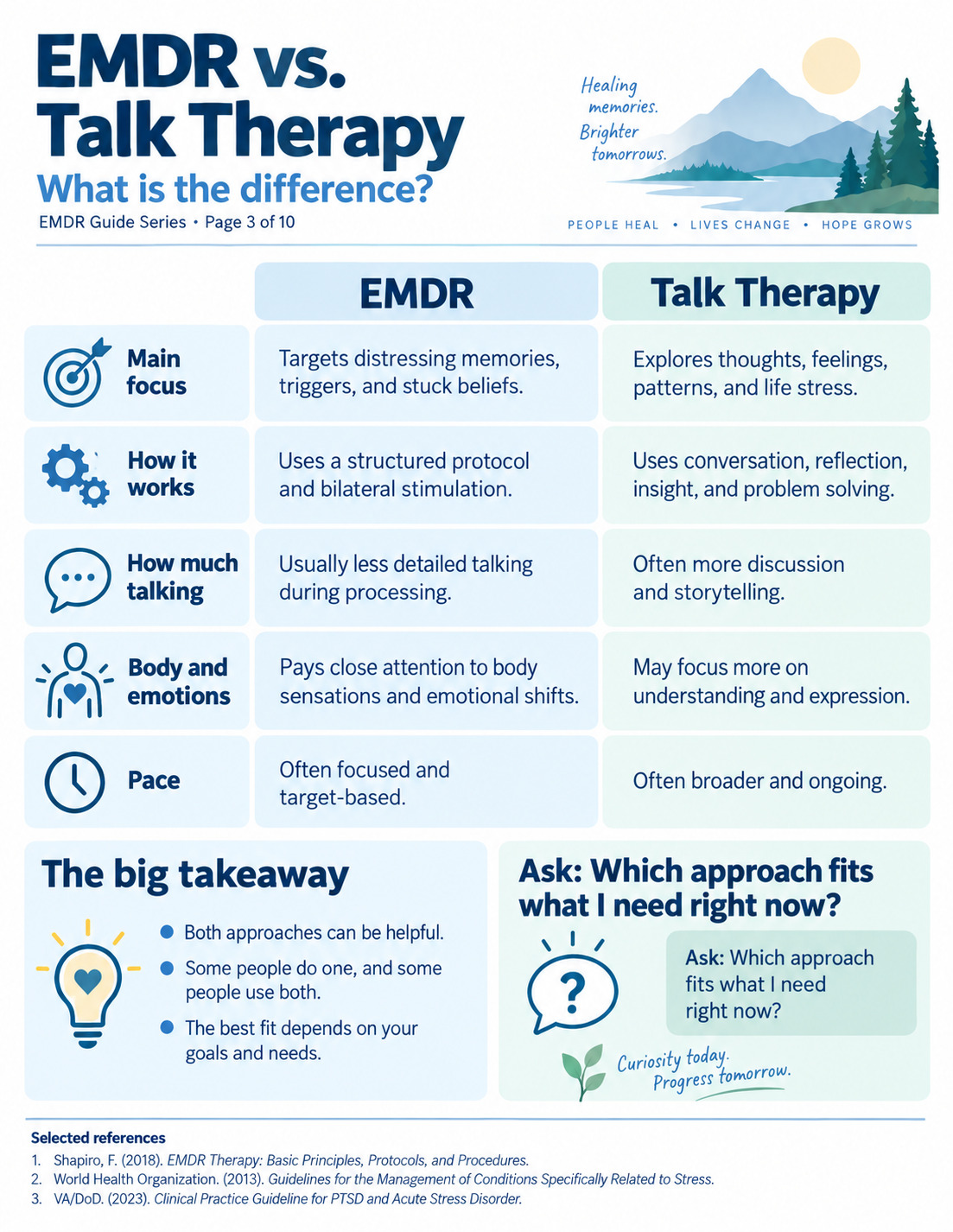
What this guide explains
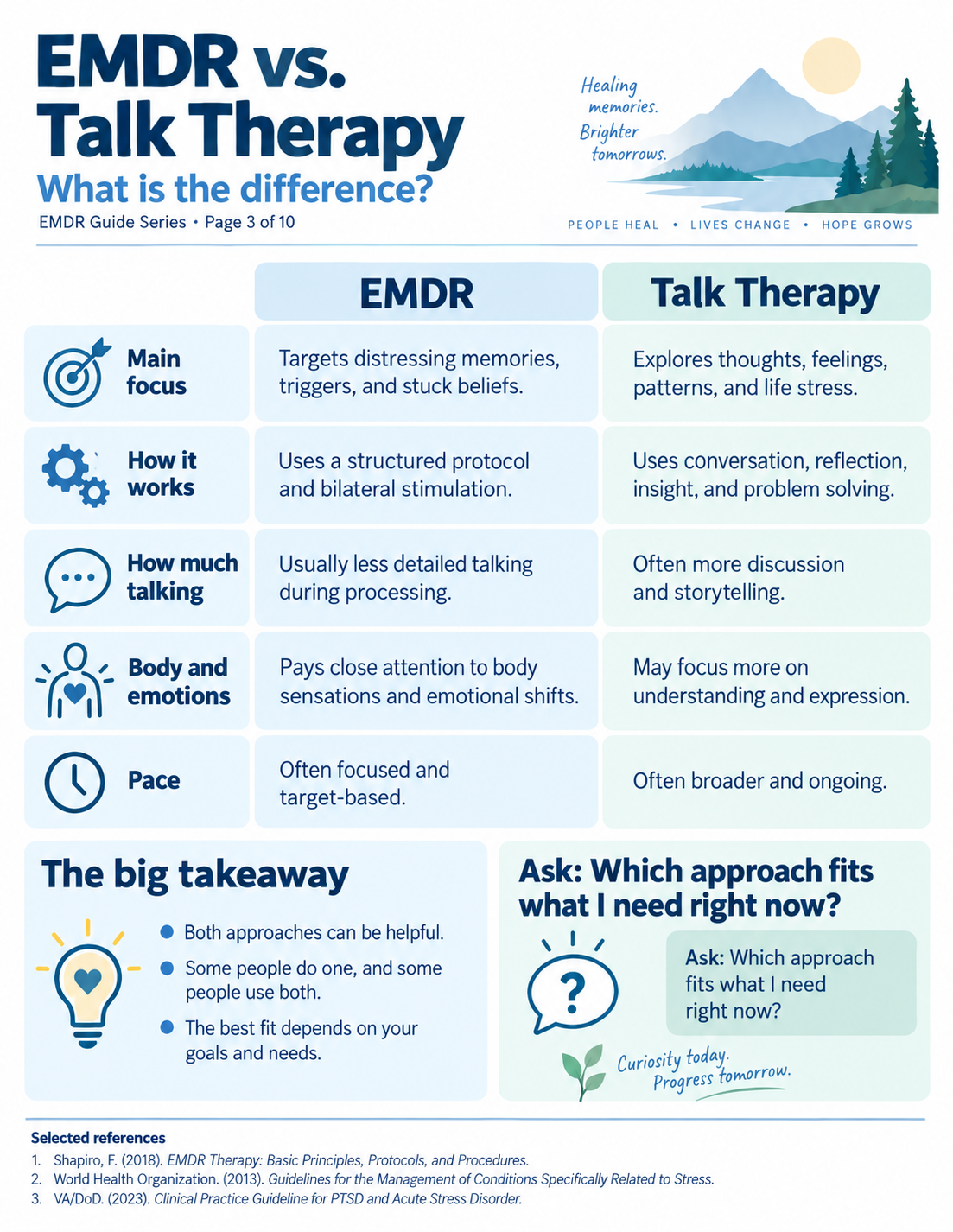
Some therapies organize sessions around conversation, reflection, skills, or examining patterns in current life. EMDR uses a defined framework that can include attention to a selected distressing experience during bilateral stimulation. Both involve a therapeutic relationship, communication, and a plan. Both may include attention to thoughts, emotions, and bodily responses; those features are not exclusive to EMDR.
The comparison in the graphic simplifies a diverse field. Cognitive behavioral therapies, psychodynamic therapies, supportive approaches, and other methods differ from one another. A statement about a typical conversational session should not be treated as a claim about all of them. Similarly, EMDR does not mean silence, and talking about what is happening remains part of the work.
Rather than choosing on the basis of which sounds faster or more advanced, ask a therapist to explain the rationale for the options they recommend. Discuss the evidence for your particular concern, what participation involves, and how progress will be assessed. Approaches may sometimes be used together within a coherent treatment plan. A handout cannot determine which therapy will be more helpful for an individual person.
At a glance
- EMDR is a psychotherapy with a structured protocol.
- Talk therapy includes many different approaches.
- Both require collaboration and clinical judgment.
- Less detailed retelling does not mean no discussion.
- This comparison does not establish superiority or speed.
What the research says
PTSD guidelines recommend several trauma-focused psychotherapies, including EMDR, cognitive processing therapy, and prolonged exposure. That recommendation does not show EMDR is universally superior to other therapy or suitable for every diagnosis.
How to read the evidenceReferences
- National Center for PTSD. Overview of Psychotherapy for PTSD. Summary of the 2023 VA/DoD guideline.Clinical guideline summary
- Bisson, J. I., Roberts, N. P., Andrew, M., Cooper, R., & Lewis, C. (2013). Psychological therapies for chronic post-traumatic stress disorder (PTSD) in adults. Cochrane Database of Systematic Reviews, (12), CD003388. doi:10.1002/14651858.CD003388.pub4Systematic review
- National Center for PTSD. Eye Movement Desensitization and Reprocessing (EMDR) for PTSD.Patient education
Selected sources checked for identity and relevance. This is an educational summary, not a comprehensive systematic review or a claim of independent clinical review.