Can EMDR Help With More Than PTSD?
Last reviewed: 2026-09-12 · Editorial source check
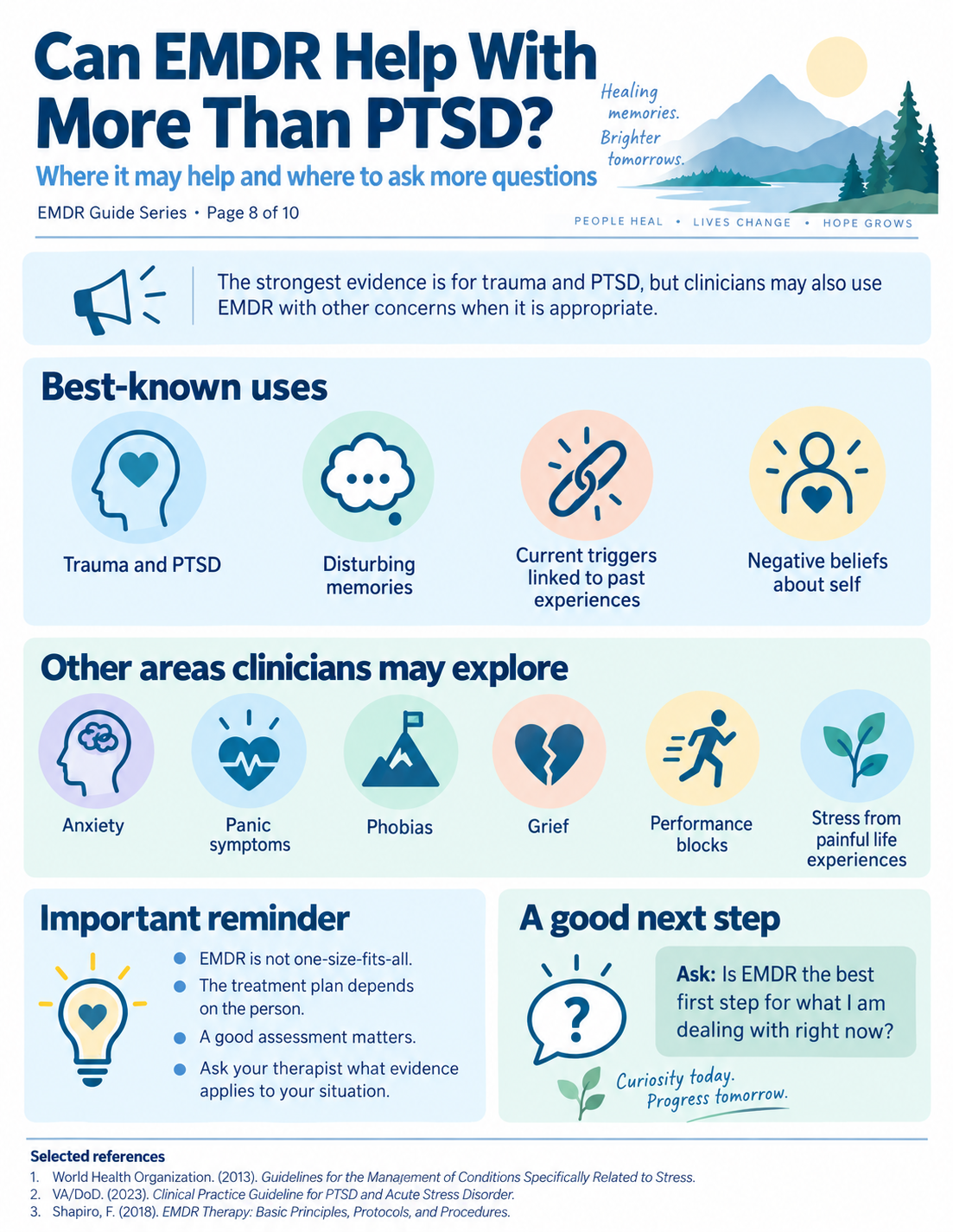
The evidence for EMDR is strongest for PTSD. Researchers and clinicians have also explored its use for other concerns, but those areas do not all have the same evidence base.
A condition appearing in an infographic means it has been discussed or investigated, not that EMDR is an established first-line treatment for it.
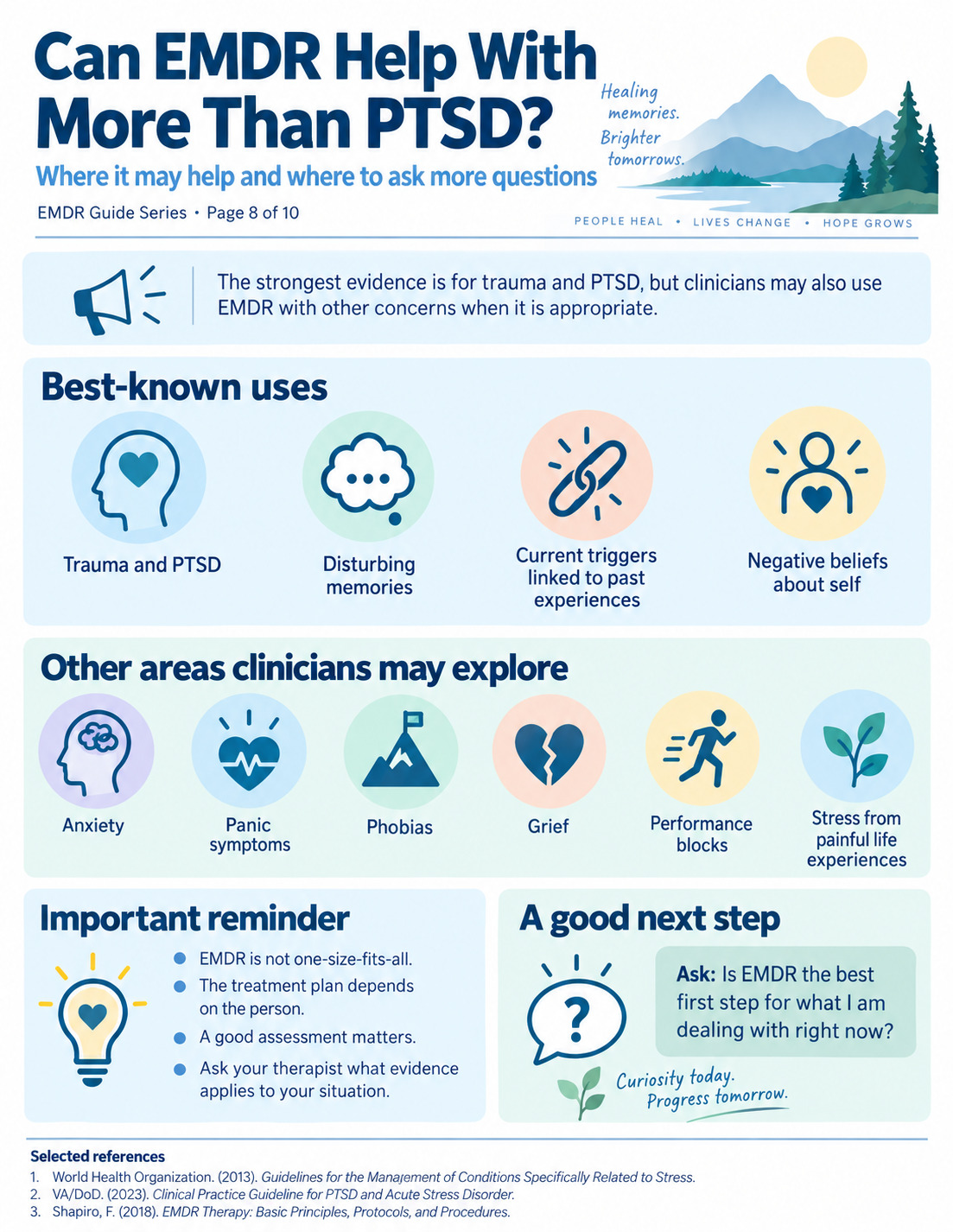
What this guide explains
A helpful evidence map begins with the question actually being studied. Research involving people diagnosed with PTSD cannot automatically establish effectiveness for a different diagnosis. Similarly, improvement in a symptom measured during a study does not always mean the treatment has been tested for the disorder associated with that symptom.
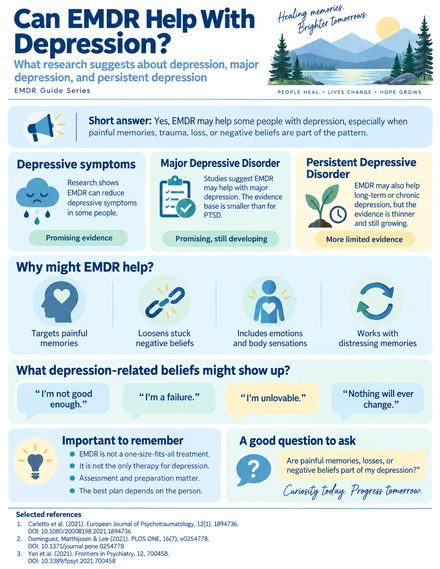
Reviews of applications beyond PTSD include a wide variety of conditions and study designs. Some areas have controlled trials, while others depend more heavily on small studies or case reports. Pooling those examples into a single list can obscure important differences. Depression research is promising, for example, but the evidence remains smaller and less certain than the PTSD literature.
When considering an emerging application, ask what is known for your particular concern, how it compares with established options, and why a clinician thinks the approach may fit. A history of difficult experiences may be relevant without explaining every symptom. This guide should support a balanced conversation rather than broaden a treatment claim beyond what the research can justify. The linked depression guide provides a more specific example of how to distinguish symptoms, a diagnosis, and evidence gaps.
At a glance
- PTSD has the strongest evidence base.
- Other applications need condition-specific evidence.
- A case report is not equivalent to a randomized trial.
- Promising findings still require replication and careful assessment.
What the research says
Scelles and Bulnes reviewed EMDR beyond PTSD and described a broad, uneven literature. This supports further investigation, not an equal-confidence recommendation for every condition. The depression reviews below offer a more focused example of emerging evidence.
How to read the evidenceReferences
- National Center for PTSD. Overview of Psychotherapy for PTSD. Summary of the 2023 VA/DoD guideline.Clinical guideline summary
- Scelles, C., & Bulnes, L. C. (2021). EMDR as Treatment Option for Conditions Other Than PTSD: A Systematic Review. Frontiers in Psychology, 12, 644369. doi:10.3389/fpsyg.2021.644369Systematic review
- Carletto, S., et al. (2021). Eye movement desensitization and reprocessing for depression: a systematic review and meta-analysis. European Journal of Psychotraumatology, 12(1), 1894736. doi:10.1080/20008198.2021.1894736Systematic review and meta-analysis
Selected sources checked for identity and relevance. This is an educational summary, not a comprehensive systematic review or a claim of independent clinical review.