Understanding EMDR: A Visual Guide
Last reviewed: 2026-09-21 · Editorial source check
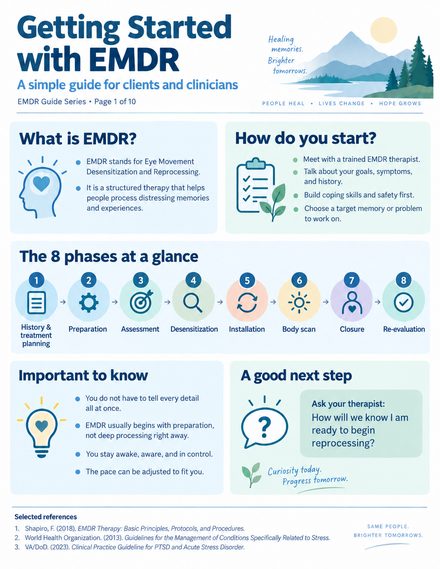
This seven-part visual series introduces EMDR and offers a starting point for conversation with a therapist. Each illustration is paired with an accessible explanation and a research clarification.
Read the notes with the images. The hopeful language describes possibilities; it does not predict an individual outcome.
Seven illustrated panels with research notes. Download PDF includes all panels, notes, and references; Download Image above is the cover. Individual PNGs are available below.
1. You’re Not Broken
Distress after difficult experiences is not a personal failure. This panel invites understanding, support, and a conversation about treatment options.
Research note: The image offers reassurance, not a diagnosis. “Without reliving the pain” describes a treatment goal, not a guarantee: recalling distressing material can bring up difficult feelings. Agree on pacing and a pause signal with your therapist.

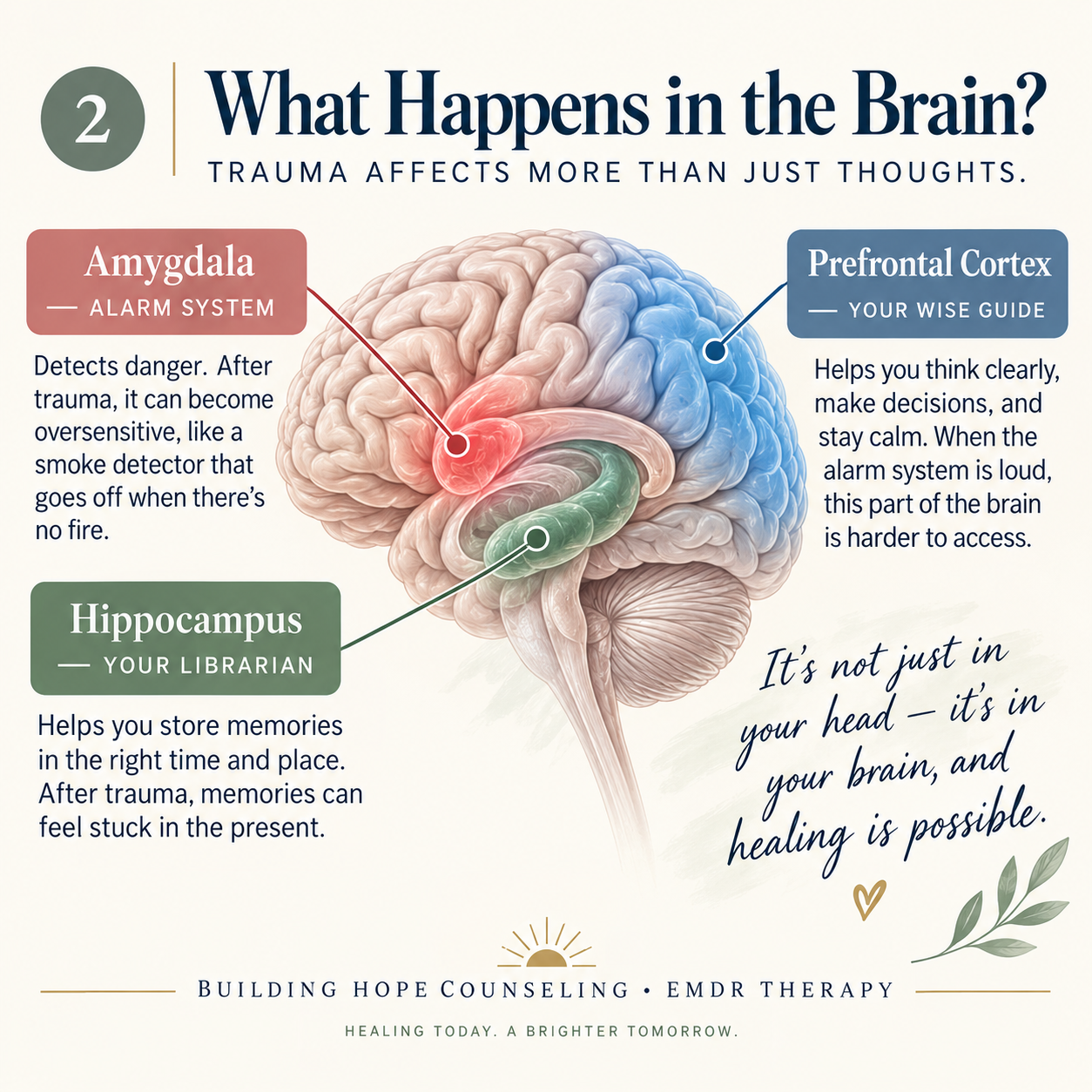
2. What Happens in the Brain?
The amygdala contributes to detecting threat, the hippocampus to memory and context, and prefrontal networks to regulation and thinking. These functions overlap across networks.
Research note: Alarm, librarian, and wise guide are metaphors. Brain regions work together in networks; an illustration cannot establish what is happening in your individual brain.
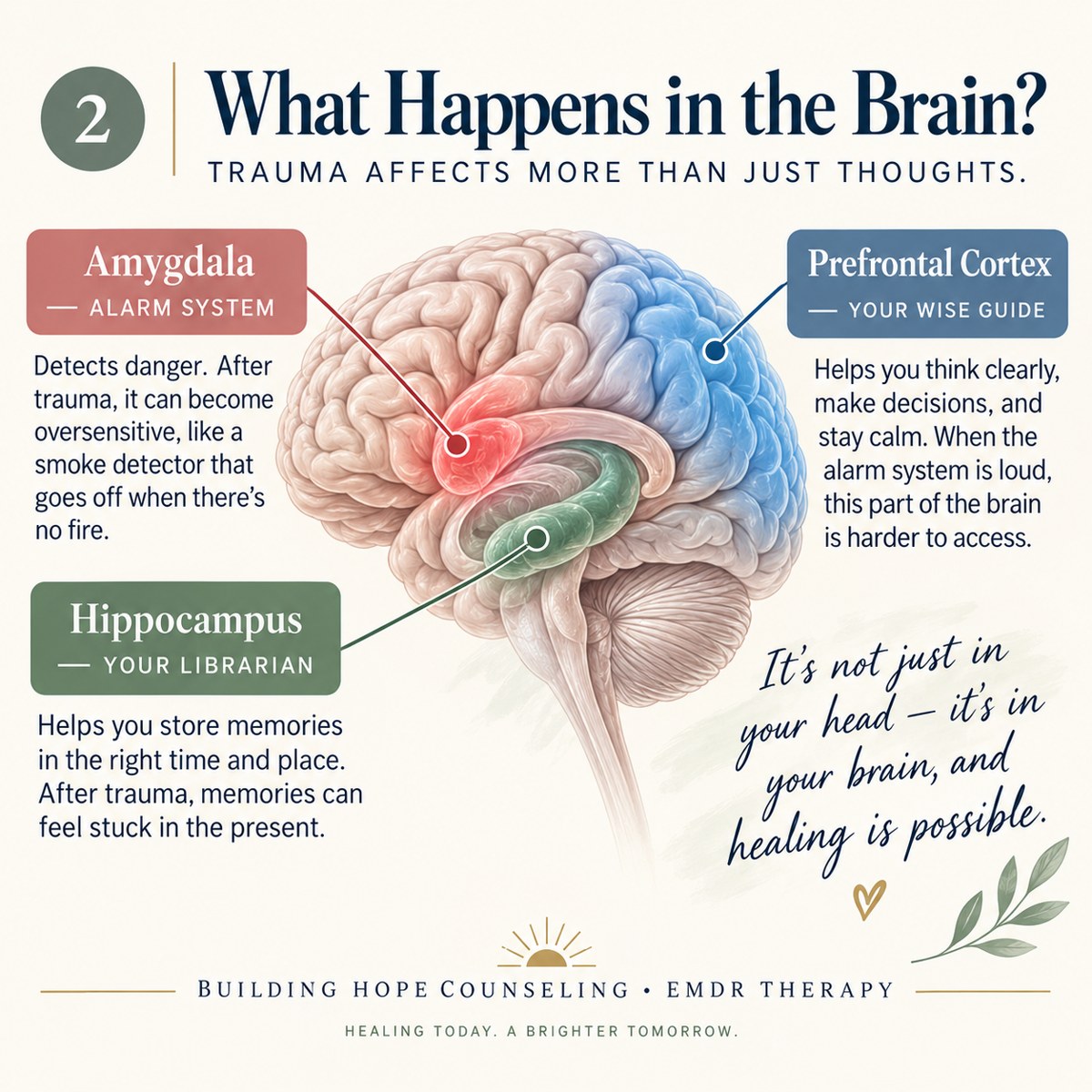
Download PNG: What Happens in the Brain? · Enlarge panel 2 (new tab)
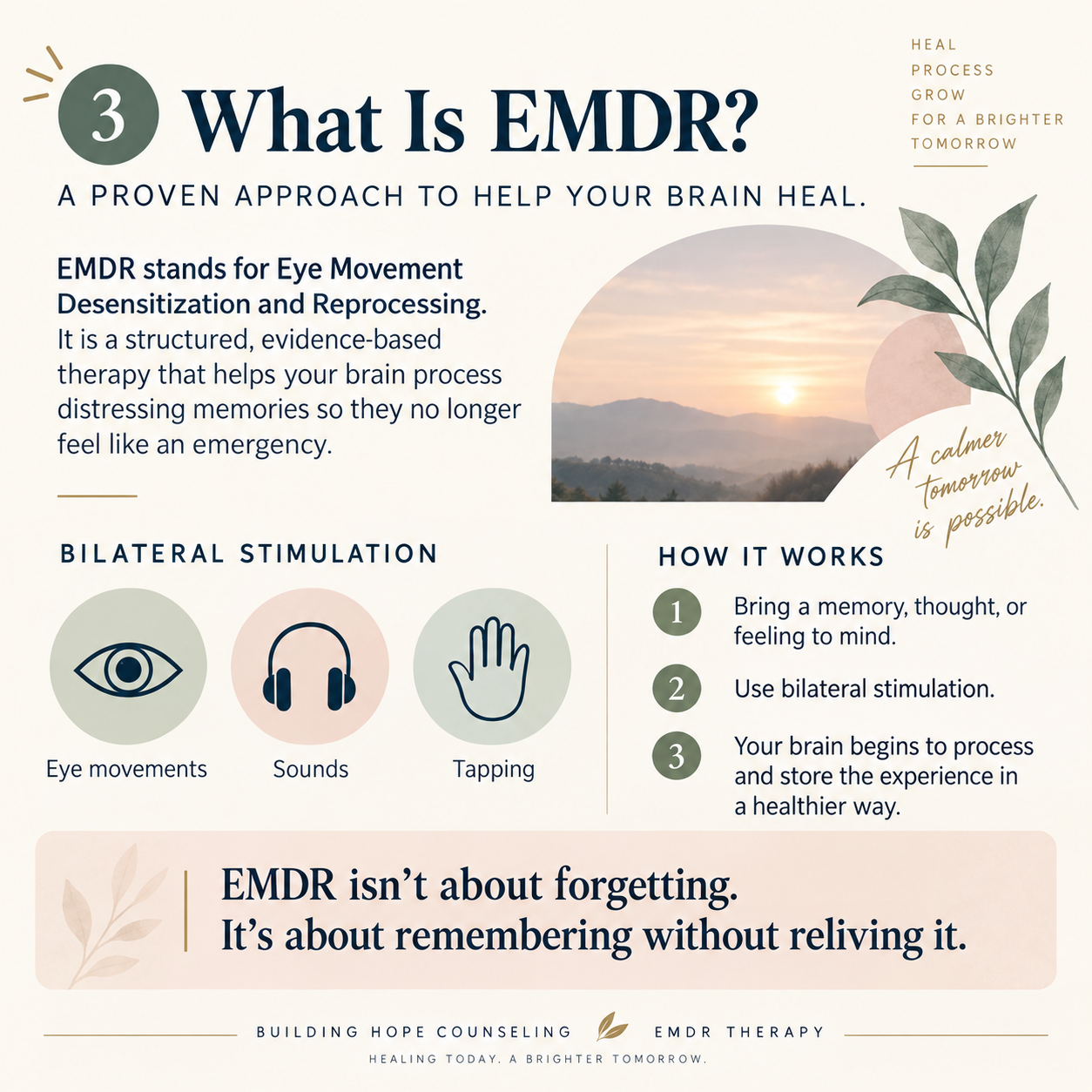
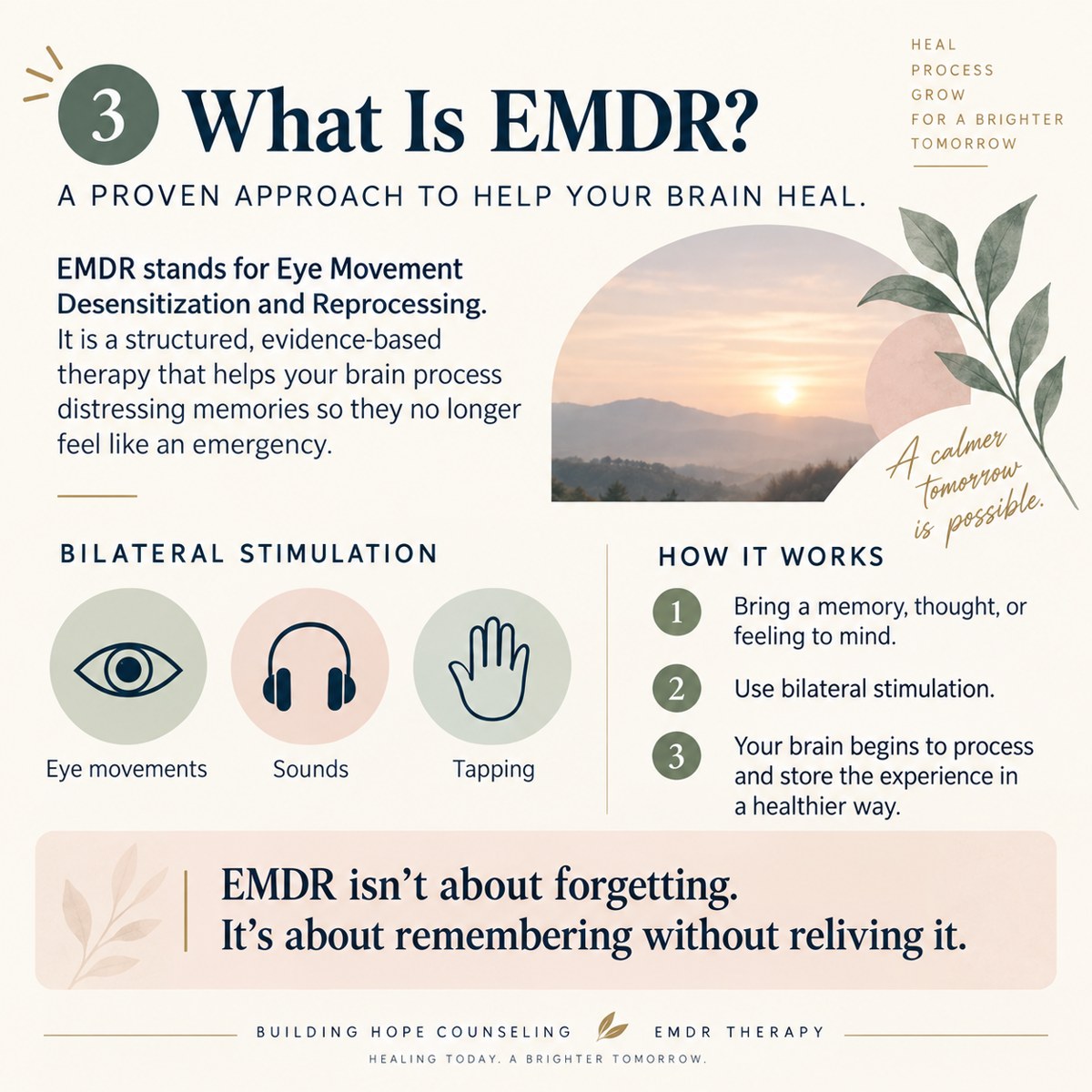
3. What Is EMDR?
EMDR means eye movement desensitization and reprocessing. Sessions may use eye movements, sounds, or taps within a structured therapy. The aim is reduced distress, not forgetting.
Research note: EMDR is a complete psychotherapy, not simply recalling a memory while following a dot. Its strongest established evidence concerns PTSD. “Brain healing” and healthier storage are explanatory language, not a proven biological sequence.
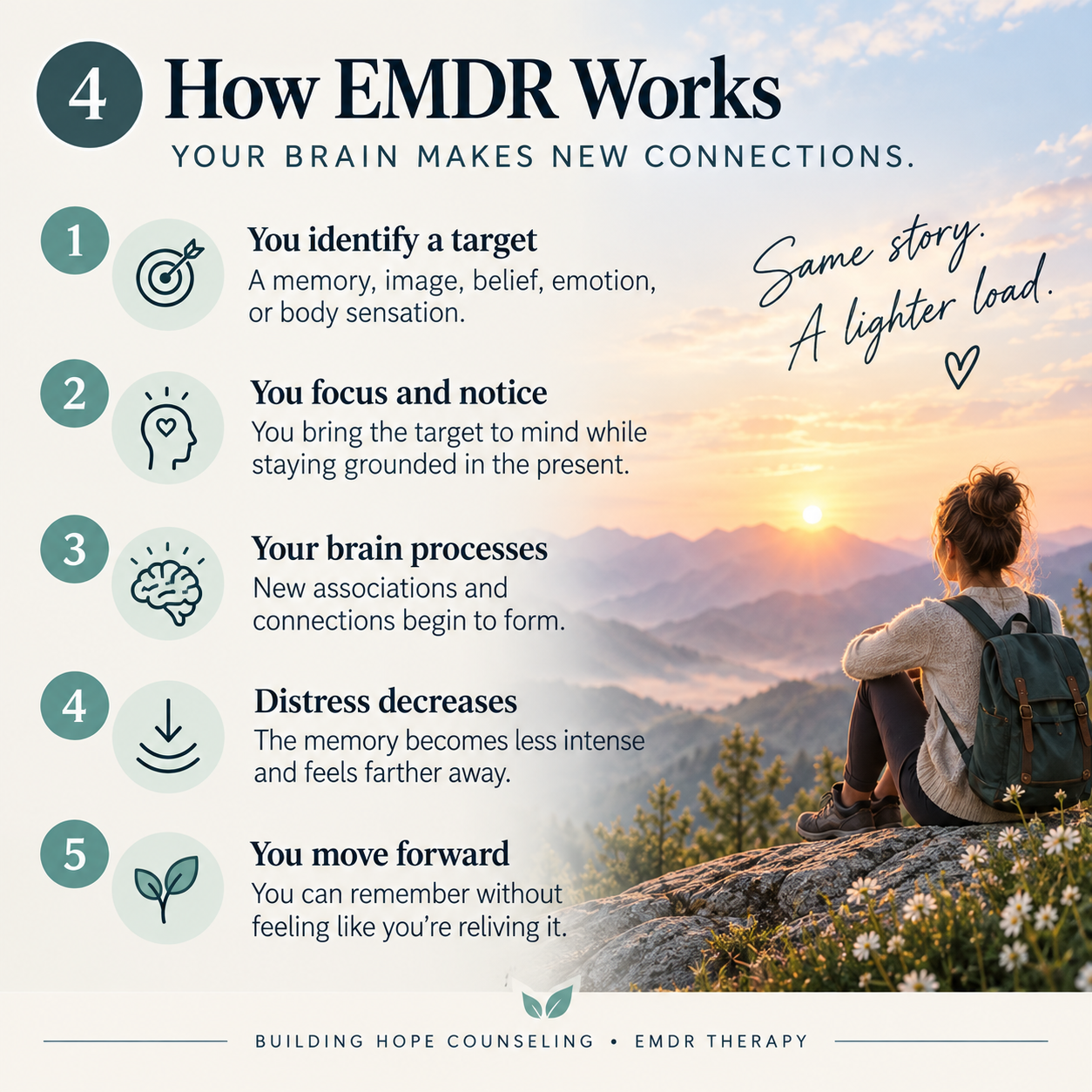
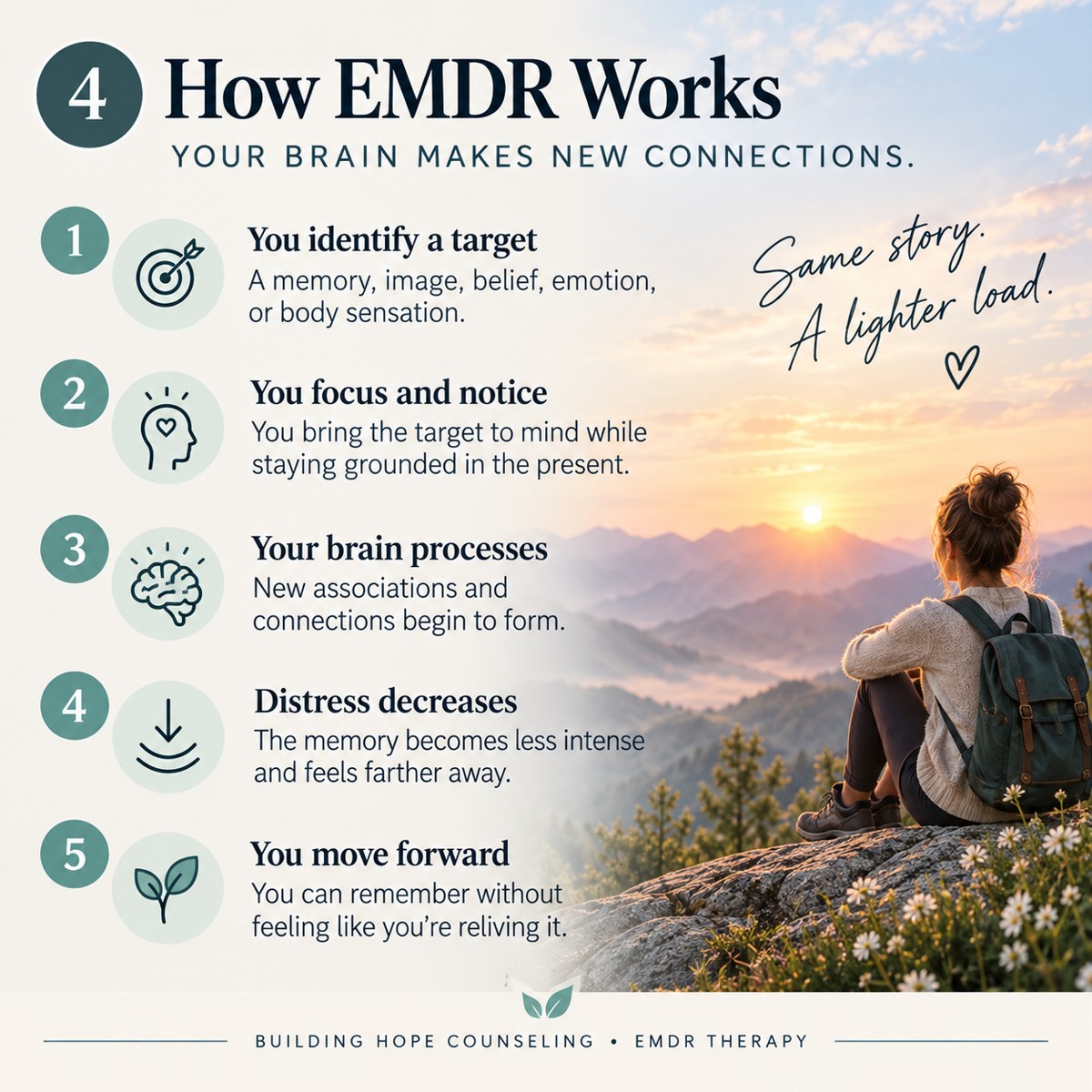
4. How EMDR Works
A therapist helps identify relevant material, notice thoughts and sensations, and review responses during processing. Changes are explored together rather than forced.
Research note: This is a simplified overview of possible change, not the eight-phase protocol or a guaranteed progression. Distress may fluctuate, and preparation, closure, and re-evaluation remain important.
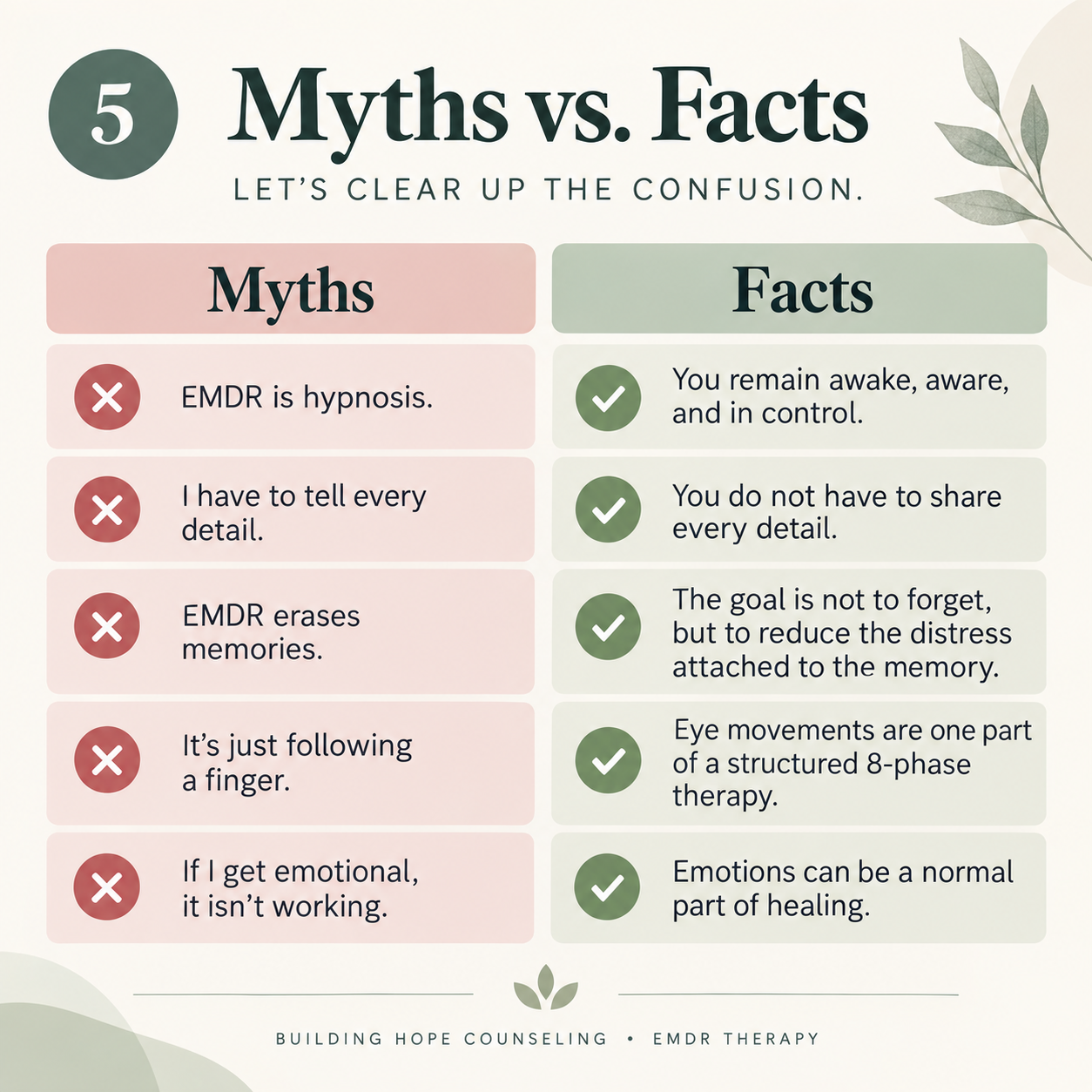
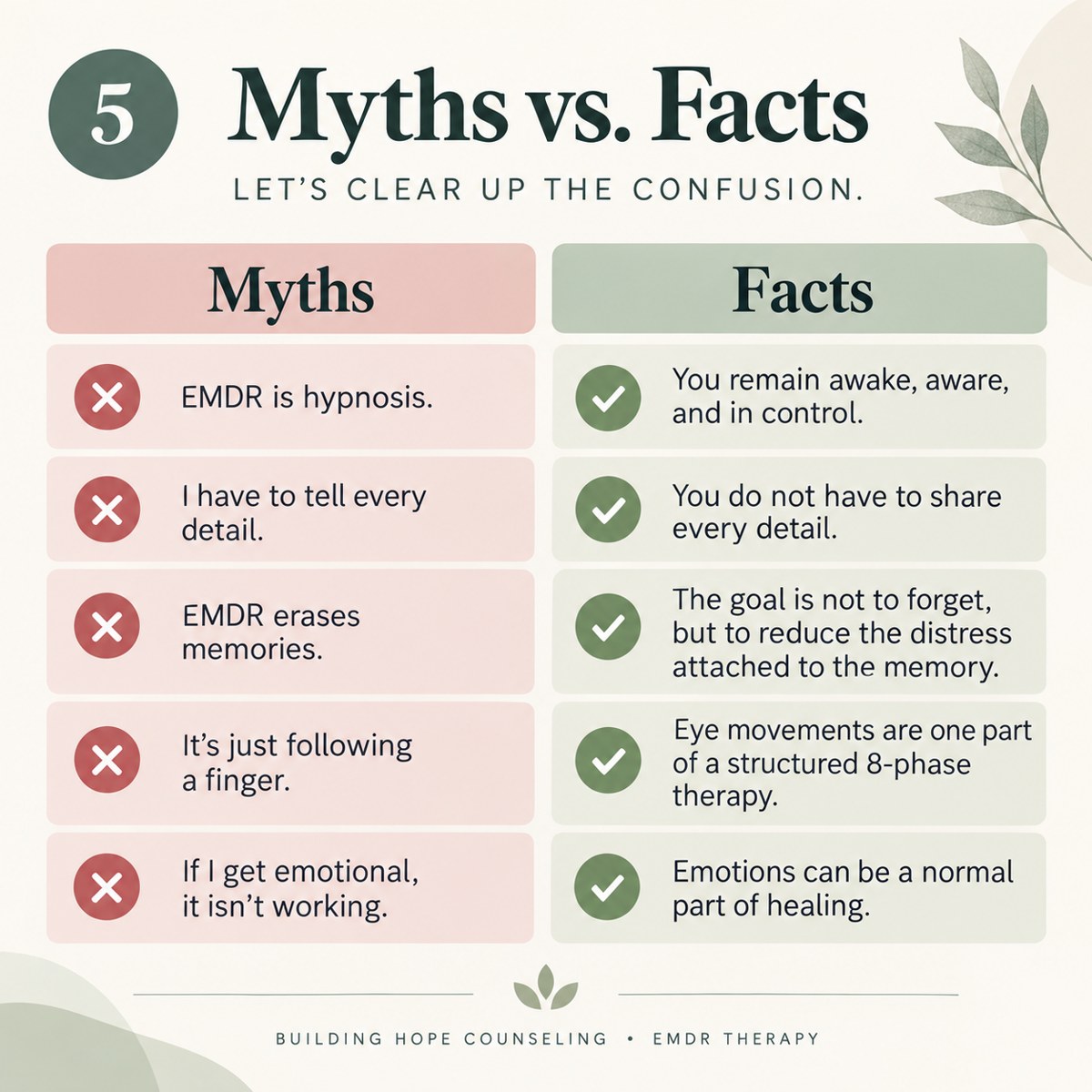
5. Myths vs. Facts
EMDR is not hypnosis or memory erasure. It involves more than eye movements. You may discuss the level of detail you share and ask to pause.
Research note: You can discuss how much detail to share and can ask to pause. Emotional intensity alone does not show that treatment is working; numbness, disconnection, or overwhelming distress should also be discussed.
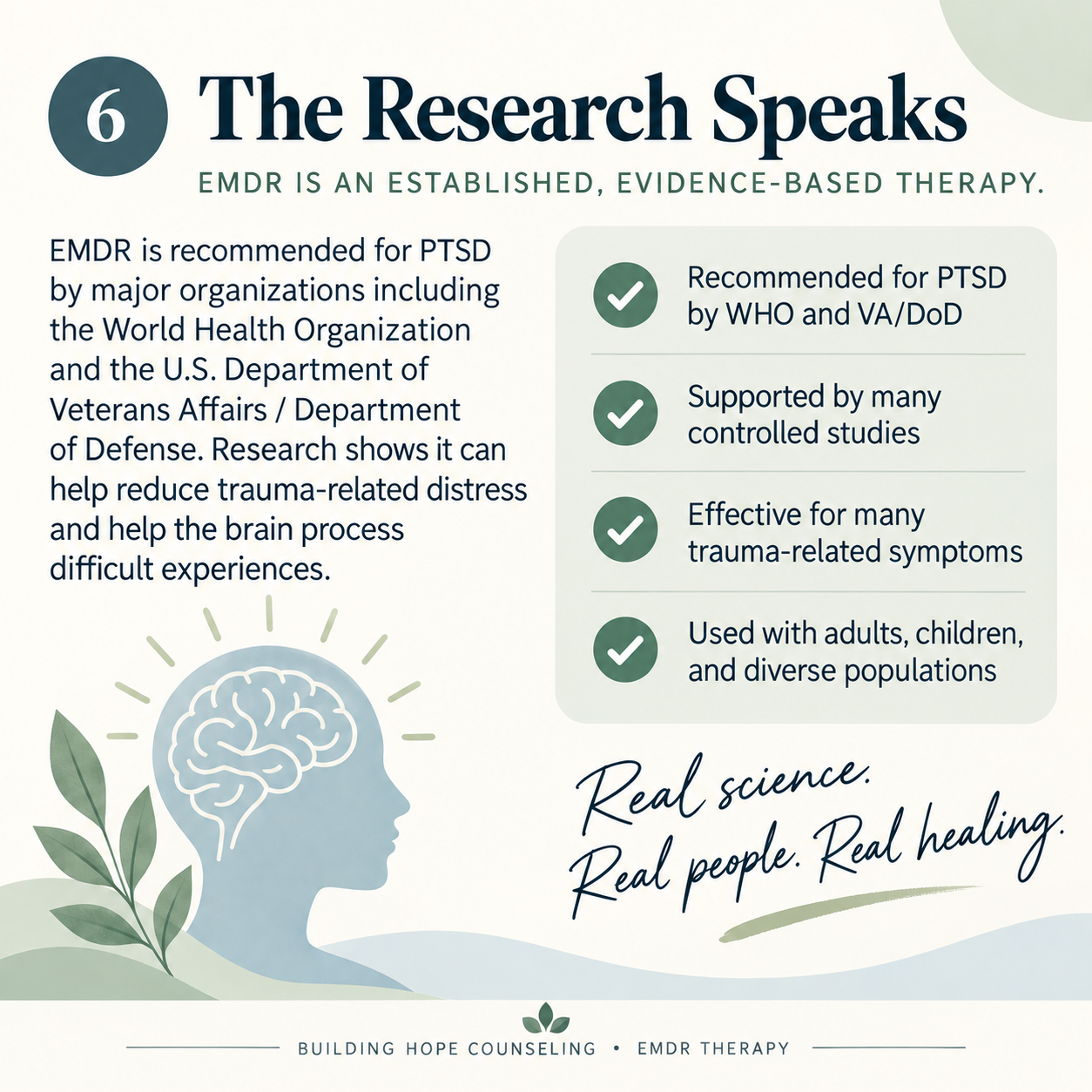
6. The Research Speaks
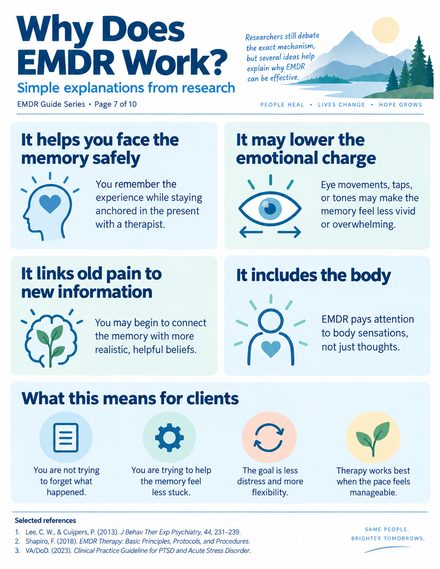
EMDR has guideline support for PTSD. Research on treatment effectiveness is different from research seeking to explain how it works.
Research note: Guideline recommendations are diagnosis- and population-specific. Evidence for PTSD does not establish effectiveness for every trauma-related problem, age group, or individual.
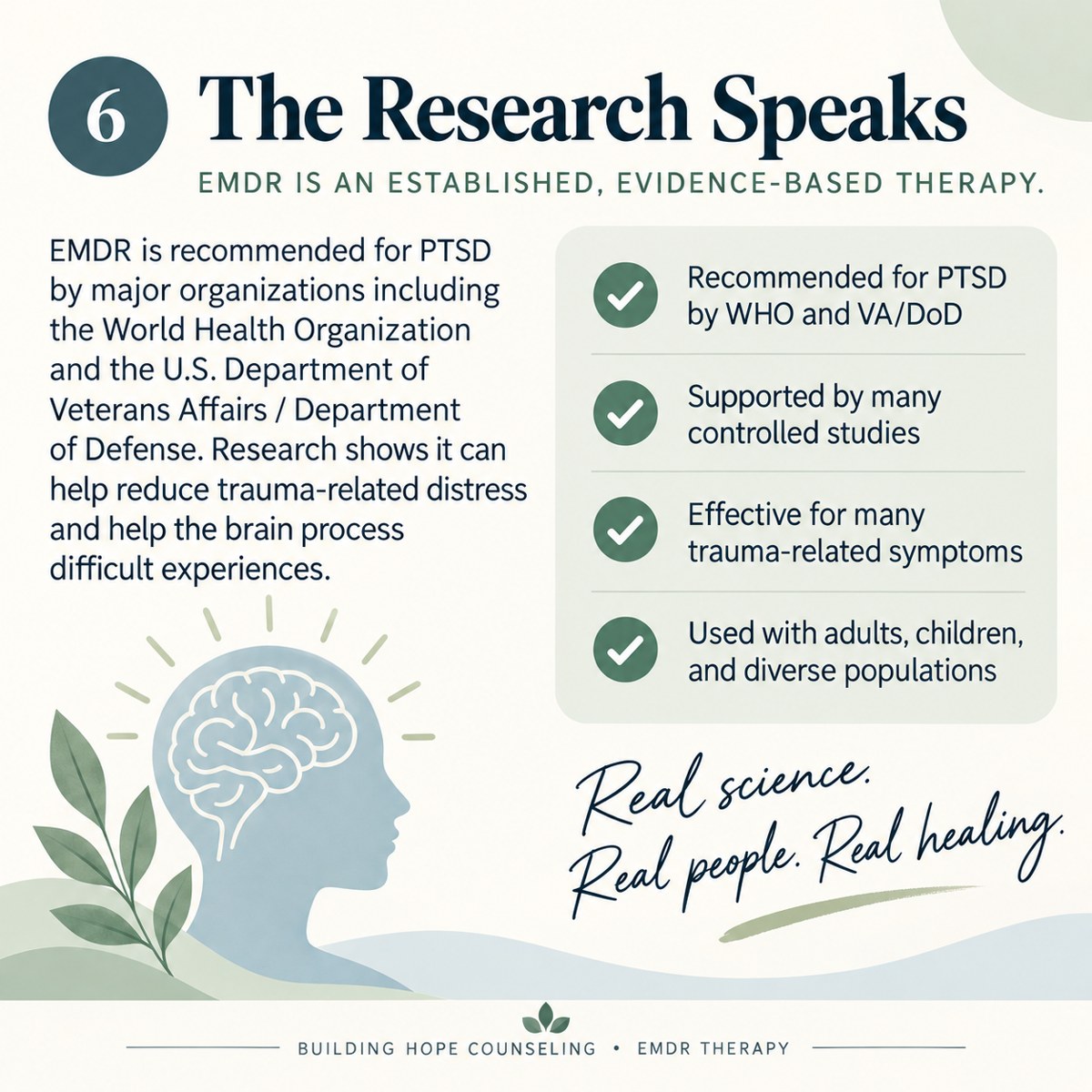
Download PNG: The Research Speaks · Enlarge panel 6 (new tab)
7. A Brighter Future Is Possible
Possible goals include feeling less distressed and more present in daily life. Your own goals and experience should guide review of treatment.
Research note: These are possible goals, not promised outcomes. Use your own priorities to discuss progress and alternatives; improvement need not look like every item in this illustration.

Download PNG: A Brighter Future Is Possible · Enlarge panel 7 (new tab)
What this guide explains
Begin with the questions you bring to treatment. You might want to understand why an experience still feels upsetting, what a session involves, or whether you must describe every detail. These illustrations can help organize that conversation. They are not a screening tool and cannot tell you whether EMDR is appropriate for your circumstances.
When looking at the brain illustration, treat its labels as teaching metaphors. Ask your therapist which parts of the explanation are established findings and which are proposed models. A drawing of an alarm system should not become a label for who you are or a conclusion that your brain is damaged. You can also ask for a simpler explanation if the neuroscience language is unhelpful.
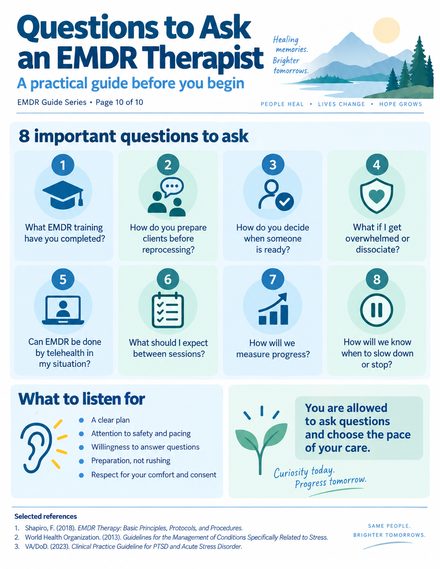
Use the session and myths panels to discuss consent and expectations. What would you like your therapist to explain before beginning? How will you communicate that you want to pause? What would useful progress look like in everyday life? Consider writing down one question from each panel and returning to those questions together. The final panel is an invitation to identify meaningful goals, not a checklist you must achieve.
At a glance
- Use the illustrations to start a discussion.
- PTSD evidence and mechanism evidence are different.
- The images cannot predict individual outcomes.
- Preparation, consent, pacing, and follow-up matter.
What the research says
Established evidence: EMDR is among recommended psychotherapies for PTSD in major guidelines. That support concerns the full treatment. Proposed mechanisms: explanations about memory storage or specific brain changes are not settled accounts of how treatment works. Outcomes and suitability vary.
How to read the evidenceReferences
- National Center for PTSD. Overview of Psychotherapy for PTSD. Summary of the 2023 VA/DoD guideline.Clinical guideline summary
- National Center for PTSD. Eye Movement Desensitization and Reprocessing (EMDR) for PTSD.Patient education
- Landin-Romero, R., Moreno-Alcazar, A., Pagani, M., & Amann, B. L. (2018). How Does Eye Movement Desensitization and Reprocessing Therapy Work? A Systematic Review on Suggested Mechanisms of Action. Frontiers in Psychology, 9, 1395. doi:10.3389/fpsyg.2018.01395Systematic review of proposed mechanisms
Selected sources checked for identity and relevance. This is an educational summary, not a comprehensive systematic review or a claim of independent clinical review.