Clients + Clinicians · Aftercare · Phase 7 · 3 min
Between-session support and aftercare
Make an individualized plan for the time after sessions, including how to seek support.
Awaiting qualified clinical review. Educational reference; not a protocol, formal training, supervision, or individualized treatment.
Why this matters
Clear expectations can reduce uncertainty without assuming every reaction is treatment progress.
Client-facing explanation
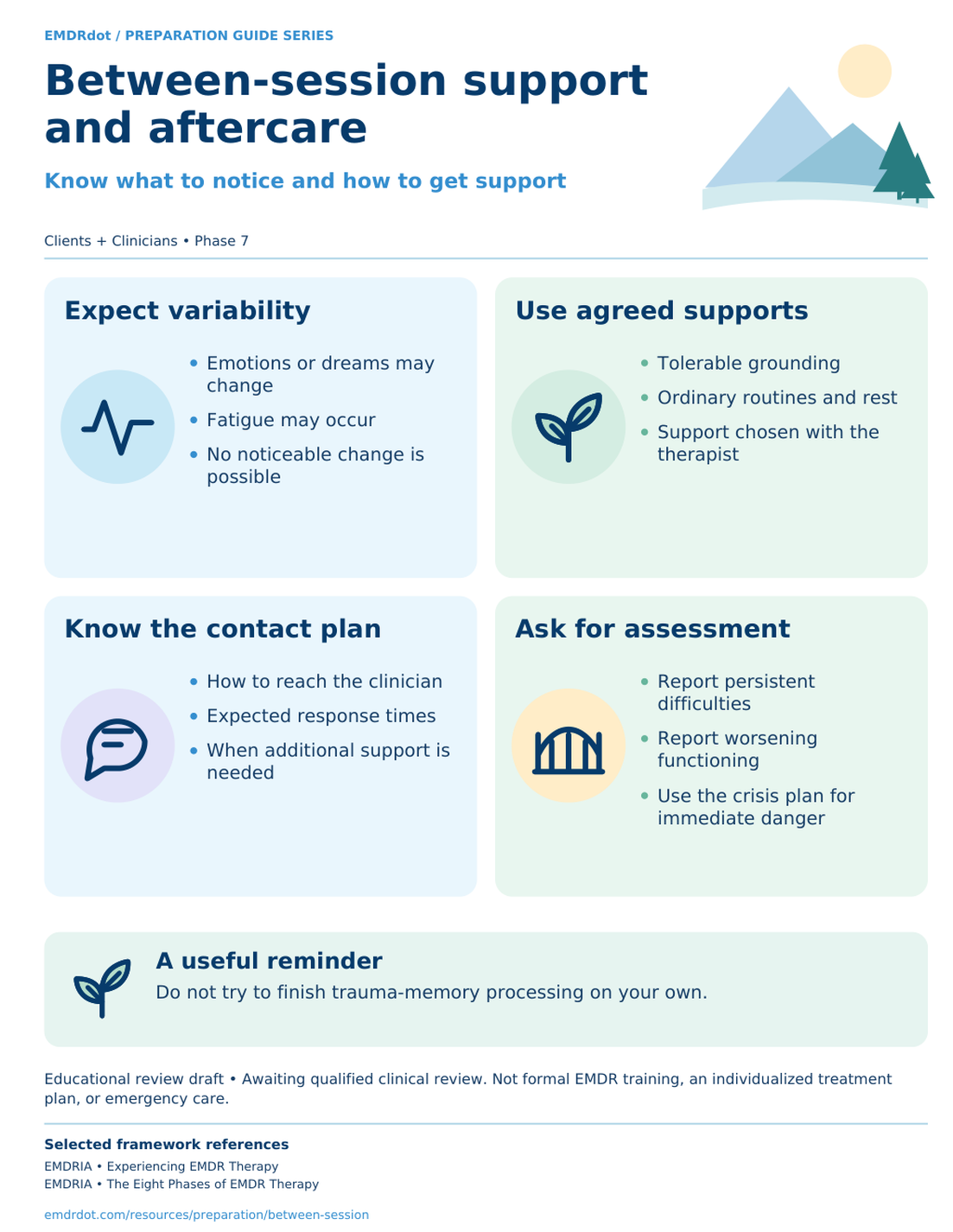
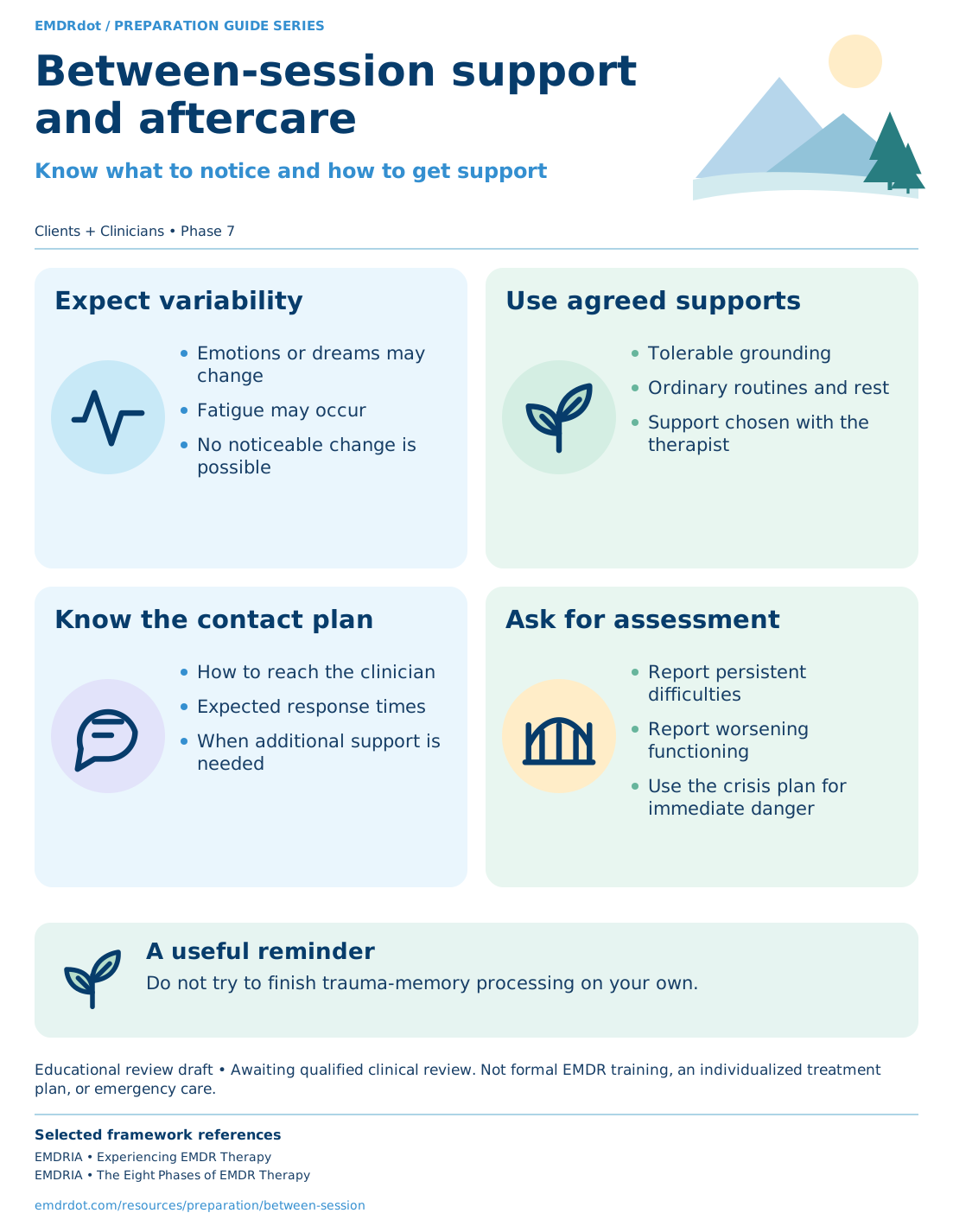
You may feel different after a session, or you may not notice a change. Use the supports you agreed on. Tell your therapist about persistent or worsening difficulties rather than trying to process memories on your own.
Clinician reference
Discuss possible variability in emotions, dreams, fatigue, and distress, including the possibility of no noticeable changes. Confirm contact boundaries, local urgent-care options, and the client’s existing safety plan.
General sequence and discussion checklist
Optional discussion aid. Selections clear when you leave; this does not assess clinical readiness.
Practical example / documentation consideration
Fictional example: a client plans a quiet transition and notes a brief topic to discuss next time in their own protected record.
References and evidence notes
These sources inform the framework and discussion. They do not independently validate these original exercises or establish that every preparation technique is necessary or effective for every client.
- EMDRIA: Experiencing EMDR Therapy
Client orientation and eight-phase overview.
- EMDRIA: The Eight Phases of EMDR Therapy
Framework and phase descriptions; does not validate these original worksheets.