Clinicians · English
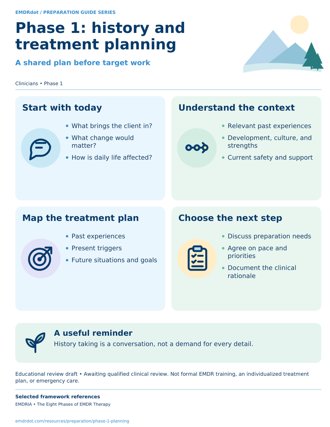
Phase 1: history and treatment planning
Build a collaborative formulation before choosing targets. History taking is paced to the person; it is not a request for a detailed account of every traumatic experience.
EMDR clinical preparation center
A practical place to understand the process, develop shared language, and prepare the next session.
The preparation center · Review draft
Practical education, phase references, printable materials, and equipment checks.
Review drafts with original references. No completed client information is included.
Use these high-level references alongside your training. Phases can be revisited; they are not eight compulsory steps in one appointment.
30 resources · All await clinical review; Spanish also awaits translation review.
Clinicians · English
Build a collaborative formulation before choosing targets. History taking is paced to the person; it is not a request for a detailed account of every traumatic experience.
Clinicians · English
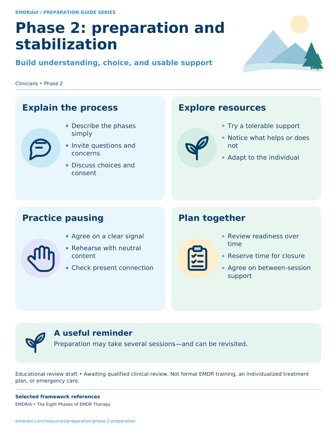
Explain the treatment, establish shared control, and develop resources the client can actually use. Preparation may take several sessions and may be revisited.
Clients + Clinicians · English
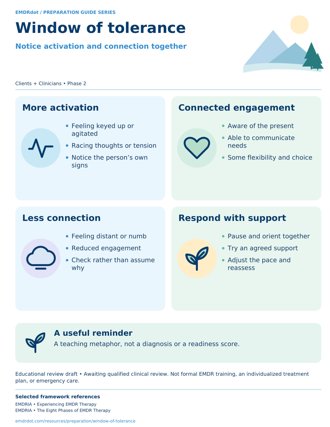
A flexible way to talk about activation, connection, and the ability to stay engaged. It is a teaching metaphor, not a diagnostic test.
Clients + Clinicians · English
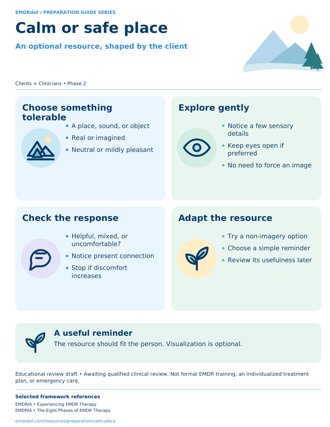
A therapist-guided resource that explores a tolerable sense of comfort, steadiness, or relative safety.
Clients + Clinicians · English
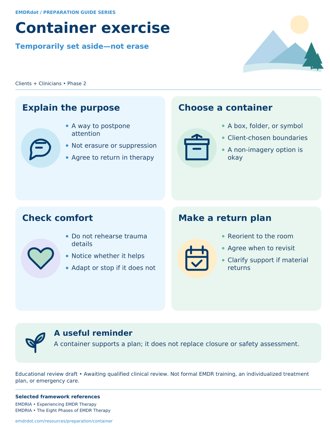
An optional imagery or symbolic exercise for setting material aside temporarily, with an explicit plan to return to it in therapy.
Clients + Clinicians · English
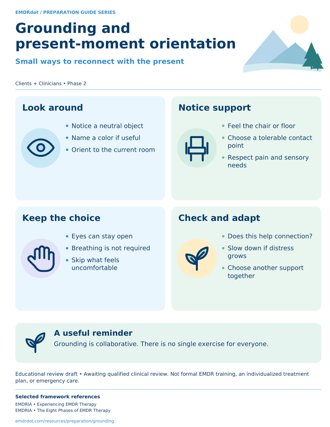
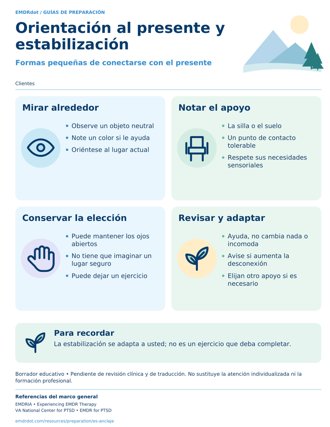
Collaborative ways of noticing the present environment and the body’s contact with support.
Clients + Clinicians · English
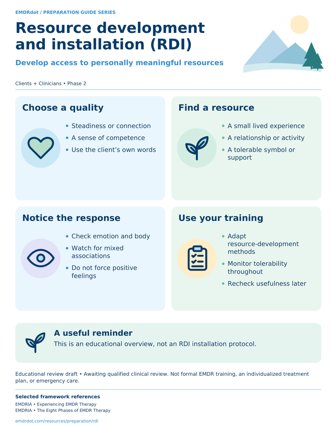
A clinician-guided approach to identifying and strengthening access to supportive qualities or experiences.
Clients + Clinicians · English
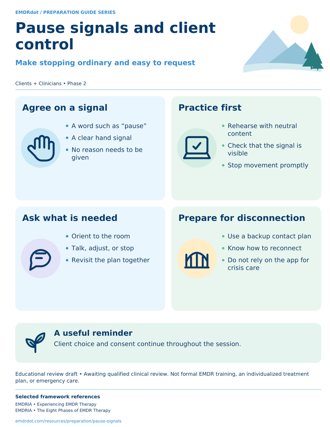
Agree on a clear signal, practice using it, and make stopping feel ordinary.
Clients + Clinicians · English
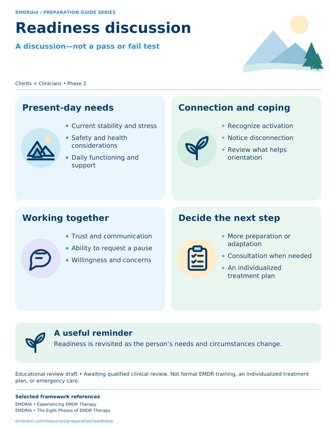
A collaborative review of present needs, capacities, and supports before changing the pace of treatment.
Clients + Clinicians · English
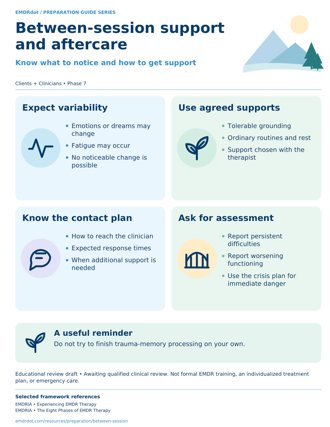
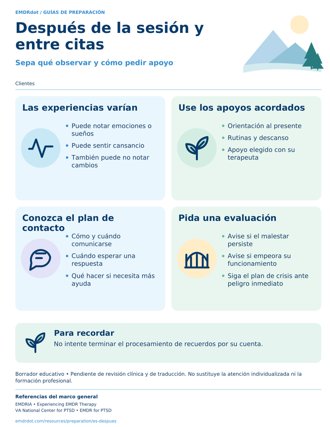
Make an individualized plan for the time after sessions, including how to seek support.
Clinicians · English
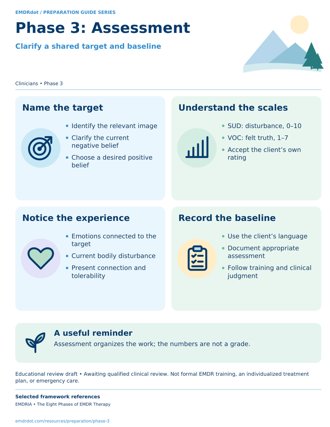
Establish a shared target assessment according to the clinician’s training.
Clinicians · English
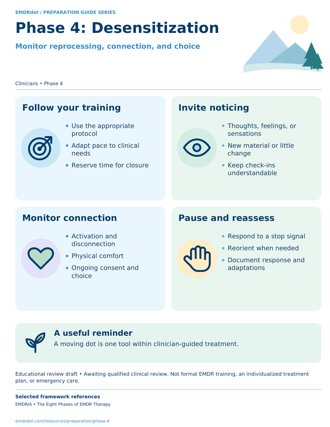
Support reprocessing while maintaining clinical monitoring and client choice.
Clinicians · English
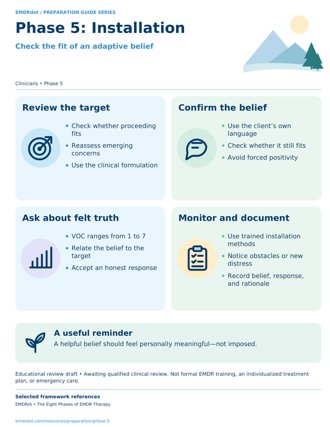
Strengthen the connection between the target and an appropriate adaptive cognition when clinically indicated.
Clinicians · English
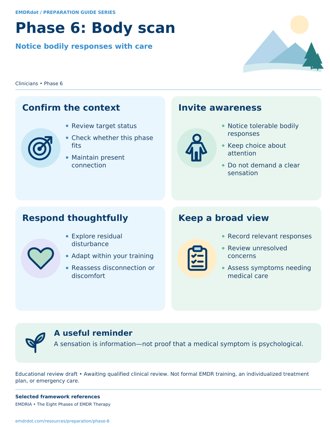
Attend to residual bodily disturbance associated with the target and adaptive cognition.
Clinicians · English
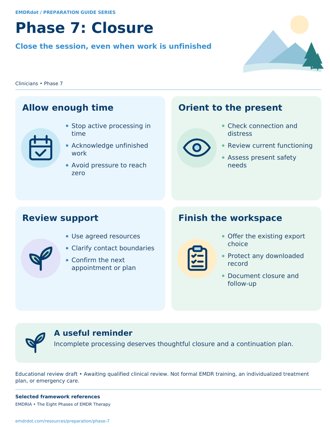
End each session with attention to orientation, present needs, and support, including when processing is incomplete.
Clinicians · English
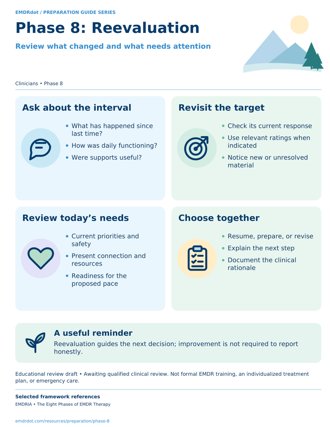
Review the previous session and current needs before deciding what to do next.
Clients + Clinicians · English
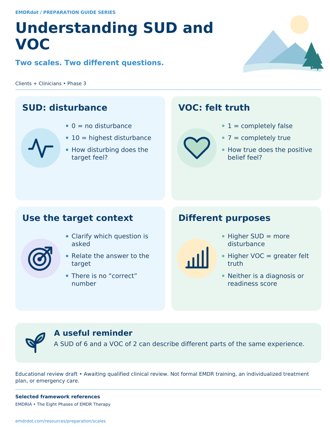
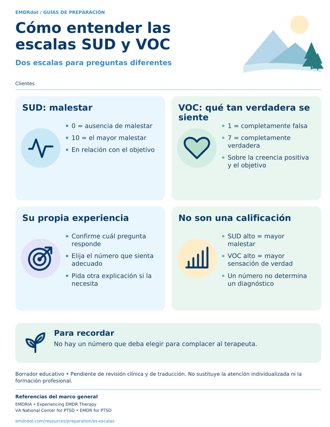
SUD and VOC answer different questions. Neither is a diagnostic test, a readiness score, or a grade.
Clients + Clinicians · English
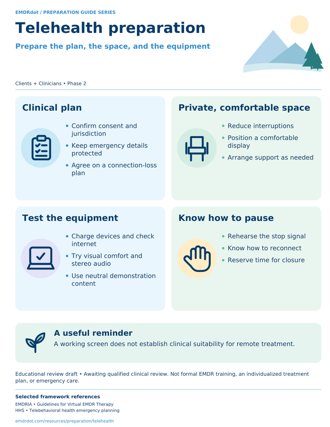
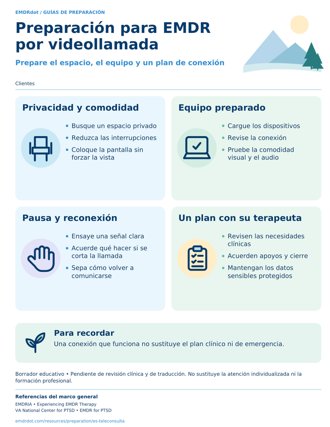
Prepare the clinical plan, the environment, and the connection before remote work. EMDRdot supplies stimulation tools, not a complete clinical telehealth service.
Clinicians · English
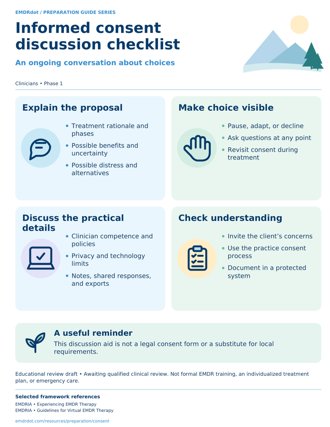
Consent is a continuing conversation about the proposed treatment, available choices, and client control.
Clinicians · English
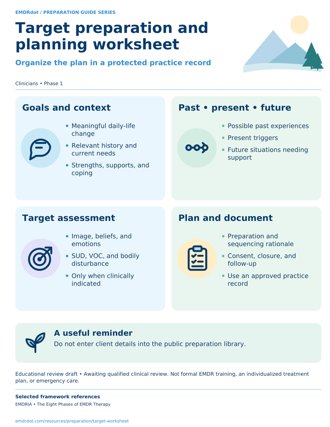
A blank planning aid for a protected practice record, not a form for entering clinical information into the resource library.
Clients · English
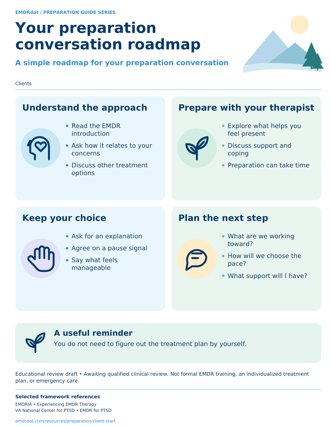
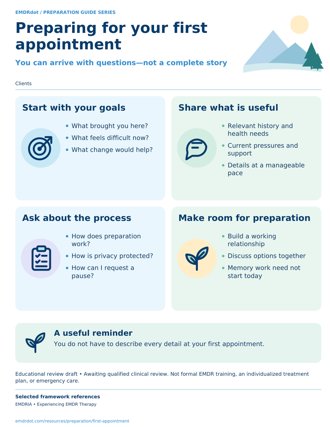
Use this roadmap to plan questions, supports, and your next conversation with a therapist. Start with the existing Getting Started with EMDR guide for the general introduction.
Clients · English
You do not need to arrive ready to describe every detail of what happened. The first appointment often focuses on your concerns, history, goals, and choices.
Clients · English
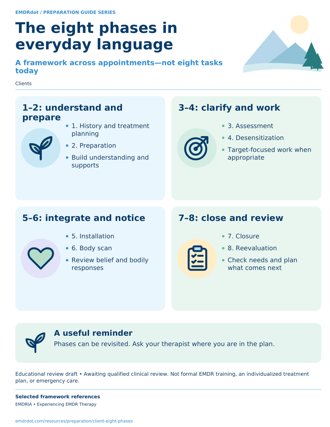
The phases describe a treatment framework, not eight steps that must all happen in one appointment.
Clients · English
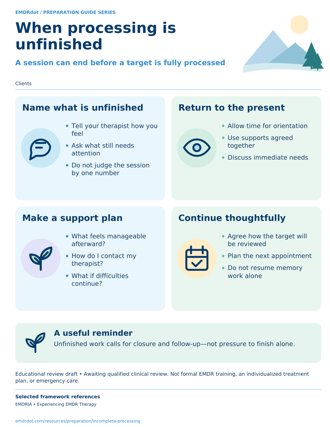
A session may end while a target still feels disturbing. That does not automatically mean treatment failed or that you must keep working alone.
Clients · Español
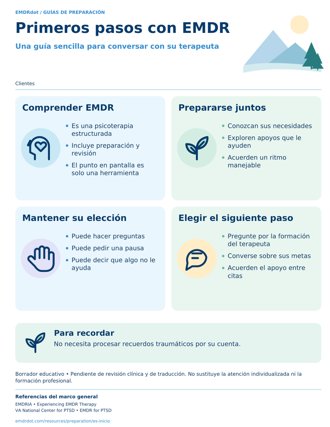
EMDR es una psicoterapia estructurada. Incluye conocer su historia, prepararse, evaluar objetivos, trabajar con recuerdos cuando corresponda y revisar lo ocurrido. Seguir un punto en una pantalla no equivale a recibir EMDR.
Clients · Español
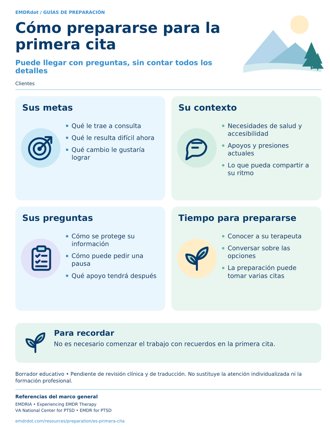
No necesita contar todos los detalles de lo que vivió en la primera cita. Pueden empezar por sus necesidades, su historia y lo que espera cambiar.
Clients · Español
Las escalas preguntan cosas distintas. No son un examen ni una calificación.
Clients · Español
Prepare un espacio privado y un plan con su terapeuta para las interrupciones o fallas de conexión.
Clients · Español
Con su terapeuta, explore formas tolerables de conectarse con el lugar y el momento presentes.
Clients · Español
Puede notar cambios en sus emociones, cansancio o sueños, o puede no notar nada diferente. No todas las dificultades significan que el tratamiento esté funcionando.
EMDRdot educational materials are provided for general information and professional education. They are not a substitute for diagnosis, individualized treatment, clinical supervision, or emergency care. Treatment decisions should be made with an appropriately qualified healthcare professional.