Clients + Clinicians · Stabilization and Resourcing · Phase 2 · 3 min
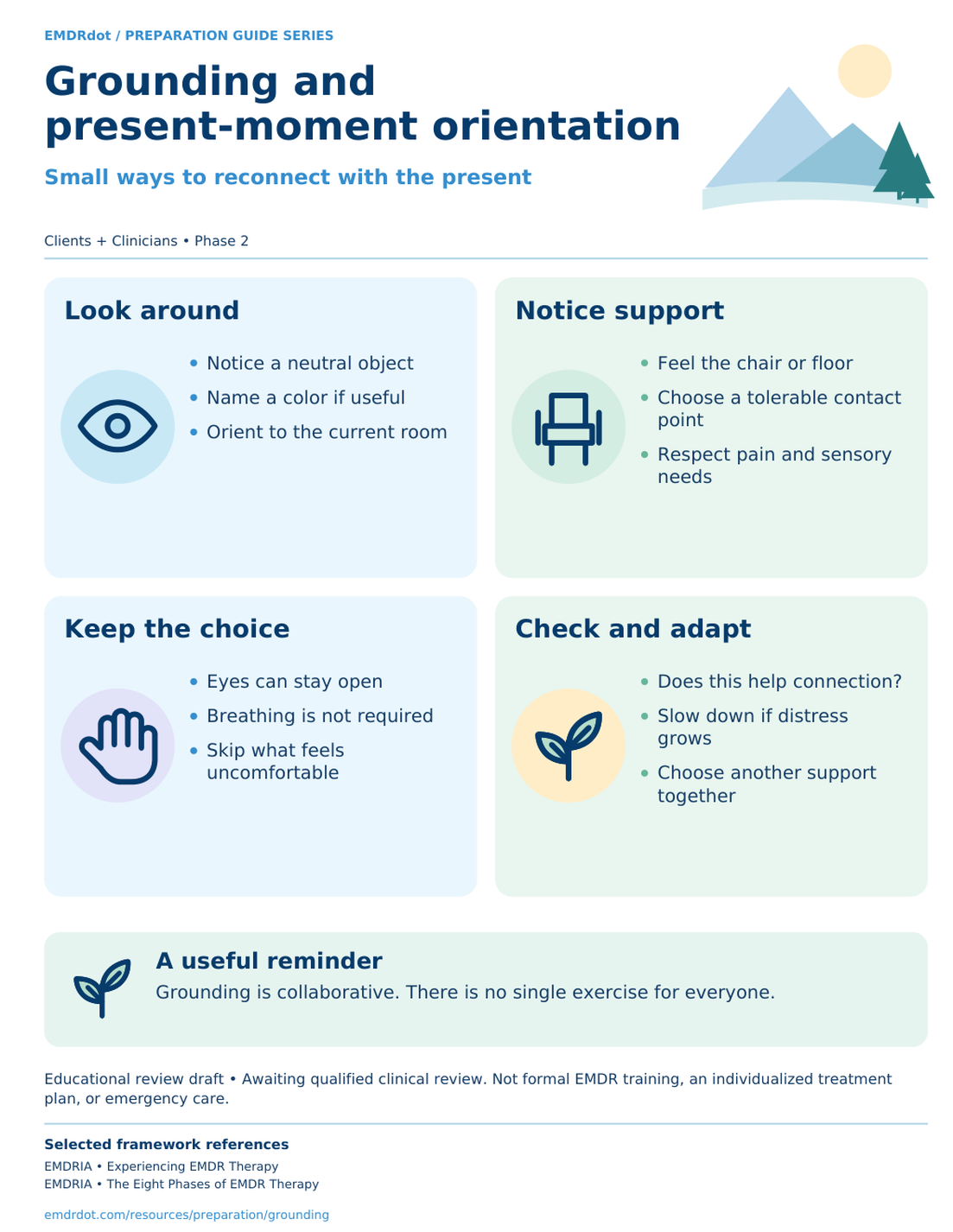
Grounding and present-moment orientation
Collaborative ways of noticing the present environment and the body’s contact with support.
Awaiting qualified clinical review. Educational reference; not a protocol, formal training, supervision, or individualized treatment.
Why this matters
A short, tolerable orienting action can help the therapist monitor connection and choose a manageable pace.
Client-facing explanation
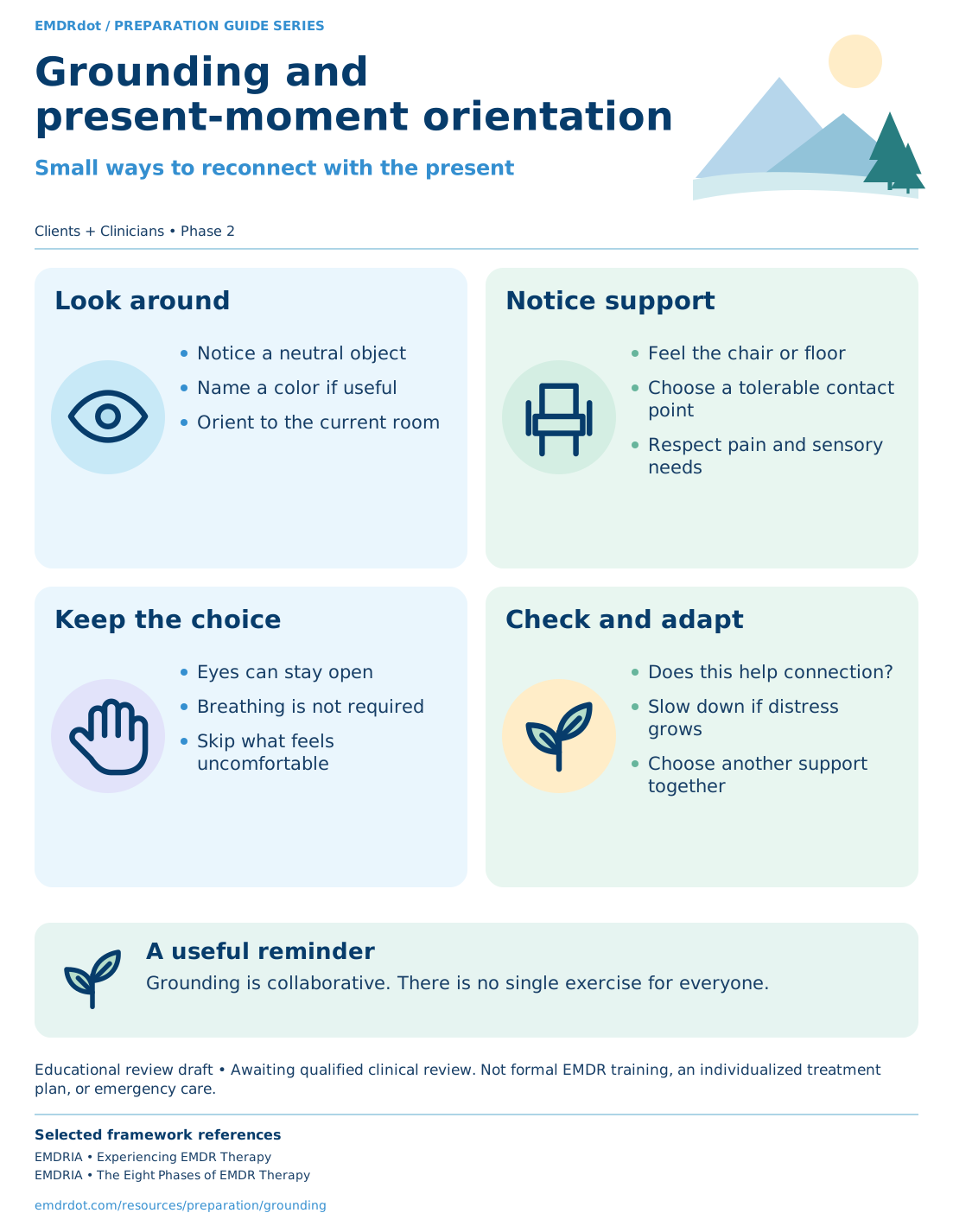
With your therapist, you can try noticing where you are, looking for a familiar object, or feeling the chair supporting you. You can skip anything that feels uncomfortable.
Clinician reference
Offer choices rather than a fixed sequence. External sensory orientation may be more tolerable than inward attention. Ask about sensory sensitivities, accessibility, pain, and cultural preferences.
General sequence and discussion checklist
Optional discussion aid. Selections clear when you leave; this does not assess clinical readiness.
Practical example / documentation consideration
Fictional example: naming two blue objects with eyes open works better than a breathing exercise.
References and evidence notes
These sources inform the framework and discussion. They do not independently validate these original exercises or establish that every preparation technique is necessary or effective for every client.
- EMDRIA: Experiencing EMDR Therapy
Client orientation and eight-phase overview.
- EMDRIA: The Eight Phases of EMDR Therapy
Framework and phase descriptions; does not validate these original worksheets.