Clients + Clinicians · Stabilization and Resourcing · Phase 2 · 3 min
Readiness discussion
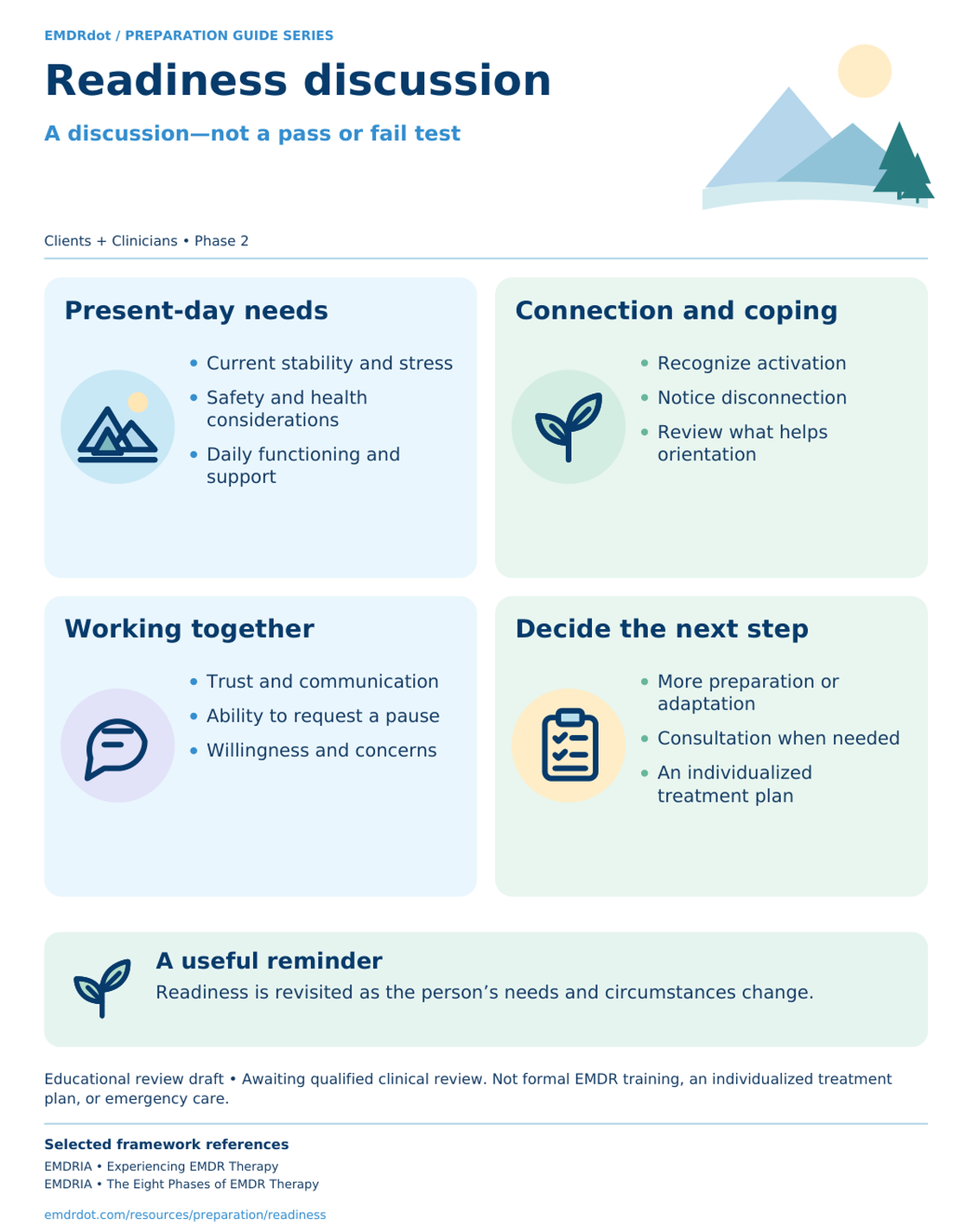
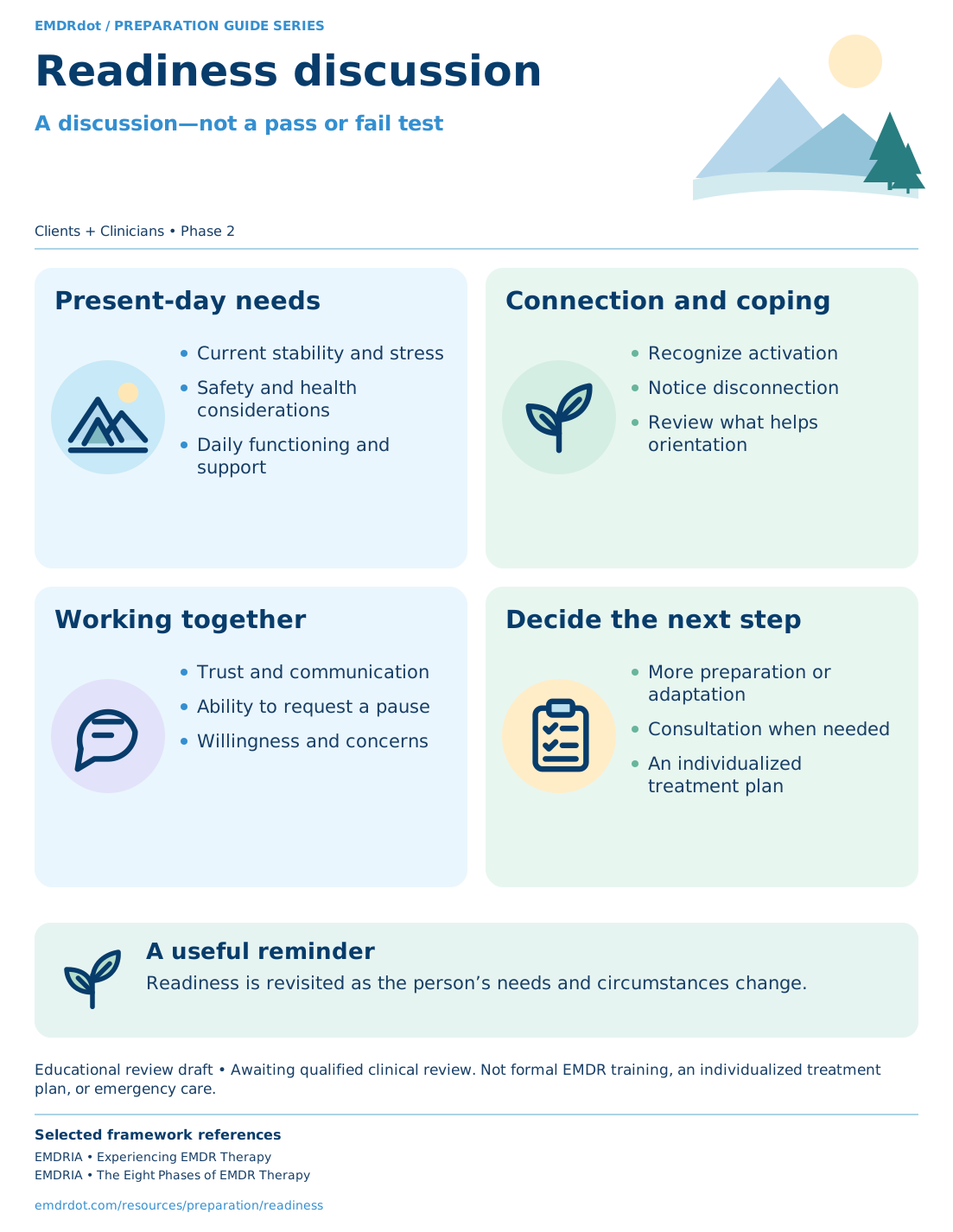
A collaborative review of present needs, capacities, and supports before changing the pace of treatment.
Awaiting qualified clinical review. Educational reference; not a protocol, formal training, supervision, or individualized treatment.
Why this matters
Readiness is revisited as circumstances change; it is not a score or a promise of an easy session.
Client-facing explanation
We can talk about what feels manageable, what makes it hard to stay present, and what support you would need before we take another step.
Clinician reference
Consider emotional regulation, ongoing stress and safety, dissociation, alliance, capacity to maintain present connection, support, and between-session needs. Discuss modifications, consultation, or more preparation rather than making categorical judgments from a checklist.
General sequence and discussion checklist
Optional discussion aid. Selections clear when you leave; this does not assess clinical readiness.
Practical example / documentation consideration
Fictional example: a week with major housing disruption leads to a fresh discussion of session priorities.
References and evidence notes
These sources inform the framework and discussion. They do not independently validate these original exercises or establish that every preparation technique is necessary or effective for every client.
- EMDRIA: Experiencing EMDR Therapy
Client orientation and eight-phase overview.
- EMDRIA: The Eight Phases of EMDR Therapy
Framework and phase descriptions; does not validate these original worksheets.