Clients · Getting Started · 3 min
The eight phases in everyday language
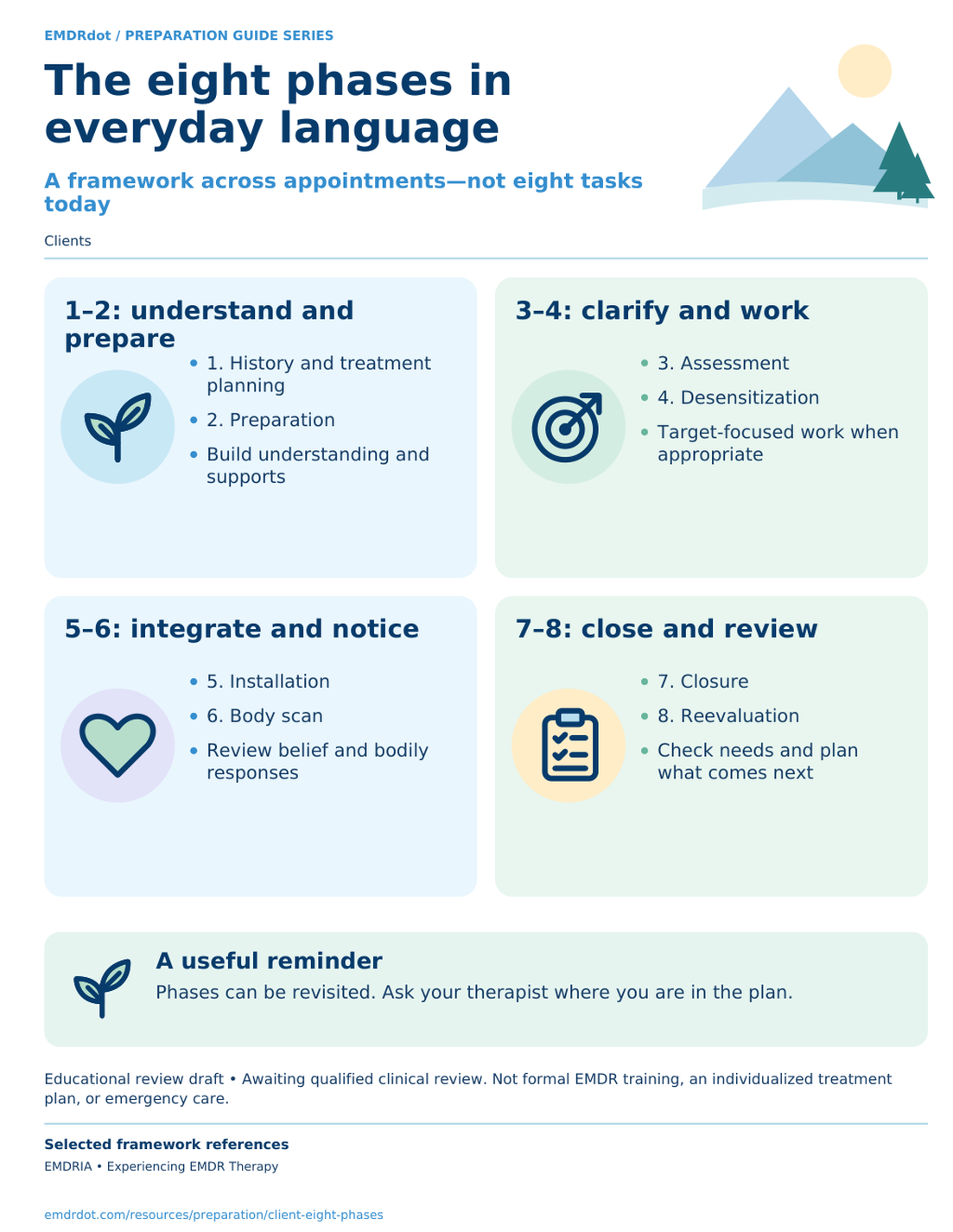
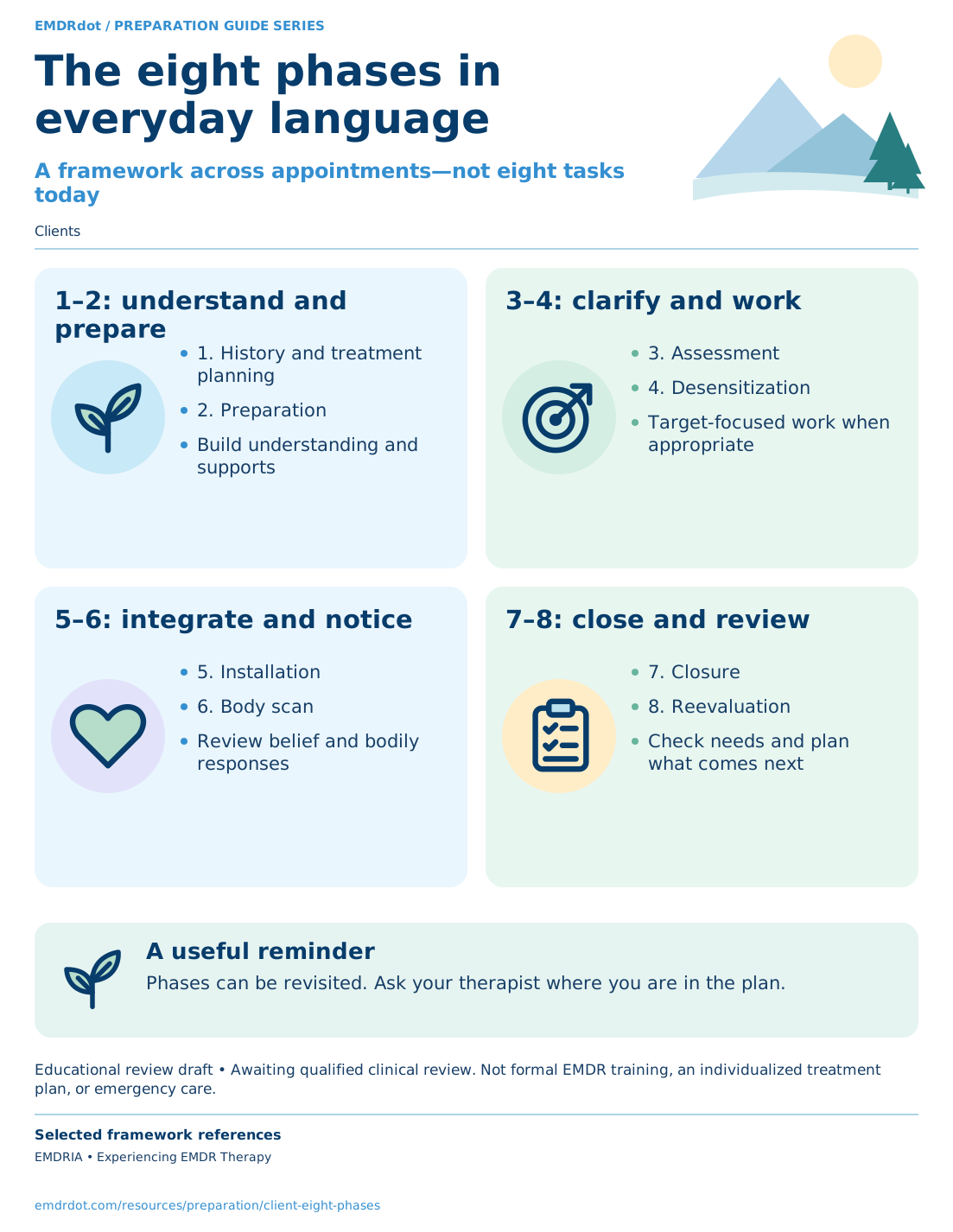
The phases describe a treatment framework, not eight steps that must all happen in one appointment.
Awaiting qualified clinical review. Educational reference; not a protocol, formal training, supervision, or individualized treatment.
Why this matters
Preparation, pacing, and review remain part of treatment even when attention turns to a memory.
Client-facing explanation
History: understand needs. Preparation: build understanding and supports. Assessment: clarify a target. Desensitization: work with the target. Installation: connect with a helpful belief. Body scan: notice bodily responses. Closure: return to present needs. Reevaluation: review and plan.
Clinician reference
Use this guide for shared discussion, adapting language and pacing to the person’s needs.
General sequence and discussion checklist
Optional discussion aid. Selections clear when you leave; this does not assess clinical readiness.
Practical example / documentation consideration
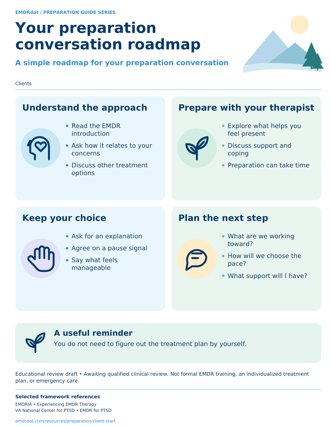
Conversation starter: “What would you like me to know before we choose the next step?”
References and evidence notes
These sources inform the framework and discussion. They do not independently validate these original exercises or establish that every preparation technique is necessary or effective for every client.
- EMDRIA: Experiencing EMDR Therapy
Client orientation and eight-phase overview.