Clients + Clinicians · Stabilization and Resourcing · Phase 2 · 3 min
Pause signals and client control
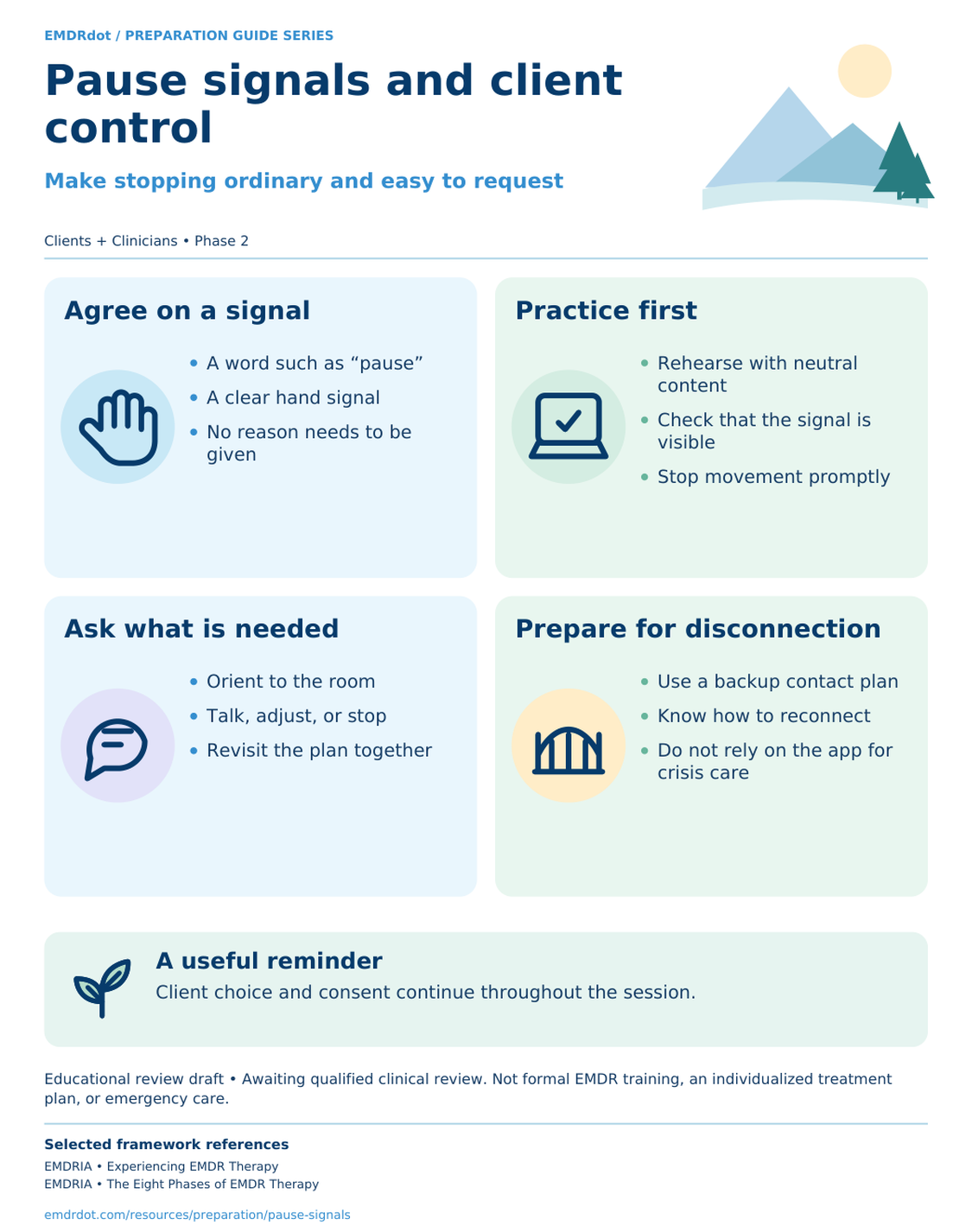
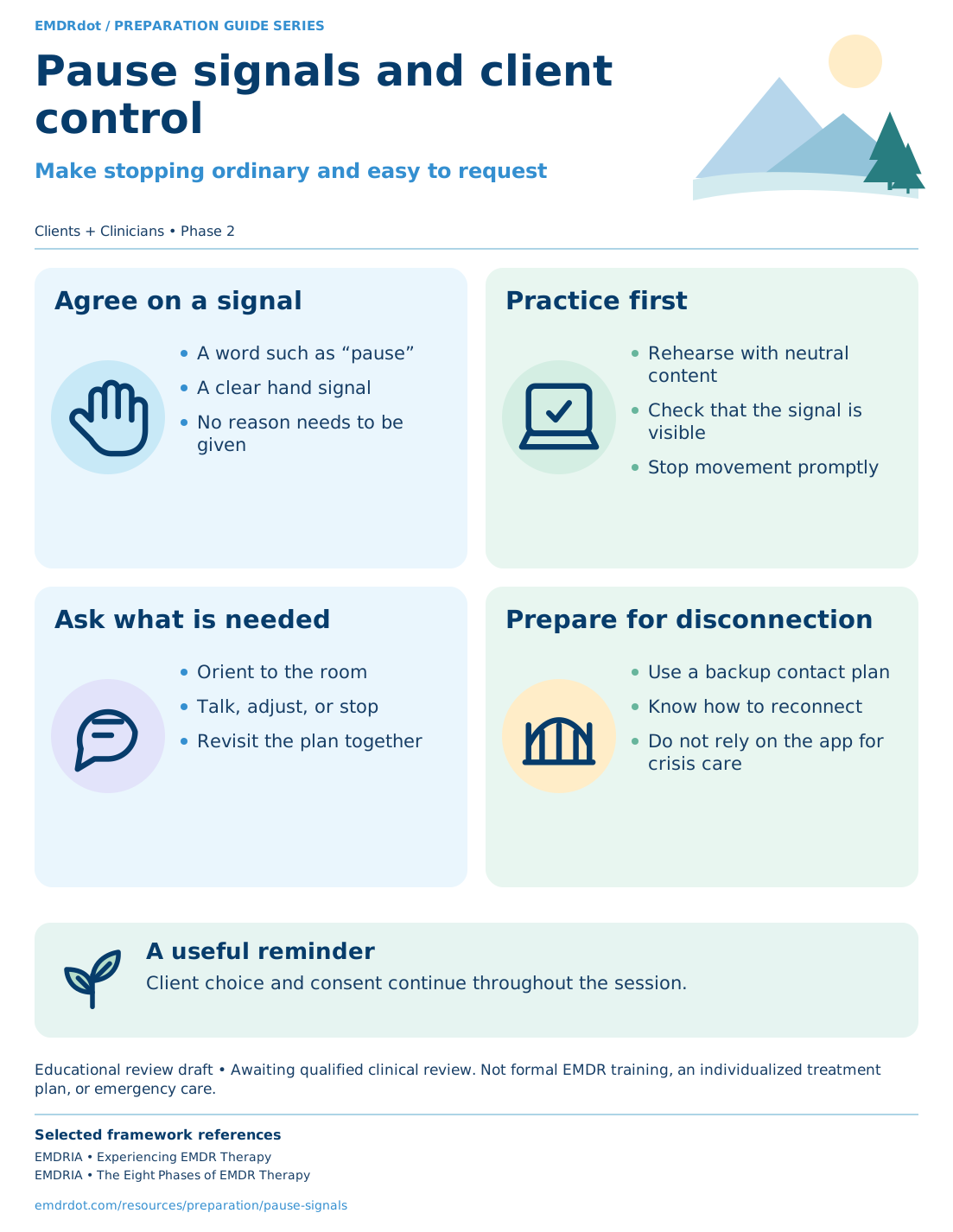
Agree on a clear signal, practice using it, and make stopping feel ordinary.
Awaiting qualified clinical review. Educational reference; not a protocol, formal training, supervision, or individualized treatment.
Why this matters
Consent continues throughout treatment. A practical rehearsal can make speaking up easier.
Client-facing explanation
You can say “pause,” raise a hand, or use the signal you agreed on. You do not need to wait for a set to finish or give a reason.
Clinician reference
Choose a verbal and visible signal together. Rehearse stopping stimulation using neutral content; confirm how to regain orientation and how to communicate during a connection failure.
General sequence and discussion checklist
Optional discussion aid. Selections clear when you leave; this does not assess clinical readiness.
Practical example / documentation consideration
Fictional example: the client raises an open hand; the therapist stops movement and asks whether to orient, talk, or end the exercise.
References and evidence notes
These sources inform the framework and discussion. They do not independently validate these original exercises or establish that every preparation technique is necessary or effective for every client.
- EMDRIA: Experiencing EMDR Therapy
Client orientation and eight-phase overview.
- EMDRIA: The Eight Phases of EMDR Therapy
Framework and phase descriptions; does not validate these original worksheets.