Clinicians · Preparation · Phase 1 · 3 min
Informed consent discussion checklist
Consent is a continuing conversation about the proposed treatment, available choices, and client control.
Awaiting qualified clinical review. Educational reference; not a protocol, formal training, supervision, or individualized treatment.
Why this matters
Clear explanations support informed participation and realistic expectations.
Client-facing explanation
You can ask how EMDR might help, what other options exist, how information is handled, and what happens if you want to stop.
Clinician reference
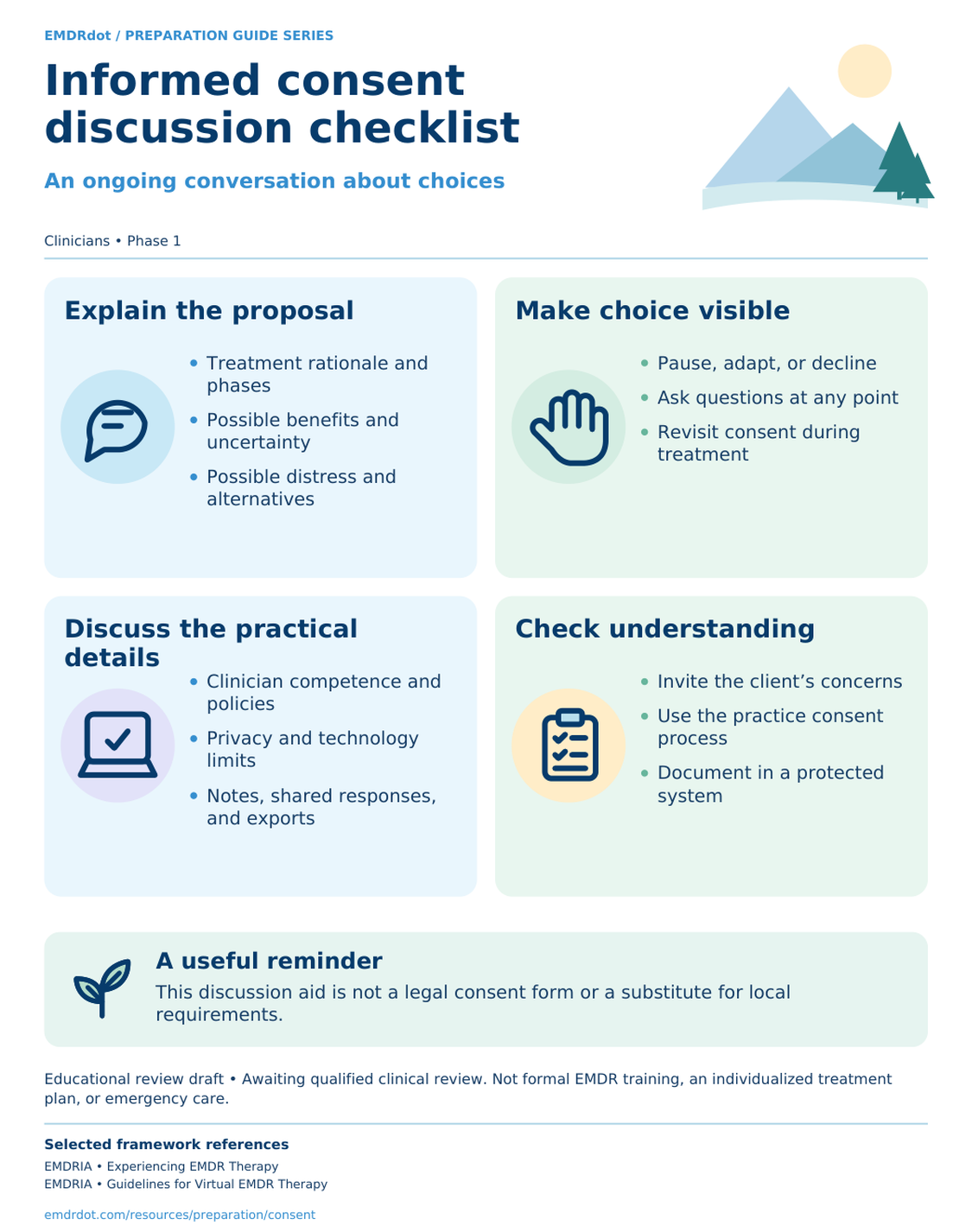
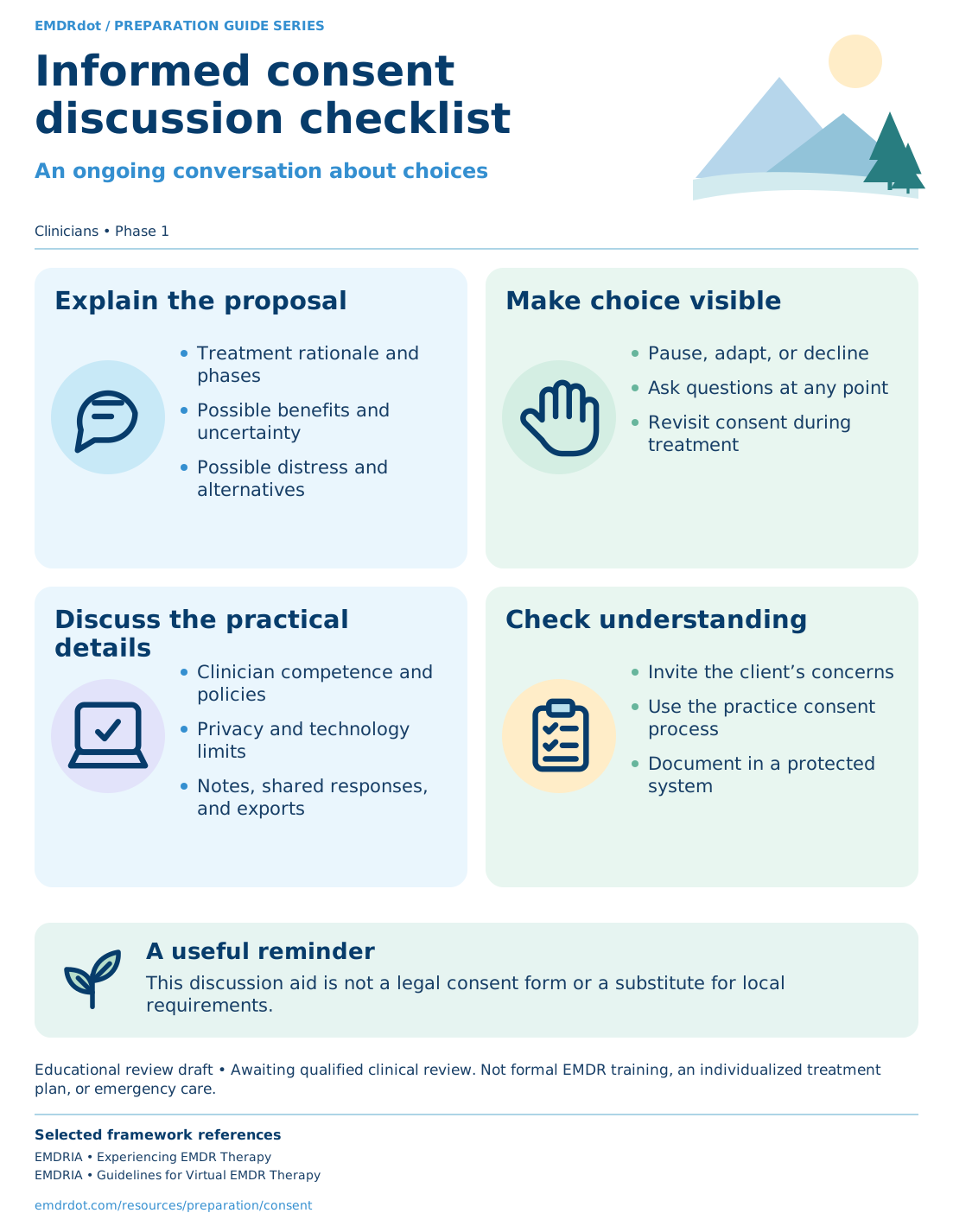
Discuss the proposed approach, intended benefits, uncertainties, possible distress, alternatives, clinician training, privacy and technology limitations, fees and practice policies, and the right to pause or decline. Use your jurisdiction-specific consent process.
General sequence and discussion checklist
Optional discussion aid. Selections clear when you leave; this does not assess clinical readiness.
Practical example / documentation consideration
An open question such as “What would you like clarified before deciding?” can reveal concerns that a signature alone cannot.
References and evidence notes
These sources inform the framework and discussion. They do not independently validate these original exercises or establish that every preparation technique is necessary or effective for every client.
- EMDRIA: Experiencing EMDR Therapy
Client orientation and eight-phase overview.
- EMDRIA: Guidelines for Virtual EMDR Therapy
Professional considerations for virtual practice; verify current local requirements.