Clients + Clinicians · Telehealth · Phase 2 · 3 min
Telehealth preparation
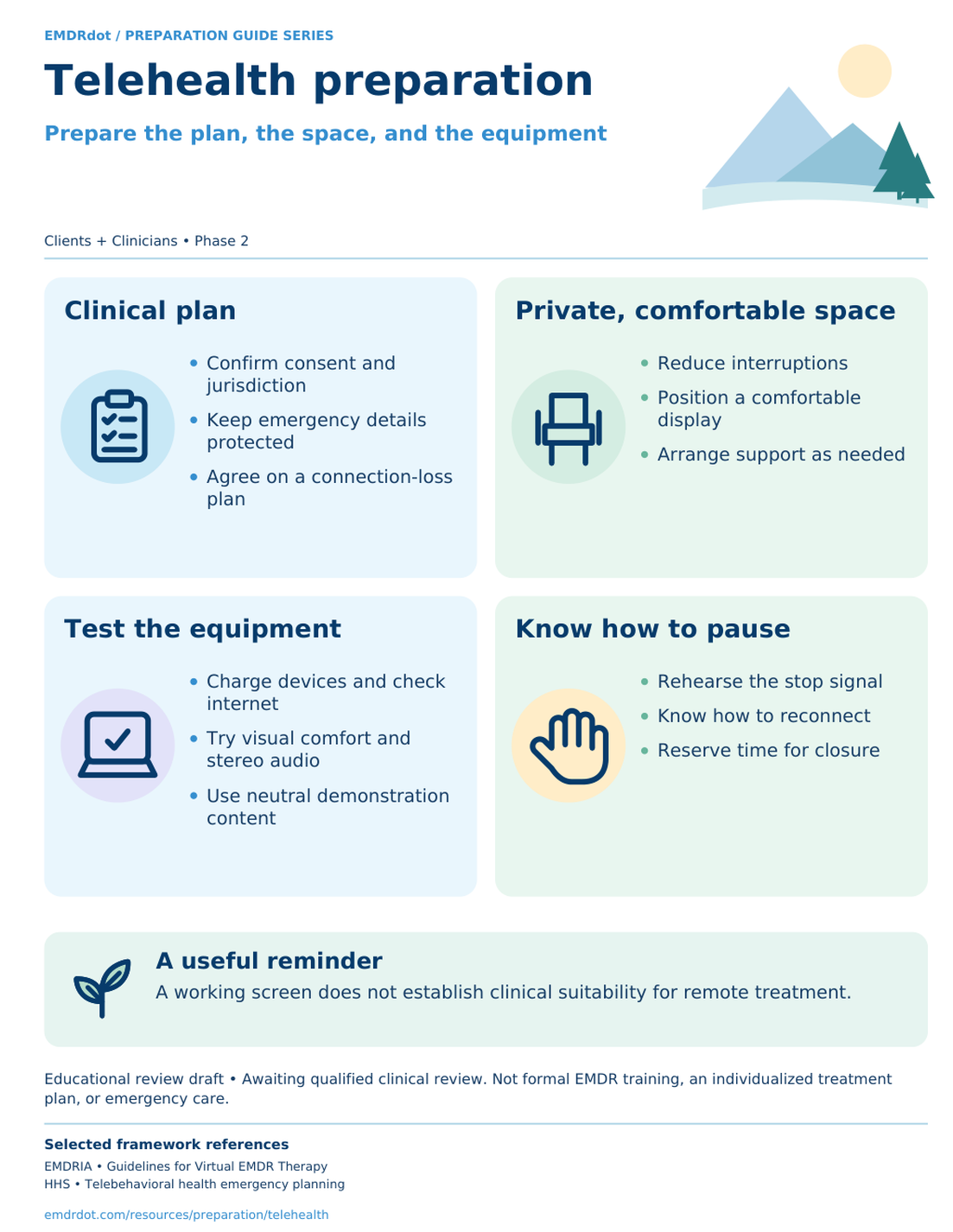
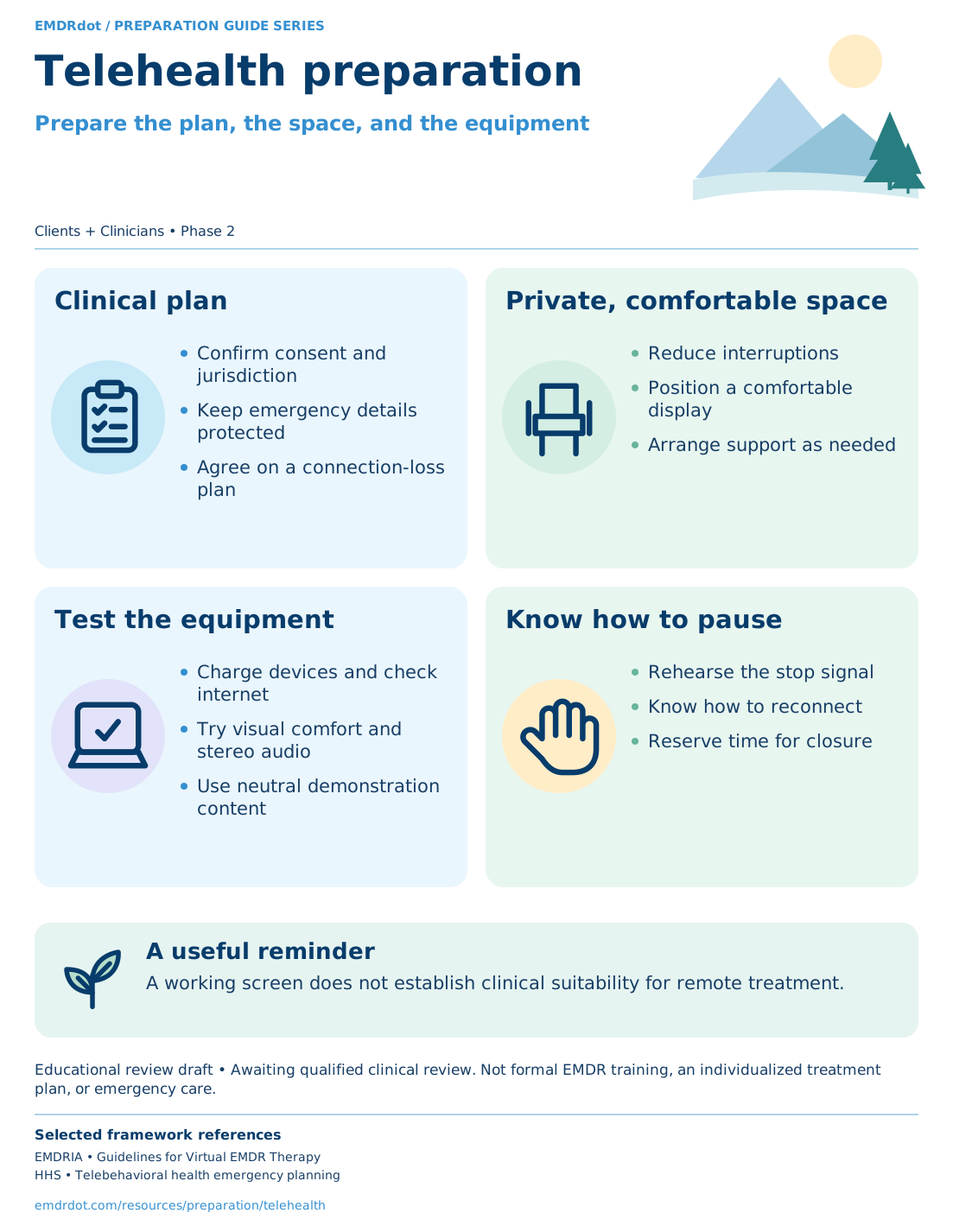
Prepare the clinical plan, the environment, and the connection before remote work. EMDRdot supplies stimulation tools, not a complete clinical telehealth service.
Awaiting qualified clinical review. Educational reference; not a protocol, formal training, supervision, or individualized treatment.
Why this matters
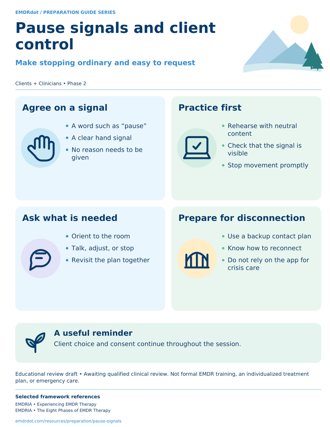
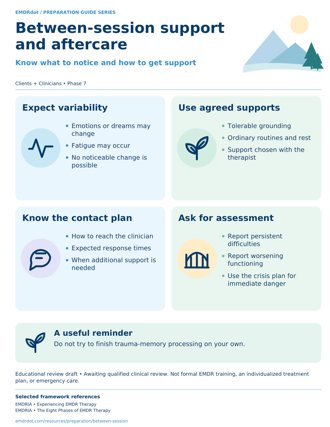
A backup plan and an agreed way to stop matter as much as a working screen.
Client-facing explanation
Choose a private place, charge your device, and test your connection. Ask your therapist what to do if the call drops. You should not have to work out a backup plan while distressed.
Clinician reference
Assess remote-treatment appropriateness, consent, jurisdiction, client location, local emergency arrangements, backup communication, privacy, and support. Keep emergency contacts and exact locations in protected practice systems, never in these educational tools.
General sequence and discussion checklist
Optional discussion aid. Selections clear when you leave; this does not assess clinical readiness.
Practical example / documentation consideration
Fictional connection plan: if the call fails, stop stimulation and follow the clinician-agreed backup contact plan. No personal contact details are collected here.
Try the equipment, with neutral content
No room is created. No camera, microphone, health information, notes, or ratings are collected. Start only when comfortable; pause for eye strain, dizziness, distress, or disconnection.
Movement starts paused, including for reduced-motion preferences. Movement occurs only after you choose Start. Use headphones at a low comfortable volume for a stereo check.
Checking browser features…
Confirm with your therapist
Optional discussion aid. Selections clear when you leave; this does not assess clinical readiness.
References and evidence notes
These sources inform the framework and discussion. They do not independently validate these original exercises or establish that every preparation technique is necessary or effective for every client.
- EMDRIA: Guidelines for Virtual EMDR Therapy
Professional considerations for virtual practice; verify current local requirements.
- HHS: Creating an emergency plan for telebehavioral health
Backup communication and emergency planning; keep client details in protected practice systems.