Clinicians · Preparation · Phase 1 · 3 min
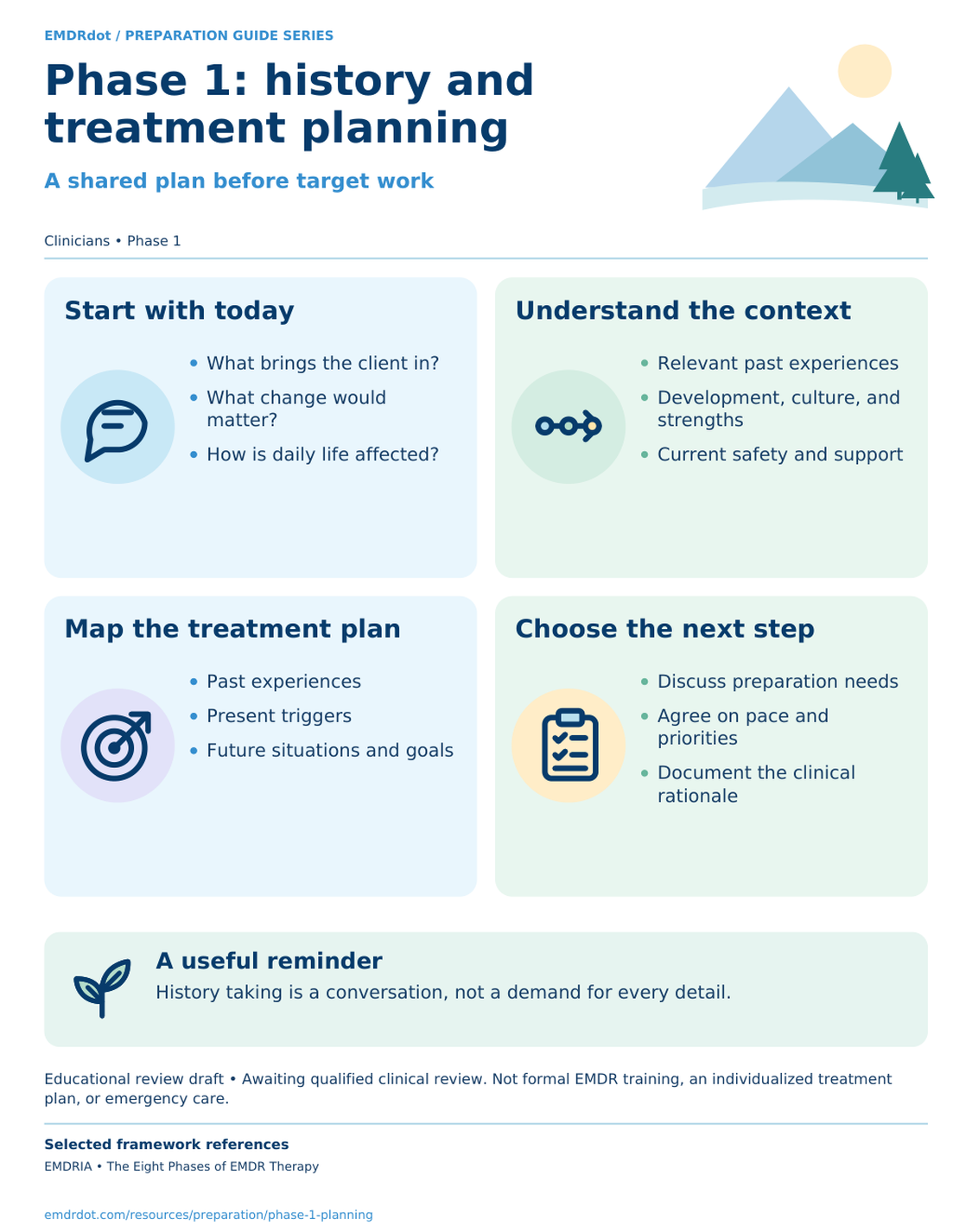
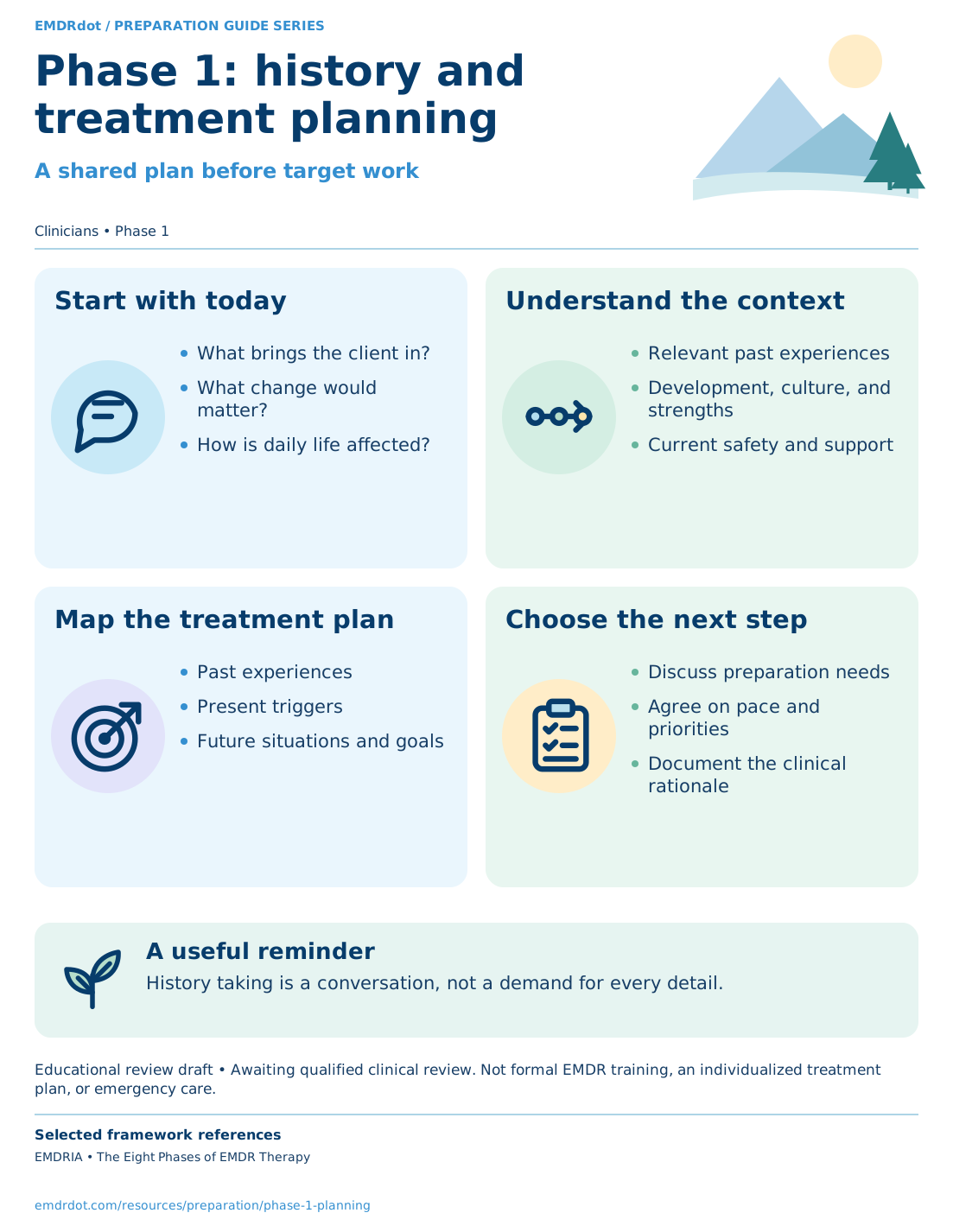
Phase 1: history and treatment planning
Build a collaborative formulation before choosing targets. History taking is paced to the person; it is not a request for a detailed account of every traumatic experience.
Awaiting qualified clinical review. Educational reference; not a protocol, formal training, supervision, or individualized treatment.
Why this matters
A useful plan connects current concerns, relevant experiences, strengths, and achievable goals while identifying needs that affect pacing.
Client-facing explanation
You can start with what brings you here and what you hope will change. You and your therapist can decide how much detail is useful today.
Clinician reference
Assess presenting concerns, functional impact, developmental and cultural context, current safety, dissociation, medical and substance-related considerations, supports, and coping. Use appropriate assessment within your competence; seek consultation for complexity. No checklist determines suitability.
General sequence and discussion checklist
Optional discussion aid. Selections clear when you leave; this does not assess clinical readiness.
Practical example / documentation consideration
Fictional planning example: a present-day driving trigger, a past collision, and a future commute may be mapped together. The clinician decides sequencing after assessment.
References and evidence notes
These sources inform the framework and discussion. They do not independently validate these original exercises or establish that every preparation technique is necessary or effective for every client.
- EMDRIA: The Eight Phases of EMDR Therapy
Framework and phase descriptions; does not validate these original worksheets.