Clinicians · Stabilization and Resourcing · Phase 2 · 3 min
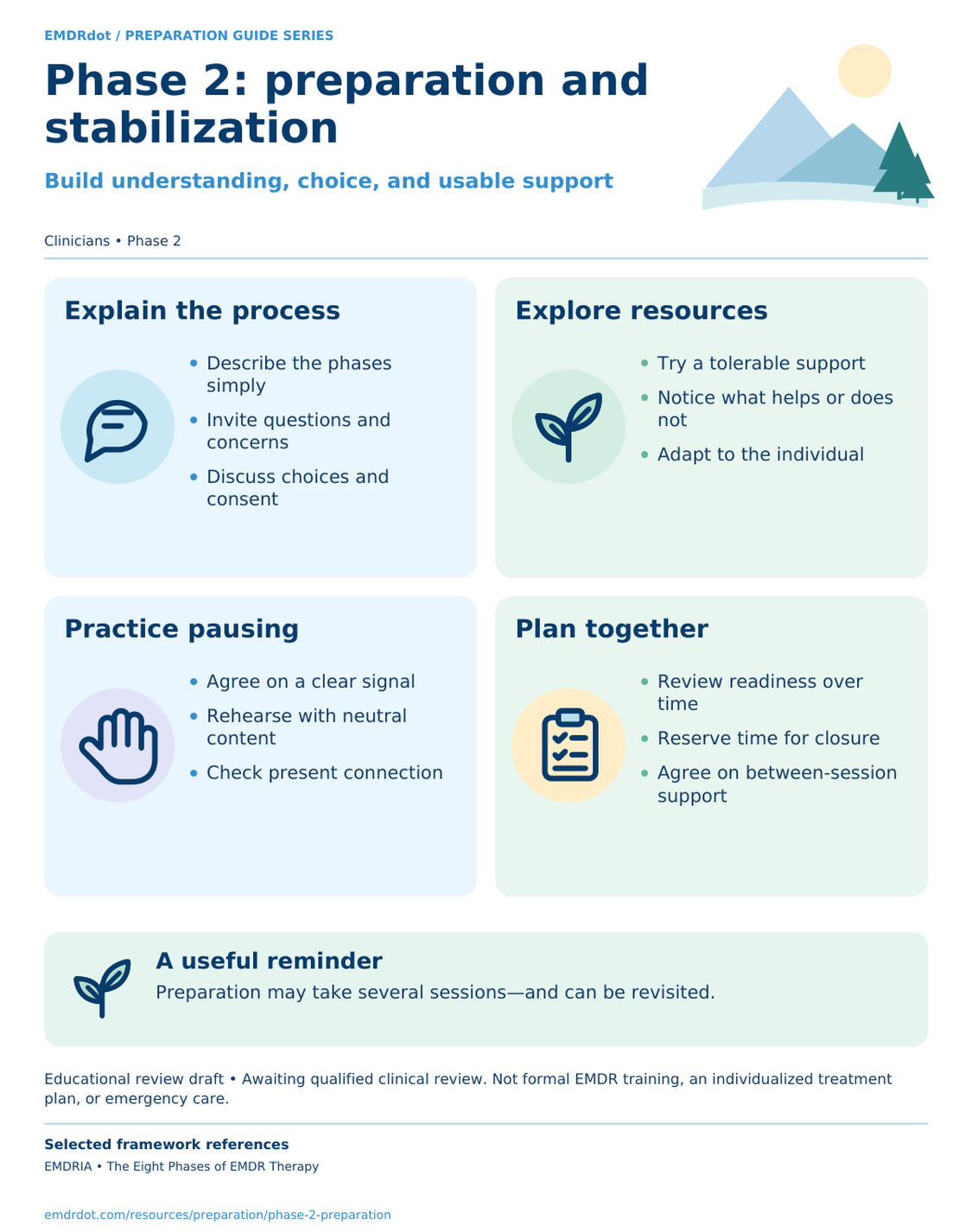
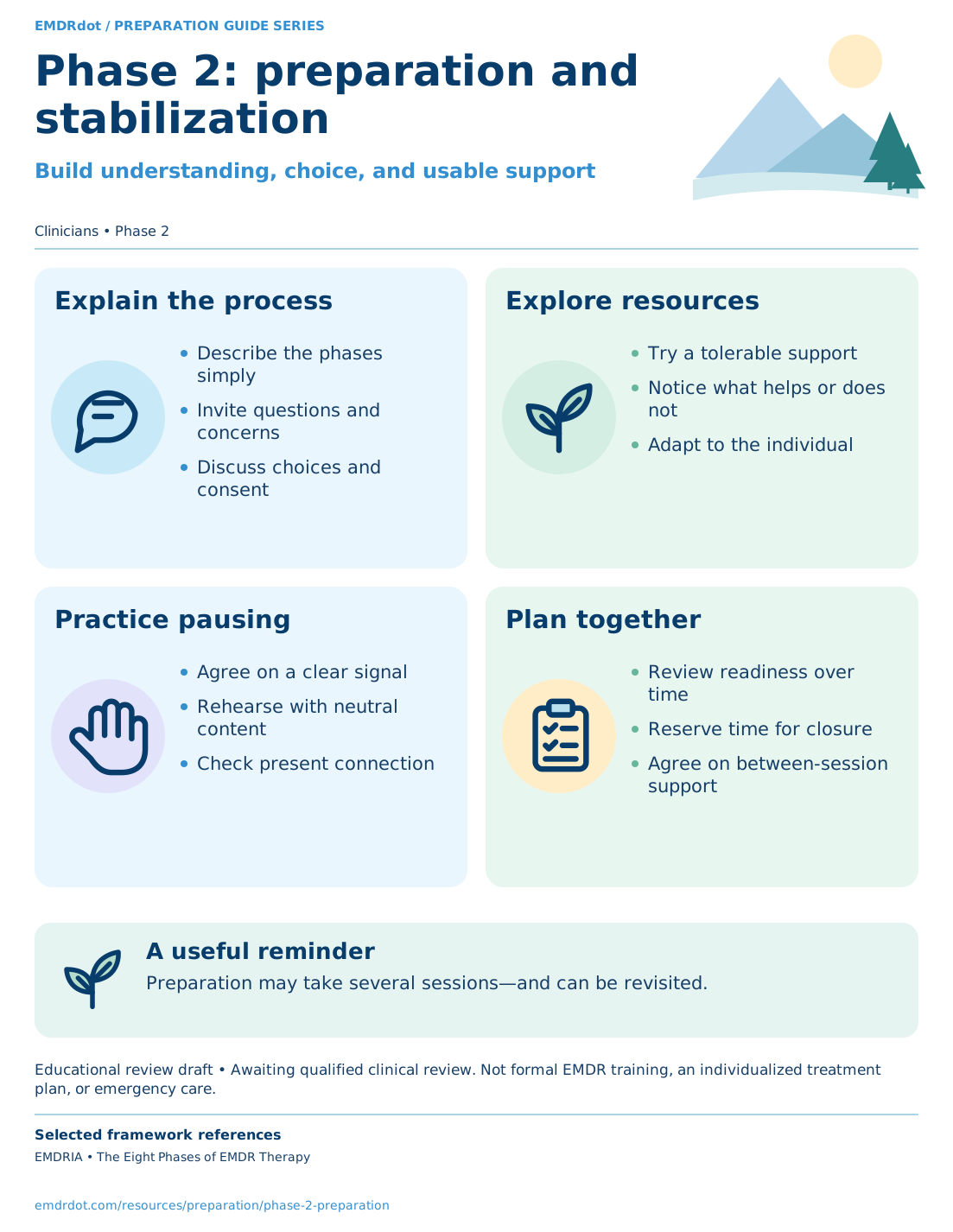
Phase 2: preparation and stabilization
Explain the treatment, establish shared control, and develop resources the client can actually use. Preparation may take several sessions and may be revisited.
Awaiting qualified clinical review. Educational reference; not a protocol, formal training, supervision, or individualized treatment.
Why this matters
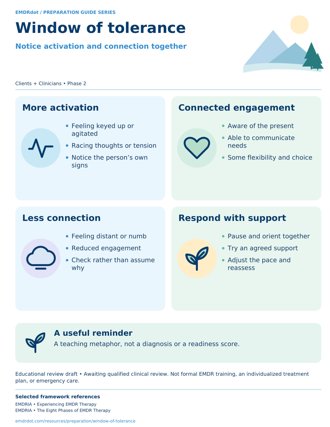
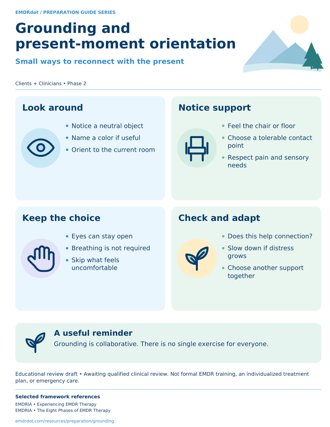
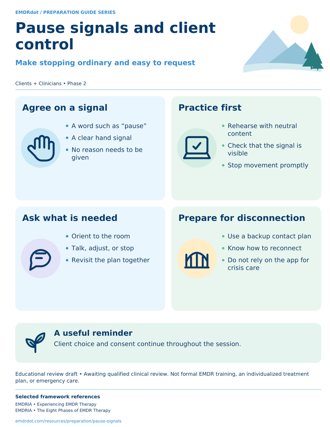
Knowing how to pause, orient, and obtain support helps the client and clinician monitor tolerability.
Client-facing explanation
Preparation gives us time to find what helps you feel present and supported. You do not have to visualize a peaceful place or feel completely calm to participate in the discussion.
Clinician reference
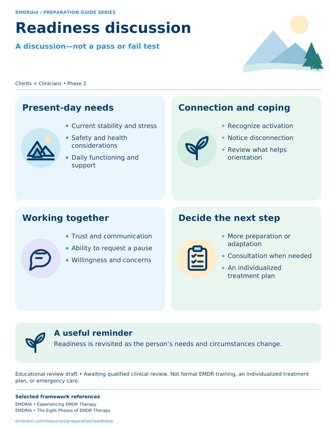
Provide an understandable rationale, discuss consent and alternatives, agree on pause signals, assess dual attention and resource tolerability, and plan between-session support. Select and adapt resources collaboratively; no technique is mandatory for every client.
General sequence and discussion checklist
Optional discussion aid. Selections clear when you leave; this does not assess clinical readiness.
Practical example / documentation consideration
A client may prefer looking around the room to imagery. Record the preferred support in the practice record and check it again later.
Safe/calm place · Phase 2 script
A stabilization and resource-building reference. Use “Signal word” for the resource cue, separately from the stop signal.
Explain & agree
“Let’s find a resource you can return to for calm. You remain in charge and can pause whenever you wish.”
Agree on a stop signal separately from the resource signal word. Keep eyes open if preferred.Find the place
“What real or imagined setting feels peaceful enough to spend a moment with?”
If imagery does not help, try an external focus or another trained resource.Notice details & sensations
“What stands out around you there? Notice any colors, sounds, scents, comfortable feelings, and where comfort registers physically.”
Capture a short description, sensory details, feelings, and pleasant body sensations if useful.Strengthen gently
“Rest your attention on what feels pleasant. If gentle BLS suits you, we can try a short set, then check what changed.”
Use brief, slow BLS within training; the Miller reference describes 4–8 slow passes, not a fixed number of sets. Check after each set. Stop for distress or disconnection; adapt the resource.Choose the signal word
“Which word or short phrase brings this experience to mind? Hold that word with the comfortable image and sensations.”
Record the client’s signal word. Add a brief slow set only if helpful, then check the response.Recall without BLS
“Try using your signal word by itself. What happens to the feeling of calm?”
Pause BLS here and keep it paused for the following recall and practice steps.Practice a small state change
“If this feels manageable, choose a minor irritation, around 1 or 2 out of 10. Then return to your signal word and resource. What changes?”
Only test after comfortable recall. Avoid trauma targets. Repeat independently if useful; stop and orient if activation increases.Integrate
“Between sessions, try recalling this resource in ordinary moments. We’ll review what helped next time.”
Resource work supports preparation; it does not establish readiness for reprocessing.
Original educational wording for trained clinicians. Procedures vary by training; individualize and monitor the response. This reference does not change BLS controls.
References and evidence notes
These sources inform the framework and discussion. They do not independently validate these original exercises or establish that every preparation technique is necessary or effective for every client.
- EMDRIA: The Eight Phases of EMDR Therapy
Framework and phase descriptions; does not validate these original worksheets.