Clients + Clinicians · Stabilization and Resourcing · Phase 2 · 3 min
Calm or safe place
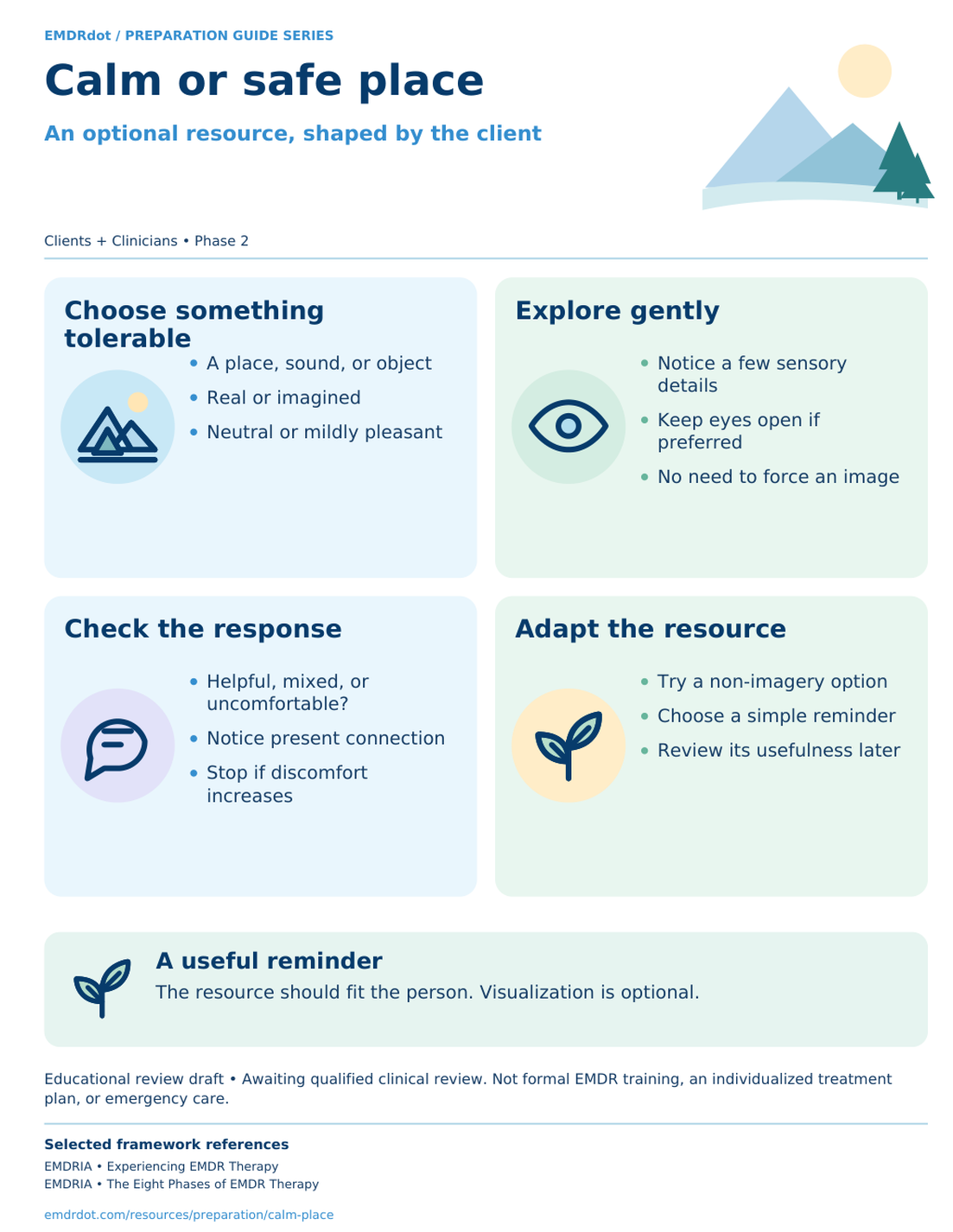
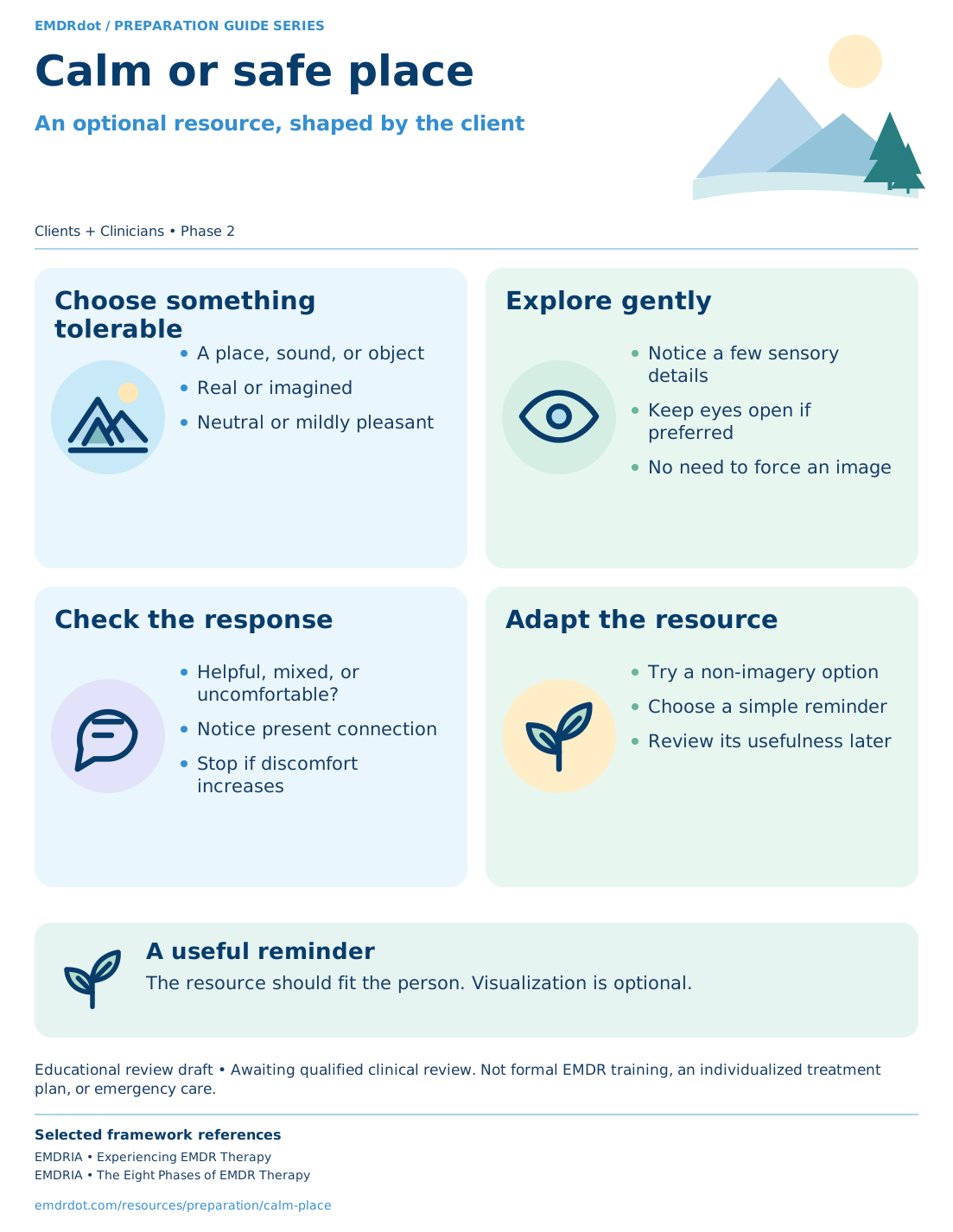
A therapist-guided resource that explores a tolerable sense of comfort, steadiness, or relative safety.
Awaiting qualified clinical review. Educational reference; not a protocol, formal training, supervision, or individualized treatment.
Why this matters
A chosen resource can give the client and clinician a shared way to practice returning attention to supportive experiences.
Client-facing explanation
You can choose something real, imagined, or sensory. It does not have to be perfectly safe. You can keep your eyes open or decide this is not helpful.
Clinician reference
Original introduction: “Would it be useful to explore something that feels a little steadier? It could be a place, a sound, an activity, or something else.” Assess the experience before considering any installation procedures from your training.
General sequence and discussion checklist
Optional discussion aid. Selections clear when you leave; this does not assess clinical readiness.
Practical example / documentation consideration
Fictional adaptation: noticing the weight and texture of a smooth stone replaces visual imagery.
References and evidence notes
These sources inform the framework and discussion. They do not independently validate these original exercises or establish that every preparation technique is necessary or effective for every client.
- EMDRIA: Experiencing EMDR Therapy
Client orientation and eight-phase overview.
- EMDRIA: The Eight Phases of EMDR Therapy
Framework and phase descriptions; does not validate these original worksheets.