Clients + Clinicians · Stabilization and Resourcing · Phase 2 · 3 min
Window of tolerance
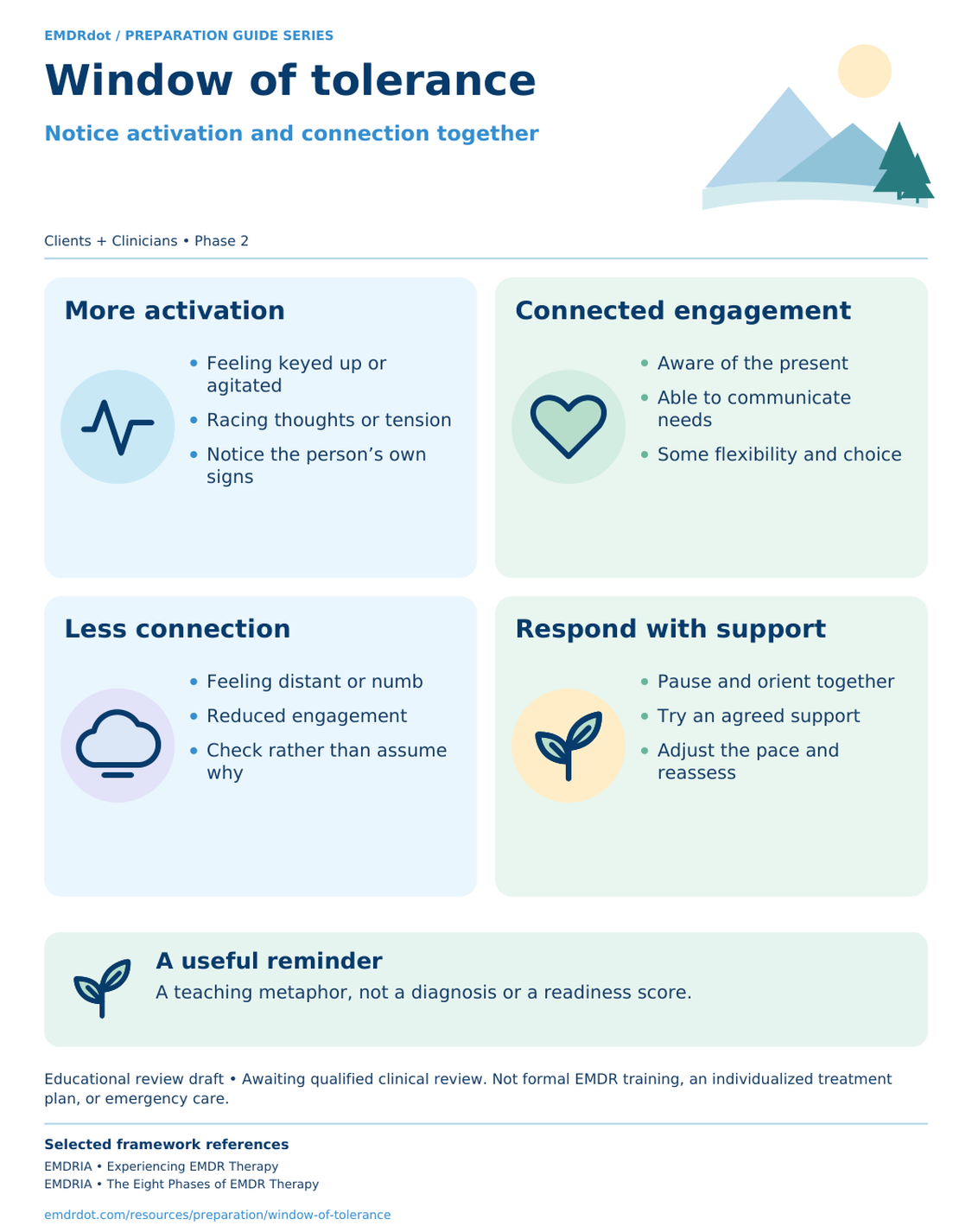
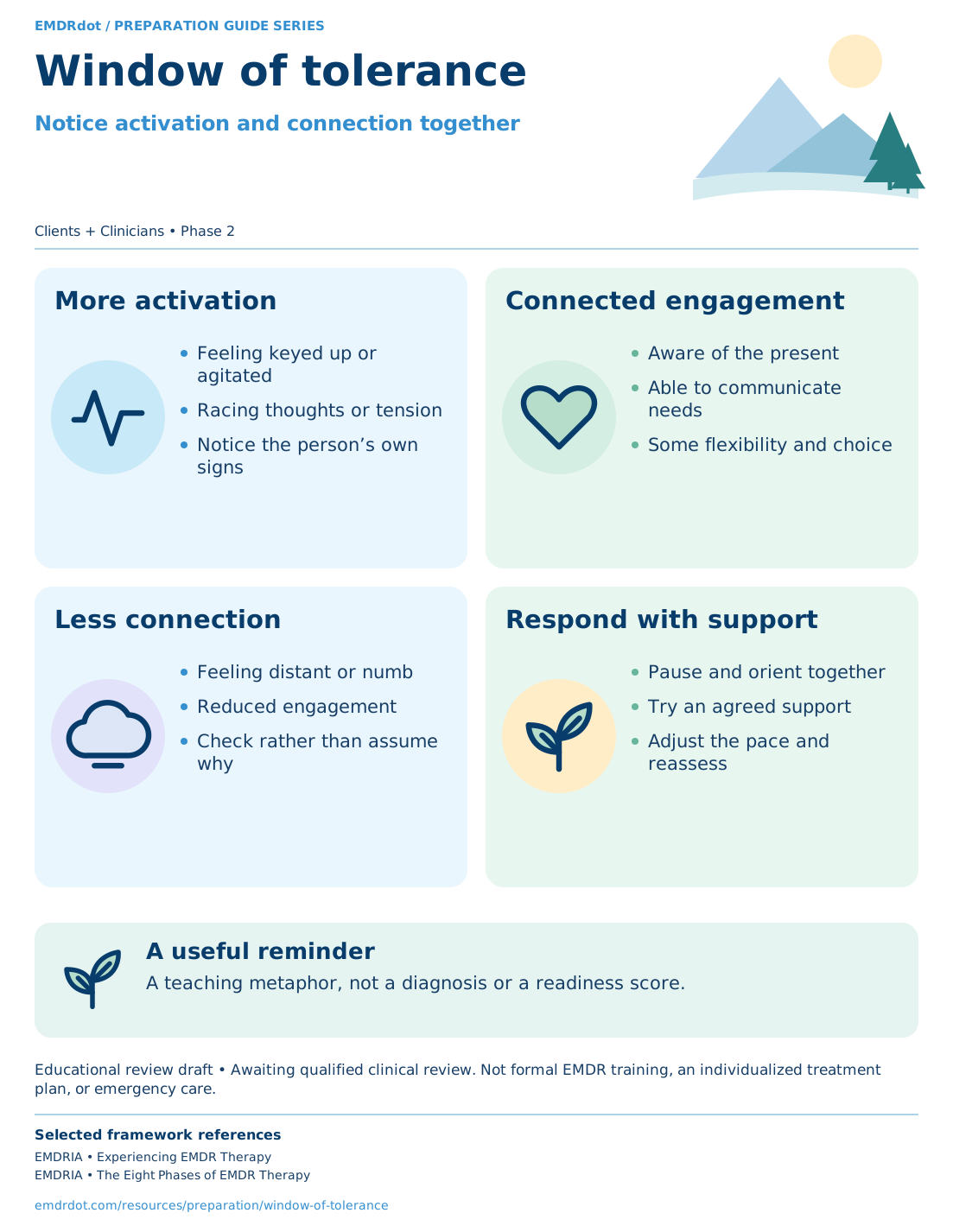
A flexible way to talk about activation, connection, and the ability to stay engaged. It is a teaching metaphor, not a diagnostic test.
Awaiting qualified clinical review. Educational reference; not a protocol, formal training, supervision, or individualized treatment.
Why this matters
Recognizing patterns can support an individualized plan without labelling every uncomfortable feeling as unsafe.
Client-facing explanation
We can notice when things feel too intense, when you feel distant, and what helps you stay connected to the room and to me.
Clinician reference
Explore the person’s own signs of hyperarousal (for example, agitation or racing thoughts) and hypoarousal (for example, numbness or feeling far away). These patterns overlap with other conditions; assess rather than assuming a cause.
General sequence and discussion checklist
Optional discussion aid. Selections clear when you leave; this does not assess clinical readiness.
Practical example / documentation consideration
Fictional example: “My hearing gets distant” becomes a cue to pause and look around with the therapist.
References and evidence notes
These sources inform the framework and discussion. They do not independently validate these original exercises or establish that every preparation technique is necessary or effective for every client.
- EMDRIA: Experiencing EMDR Therapy
Client orientation and eight-phase overview.
- EMDRIA: The Eight Phases of EMDR Therapy
Framework and phase descriptions; does not validate these original worksheets.