Clients + Clinicians · Stabilization and Resourcing · Phase 2 · 3 min
Container exercise
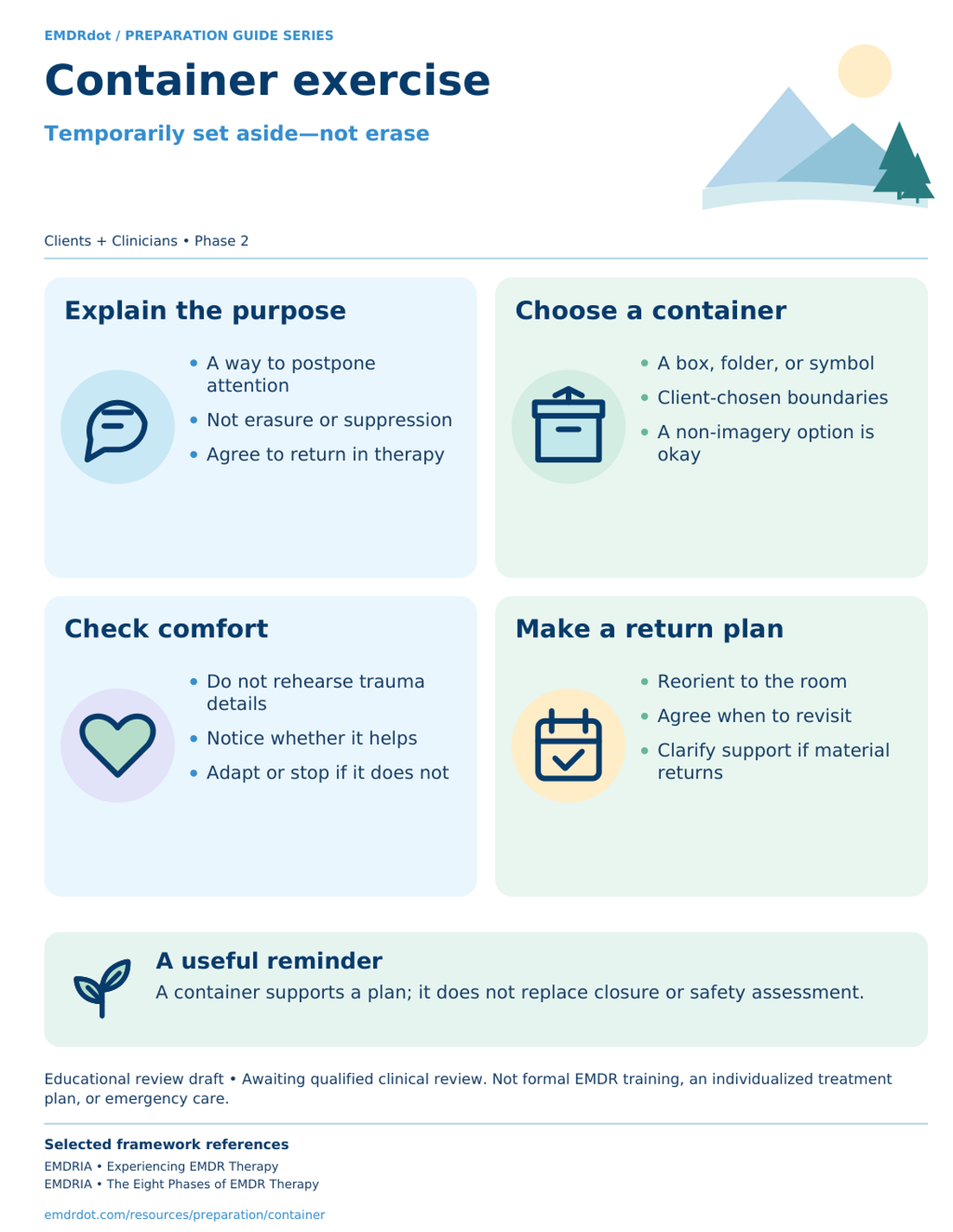
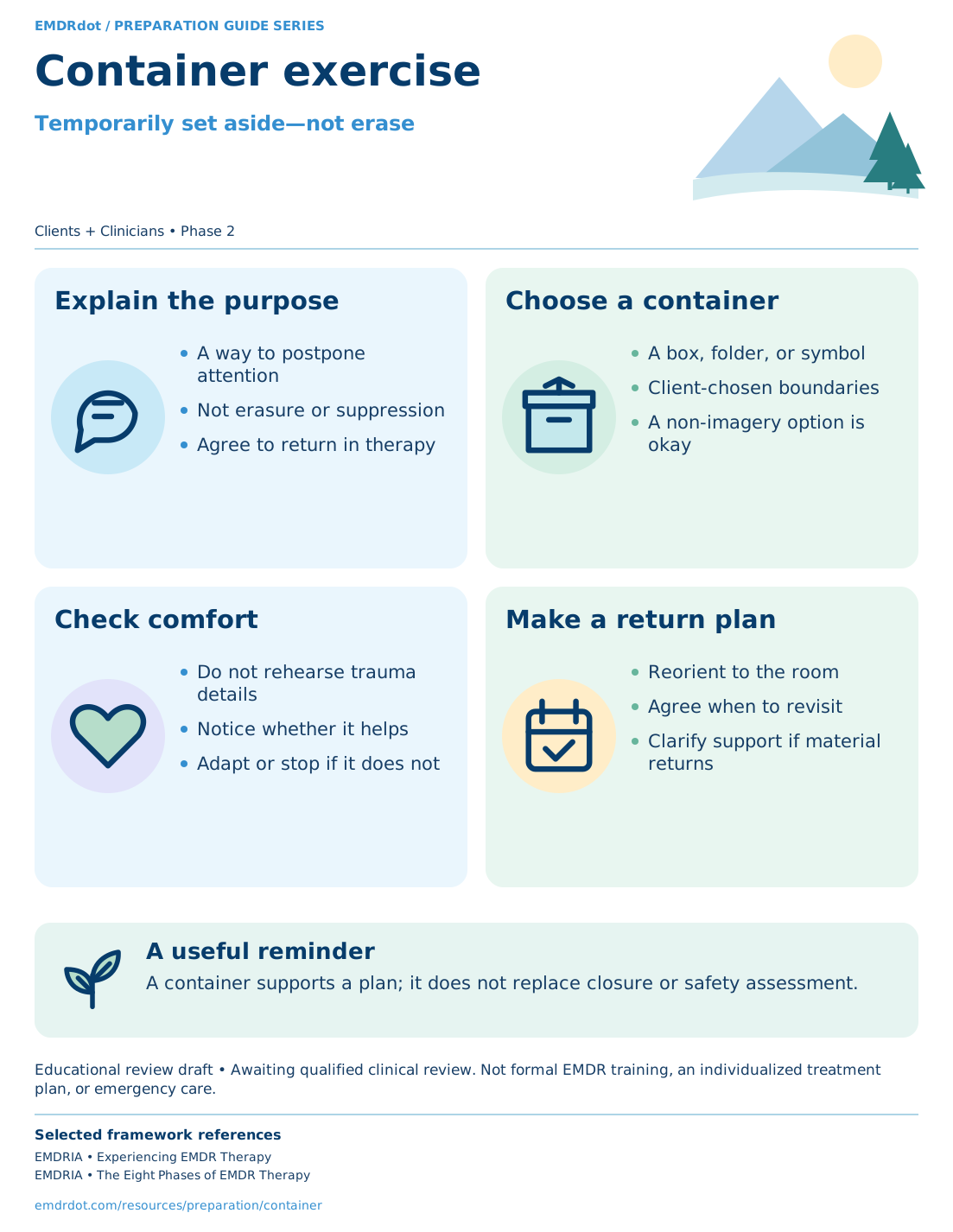
An optional imagery or symbolic exercise for setting material aside temporarily, with an explicit plan to return to it in therapy.
Awaiting qualified clinical review. Educational reference; not a protocol, formal training, supervision, or individualized treatment.
Why this matters
It can support boundaries around session endings when postponing attention is tolerable.
Client-facing explanation
You might picture a box, folder, or other way of setting something aside until we have time together. You choose whether it helps and what it means.
Clinician reference
Explain that this is temporary organization, not erasure or suppression. Invite an adaptable container concept and check whether imagining it increases distress or separation from the present.
General sequence and discussion checklist
Optional discussion aid. Selections clear when you leave; this does not assess clinical readiness.
Practical example / documentation consideration
Fictional example: a folder labelled “for next appointment” represents unfinished topics; no trauma details are entered into this website.
References and evidence notes
These sources inform the framework and discussion. They do not independently validate these original exercises or establish that every preparation technique is necessary or effective for every client.
- EMDRIA: Experiencing EMDR Therapy
Client orientation and eight-phase overview.
- EMDRIA: The Eight Phases of EMDR Therapy
Framework and phase descriptions; does not validate these original worksheets.