Clients + Clinicians · Stabilization and Resourcing · Phase 2 · 3 min
Resource development and installation (RDI)
A clinician-guided approach to identifying and strengthening access to supportive qualities or experiences.
Awaiting qualified clinical review. Educational reference; not a protocol, formal training, supervision, or individualized treatment.
Why this matters
The aim is usable support, not forcing positive feelings or bypassing distress.
Client-facing explanation
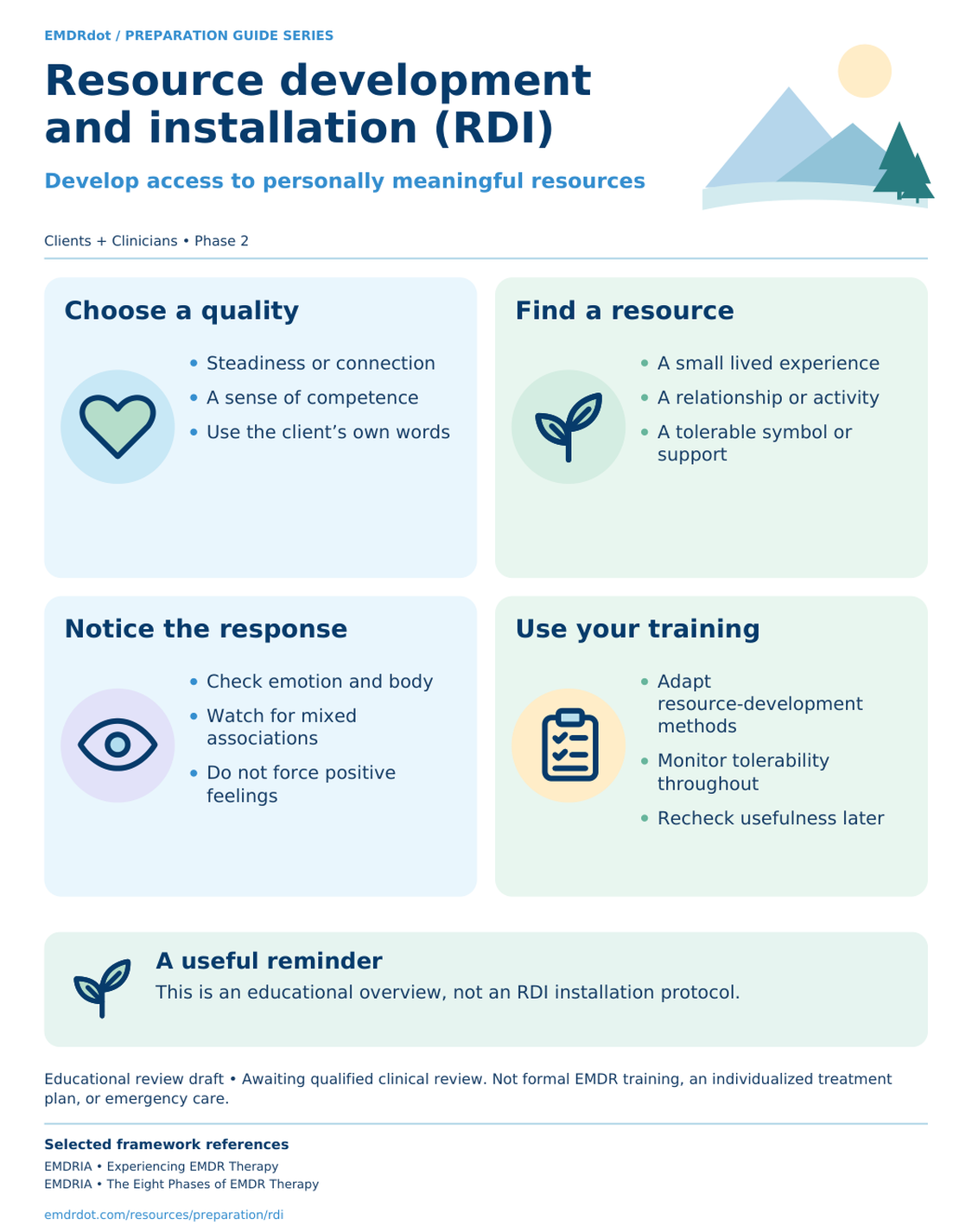
We may explore a quality you want more access to and a small experience that connects with it. If it feels false, upsetting, or unhelpful, that is useful information.
Clinician reference
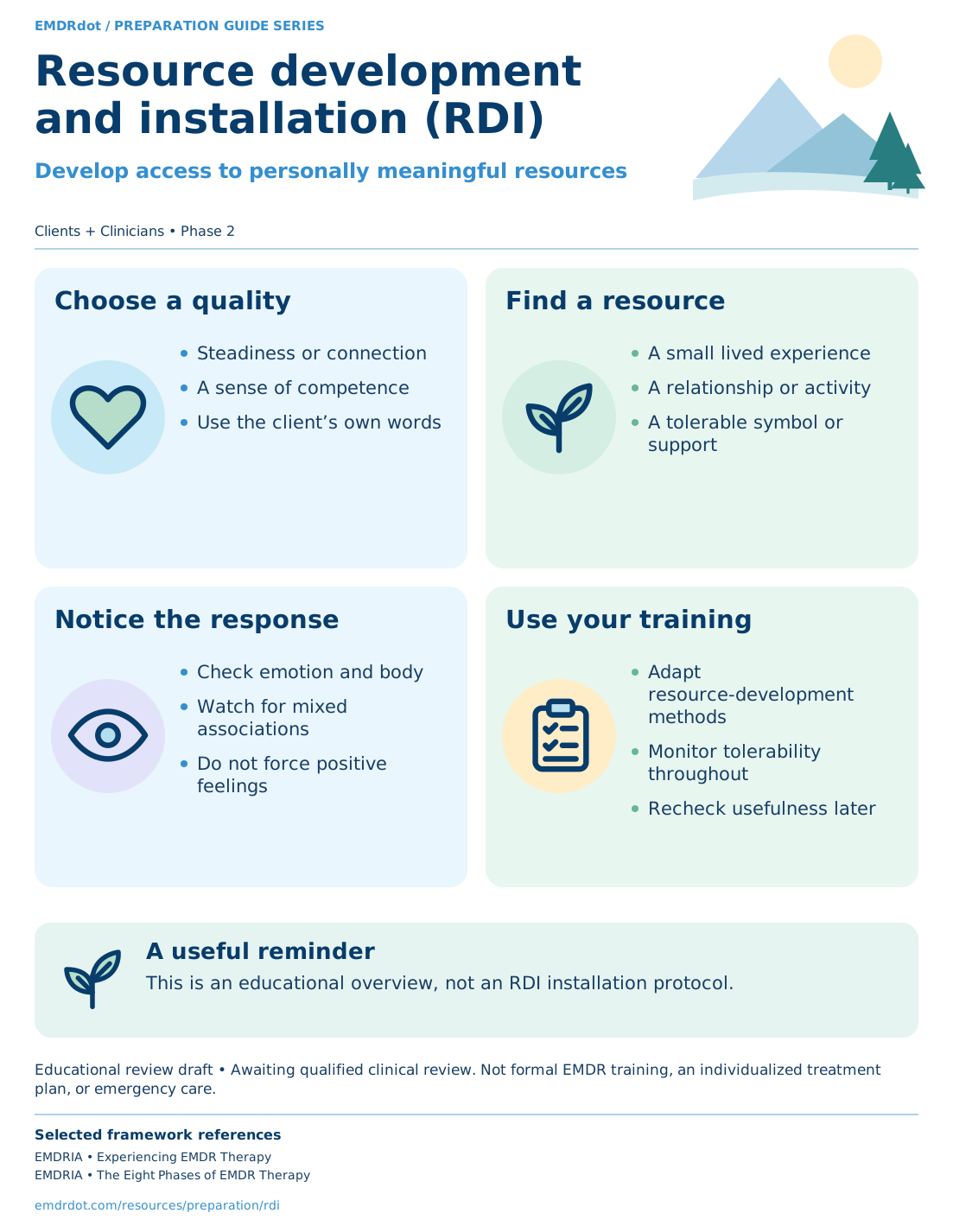
Explore qualities such as steadiness, competence, or connection and identify personally meaningful examples. Assess mixed associations. Any installation, including stimulation if used, follows your training and ongoing tolerability monitoring.
General sequence and discussion checklist
Optional discussion aid. Selections clear when you leave; this does not assess clinical readiness.
Practical example / documentation consideration
Fictional example: completing a small household task represents “I can take one step,” while heroic imagery feels unrealistic.
References and evidence notes
These sources inform the framework and discussion. They do not independently validate these original exercises or establish that every preparation technique is necessary or effective for every client.
- EMDRIA: Experiencing EMDR Therapy
Client orientation and eight-phase overview.
- EMDRIA: The Eight Phases of EMDR Therapy
Framework and phase descriptions; does not validate these original worksheets.