Client + Clinician
Getting Started with EMDR
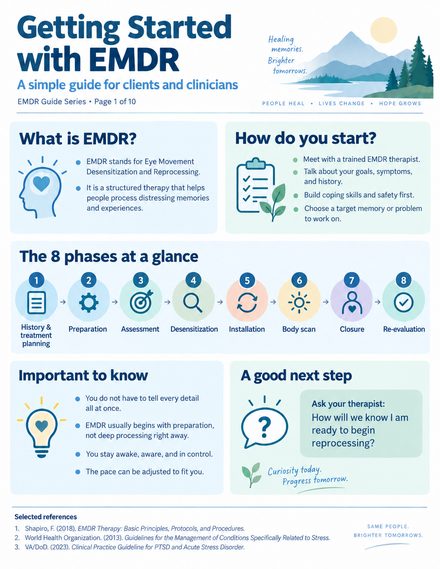
An introduction to the eight phases of EMDR, preparation, target selection, and what to expect when beginning treatment.
EMDR Research & Resources
Explore simple, evidence-informed EMDR guides designed for clients and clinicians. Learn what EMDR is, how sessions work, what the research says, and how bilateral stimulation fits into treatment.
These resources support education and informed conversation. They are not a substitute for assessment, diagnosis, clinical judgment, or individualized treatment.
The preparation center · Review draft
Practical education, phase references, printable materials, and equipment checks.
Free to read, download & share
12 guides · No account needed
An introduction to the eight phases of EMDR, preparation, target selection, and what to expect when beginning treatment.
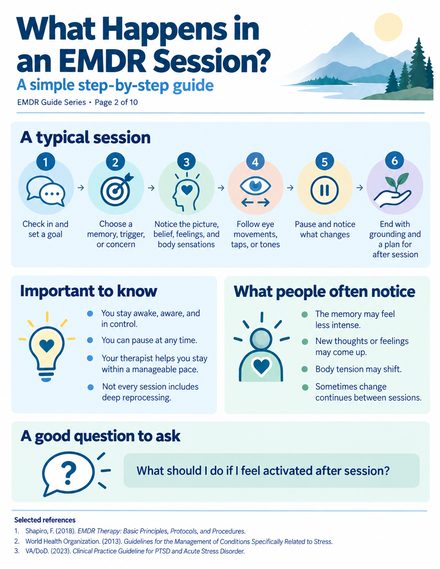
Follow a typical session from check-in and target work to noticing changes, grounding, and closure.
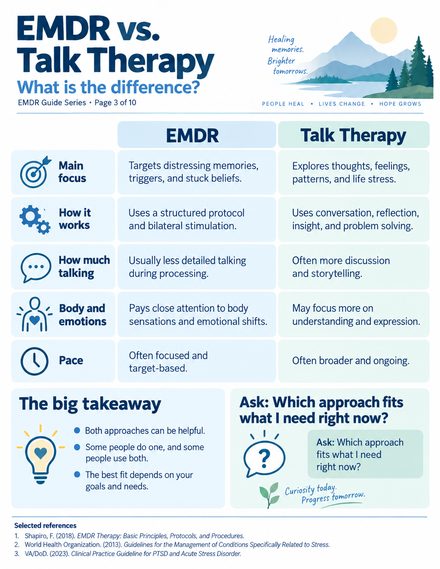
Compare treatment focus, structure, processing, and discussion without assuming one approach fits everyone.
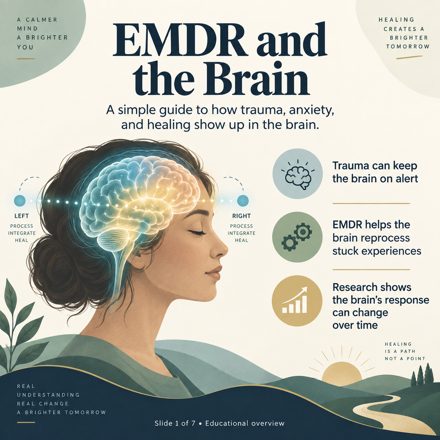
A seven-part illustrated introduction to EMDR, common questions, treatment expectations, and the evidence for PTSD.
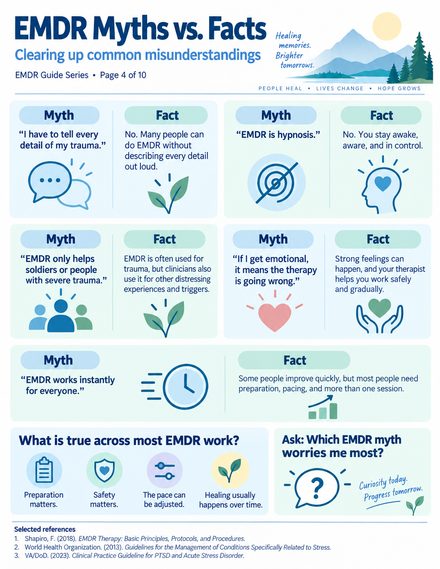
Explore common questions about detailed disclosure, hypnosis, control, and expectations for change.
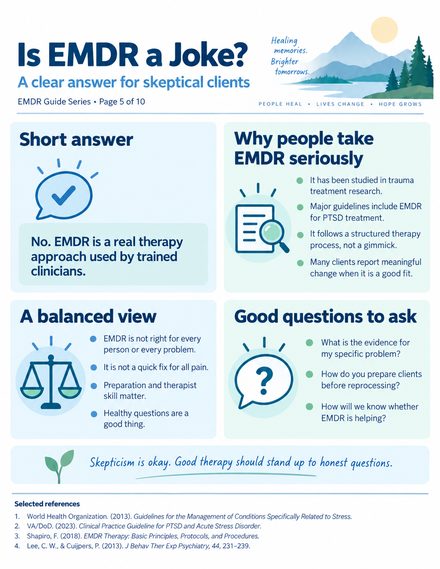
A respectful starting point for skepticism: what supports EMDR, what remains uncertain, and what to ask.
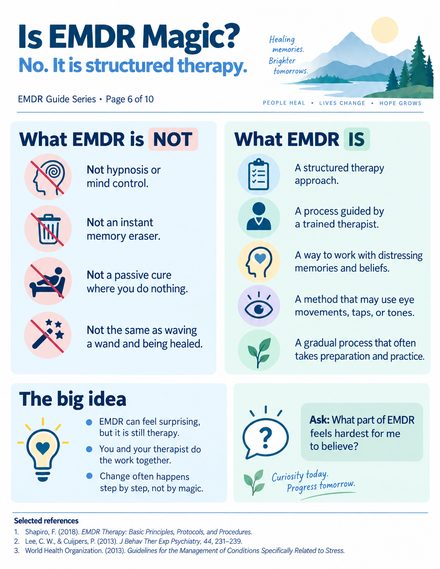
Understand why EMDR is a structured psychotherapy rather than hypnosis, mind control, or a memory eraser.
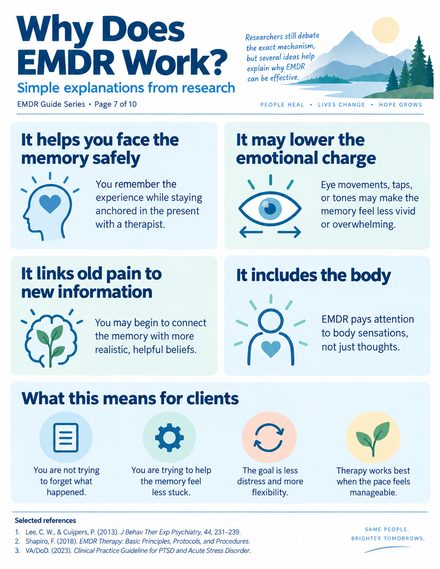
Explore proposed mechanisms, including working memory, while distinguishing research findings from settled explanations.
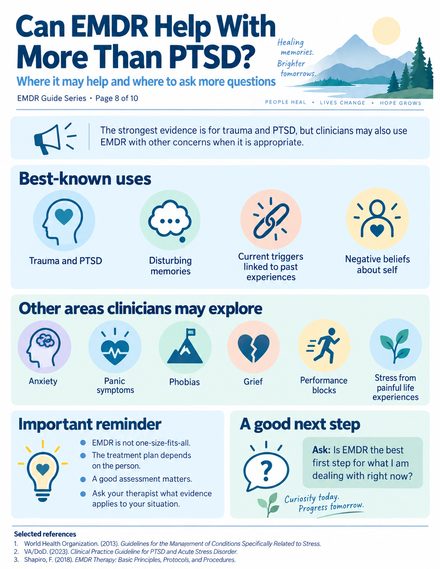
Start with established PTSD evidence, then explore other applications with appropriate differences in confidence.
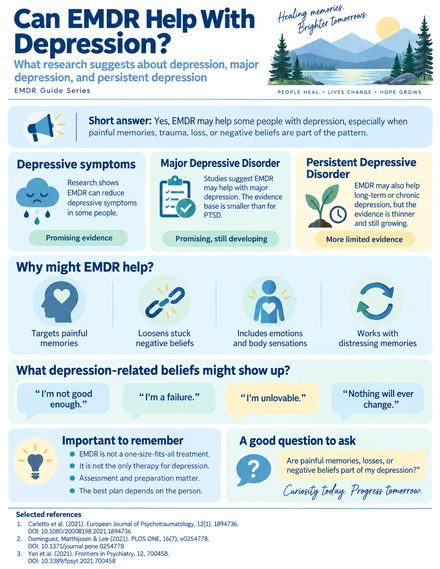
A careful overview of promising depression findings, the smaller MDD evidence base, and the limits of PDD-specific research.
Seven illustrated discussion guides about trauma, memory, EMDR sessions, and the limits of before-and-after brain explanations.
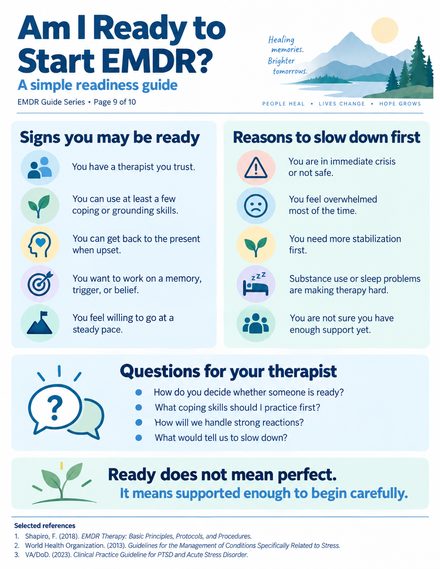
Questions about preparation, coping, support, and pacing to discuss before beginning reprocessing.
EMDRdot educational materials are provided for general information and professional education. They are not a substitute for diagnosis, individualized treatment, clinical supervision, or emergency care. Treatment decisions should be made with an appropriately qualified healthcare professional.