A practical place to understand the process, develop shared language, and prepare the next session.
Review draft: awaiting qualified clinical review. Original educational references for appropriately trained clinicians and shared discussion with clients. Not EMDR basic training, supervision, a protocol manual, individualized treatment, or emergency care. No endorsement or clinical validation of EMDRdot is implied.
The preparation center · Review draft
Prepare with clarity. Move at a considered pace.
Practical education, phase references, printable materials, and equipment checks.
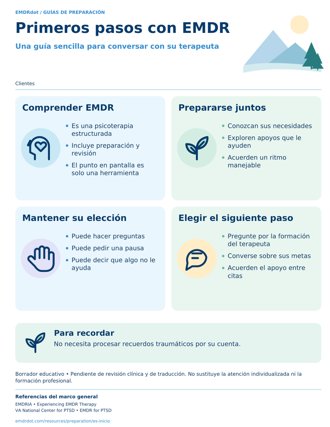
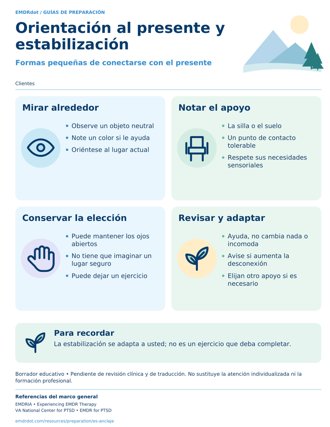
EMDR es una psicoterapia estructurada. Incluye conocer su historia, prepararse, evaluar objetivos, trabajar con recuerdos cuando corresponda y revisar lo ocurrido. Seguir un punto en una pantalla no equivale a recibir EMDR.
Getting Started · 3 min
Suggested use: shared discussion with a therapist.
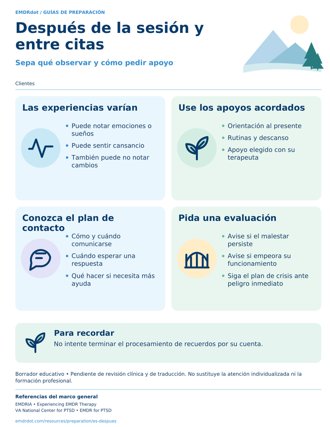
Puede notar cambios en sus emociones, cansancio o sueños, o puede no notar nada diferente. No todas las dificultades significan que el tratamiento esté funcionando.
Aftercare · 3 min
Suggested use: shared discussion with a therapist.
EMDRdot educational materials are provided for general information and professional education. They are not a substitute for diagnosis, individualized treatment, clinical supervision, or emergency care. Treatment decisions should be made with an appropriately qualified healthcare professional.